在高效超音速飛行器(ESAV)的設計過程中,必須格外重視以整體化的方式進行推進系統的設計。在建立飛行器的性能模型時必須考慮各方面的因素,包括推進系統的安裝效果。在近期的一項有關ESAV推進系統的項目中,理想飛行科學有限公司(Optimal Flight Sciences LLC)和美國空軍研究實驗室(AFRL)對一種三氣流可變循環發動機(VCE)展開了研究。
即便在傳統性能設計中,發動機對飛機整體性能的重要性都無須贅言。若能在飛行器性能分析中掌握機身與推進系統的互動機制,那么整個飛行器的設計前景便更加光明。
當前主流的“機身-推進系統”設計方法是將高保真、單一專門學科的的推進系統建模結果轉化為低保真的表格格式,方便機身制造商在傳統的性能建模中使用。機身制造商可能會被要求在這個經過弱化的發動機模型上加入安裝后的效果,但是其結果可能與原模型截然不同。在未來,一體化整合將成為包括ESAV在內的飛行器推進系統的特征,而之前的方法將不能滿足這樣的要求。
在設計的早期階段,機身制造商將信息傳遞給發動機制造商時,其要點往往集中于任務計劃中幾個節點的凈推力與推力燃料消耗率(TSFC)。如果項目中使用的是現有的發動機或發動機內核,那么傳遞給發動機制造商的信息就是上述參數的比例系數。
因此可以這樣認為,如果在概念設計階段,發動機制造商與機身制造商之間就能進行高保真銜接,那么最后設計出來的飛機系統也會更好。相反,如果缺少這種銜接,很可能導致物理交互機制的設計出現失誤,而這一機制對于最終設計效果是非常重要得。事后進行補救不僅耗費成本,而且往往會導致系統性能的損失。
在本次研究中,研究人員使用“數字推進系統模擬(NPSS)”軟件建造了一個計算模型,用于進行發動機分析。這一發動機模型是由AFRL渦輪發動機部門在一款通用型適配渦輪發動機模型的基礎上進行開發的。除了可變循環NPSS模型外,研究人員還為概念設計開發了一款三坡道外部壓縮進氣口模型,以詳細了解進氣口的安裝效果,包括超音速飛行狀態下進氣口對攻角變化的影響。
這些模型都被整合進以服務為導向的計算環境(SORCER)中,在該環境中,NPSS模型和上述模型可以同時運作,從而實現對真實飛行性能的快速評估。通過SORCER環境中的NPSS模型,研究人員搭建了一個可擴展的發動機研究平臺,比起標準的概念級發動機平臺,在這個新平臺上可以選擇并改變更多的參數,包括進氣口攻角、來流損失百分比與氣流留存率等。這些多元化的發動機參數被用于ESAV系統模型性能的評估。評估結果顯示,新加入的非傳統可變參數對飛機設計非常重要,值得認真對待。
研究人員搭建了一個概念級的三坡道外部壓縮進氣口模型,并將其與通用型適配渦輪發動機(GATE)NPSS模型整合起來。該進氣口模型采用二維可壓縮流方程建立,其結果與采用保真度更高的歐拉代碼CART3D得出的氣流結果吻合,因而證實了它的有效性。這個用于多學科設計與分析優化(MDAO)的進氣模型與參數化、一體化的GATE,統稱為MSTC-GATE推進模型(注:MSTC為AFRL的多學科科技中心)。
為了在概念設計的階段便能實現推進器的多參數計算,研究人員將進氣代碼整合進了NPSS的GATE模型中。借助一個基于物理的方法,進氣模型還能完成泄漏拖拽的計算。此外,在飛機設計的空間中,研究人員還將更多的效果和參數考慮在內,包括攻角的效果和各種發動機部件的設定值。
研究人員將MSTC-GATE模型整合進SORCER環境中,目的是促進不同與飛機設計相關的學科之間的銜接,并使該模型在計算上實現可追溯性,便于MDAO的應用。因此,在單一領域進行的變更能夠傳達至飛機的整個系統,而所有受影響的其他學科領域也可以及時進行更新。通過這種方法,不同子系統之間復雜的物理交互(如推進系統與空氣動力學研究的結合)在概念設計階段就能得到明確規劃和探討。
該項目使用SORCER環境建立MSTC-GATE模型,以研究飛機攻角、發動機逸散損失百分比與氣流留存值的改變對飛機系統性能的影響。為理解這些參數的影響,研究人員將發動機安裝在一架超音速蘭姆達機翼平臺試驗飛機上,對MSTC-GATE發動機的使用方式,或是對該發動機各種特性的改進方法進行評估。結果顯示,對研究中涉及的所有特性(攻角連接、超音速溢流拖拽、氣流錯配溢流拖拽、帶有TSFC最小化客觀函數的VCE特征、溢流拖拽最小化、SEP最大化等)的影響,都能進行量化。
除了傳統的馬赫數值和海拔高度任務參數外,其他新加入的參數可以讓研究人員更深刻地理解并進行高性能飛機的設計。因為通過多參數性能分析,可以在早期階段的設計中更接近真實的物理效果。傳統的概念設計在預估飛機的最終造價時,只能借助極少量的設計階段的知識。而這個項目通過對設計知識的增加,大大改善了這一情況,可以實現最終造價的降低或系統性能的提高,甚至二者兼得。
本次研究還發現,確定VCE的優化使用,是一個多目標問題,比單目標問題更為復雜。
另外,研究展示,增加拖曳確實可以提高發動機運行效率,這為提高“機身-推進系統”這一水平的性能打開了新的思路,并且又一次強調了同時推進系統和機身設計相結合,對實現性能的最佳水平是非常重要的。
最后,研究人員還展示了將單位剩余功率(SEP)調至最大值,或將錯配溢流拖曳調至最小值時(這只是眾多目標參數中的兩個例子),怎樣使用VCE來操作同一臺飛行器。標準的飛機性能分析只能針對一架飛行器生成一個SEP圖,而多參數性能方案則可以根據不同目標,為設計師提供不同的飛行方案,從而全面展現飛機性能。為了說明這一點,研究人員針對上述兩個目標設計了可量化的飛行方案。
本文基于SAE International技術文章2014-01-2133改編而成。后者由理想飛行科學有限公司的Darcy Allison與美國空軍研究實驗室的Edward Alyanak聯合撰寫。
Propulsion performance model for efficient supersonic aircraft
For the design process of the class of aircraft known as an efficient supersonic air vehicle (ESAV), particular attention must be paid to the propulsion system design as a whole including installation effects integrated into a vehicle performance model. The propulsion system assumed for the ESAV considered in a recent study done by Optimal Flight Sciences LLC and the Air Force Research Laboratory was a three-stream variable cycle engine (VCE).
The importance of engine performance on overall aircraft performance, even when using traditional performance methods, is hard to overstate. The ability to capture airframe-propulsion system interactions during air vehicle performance analysis promises great insights into the air vehicle design process.
Prevailing airframe-propulsion design methods involve high-fidelity, single-discipline propulsion modeling translated to a low-fidelity table format for an airframer's use in traditional performance modeling. The airframer may be required to add installation effects to this reduced engine model that are not coupled to the propulsion model that originally generated the table. This approach is not sufficient for the integrated nature of propulsion systems envisioned for future aircraft, including an ESAV class.
When information is passed from the airframer to the engine manufacturer in the early design stages, it is generally limited to net thrust and thrust specific fuel consumption (TSFC) requirements at some few points in a mission envelope. If an engine or engine core that already exists will be used to power the aircraft program, the data passed to the engine manufacturer are scale factors of the above parameters.
It can be argued that a better aircraft system could be produced if a high-fidelity interface between the engine manufacturer and the airframer existed during conceptual design stages. Without this coupling, real physical interactions that are key to the eventual design that might otherwise possibly be capitalized on through design work will be missed, and will of necessity be dealt with later on costing money and usually aircraft system performance.
In this study, a computational model was built with the Numerical Propulsion System Simulation (NPSS) software to analyze the engine. This engine model was based on the generic adaptive turbine engine model developed at the turbine engines division of the AFRL. Along with this variable cycle NPSS model, a three-ramp external compression inlet model meant for conceptual design was developed. This model was used to capture inlet installation effects, including those attributable to angle of attack changes at supersonic Mach numbers.
Those models were integrated into the Service ORiented Computing EnviRonment (SORCER), which enables parallel execution of the installed NPSS model to rapidly evaluate a full flight envelope. The SORCER-enabled NPSS model was used to produce an engine deck with an expanded selection of variable state parameters compared to a standard conceptual level engine deck. These parameters were the inlet angle of attack, inlet flow bleed percentage, and flow holding percentage. This multiparameter engine data was used to evaluate the performance of an ESAV system model. The results of the evaluation showed that the additional nontraditional variable parameters included in the engine deck are significant and are worthwhile to consider in aircraft design work.
A conceptual design level, three ramp, external compression inlet model was constructed and integrated with the Generic Adaptive Turbine Engine (GATE) NPSS model. The inlet model was built using the two-dimensional compressible flow equations, and it has been verified in that it agrees well with flow results using the higher fidelity Euler code, CART3D. This inlet model and the parameterization and wrapping of GATE to be used in a multidisciplinary design and analysis optimization (MDAO) context is collectively called the MSTC-GATE installed propulsion model. (MSTC is the Multidisciplinary Science & Technology Center with AFRL.)
The inlet code was integrated with the GATE model in NPSS for the purpose of being able to calculate the installed propulsion multiparameter performance at the conceptual design level. The inlet model enabled the calculation of spillage drag using a physics-based approach. In addition, further effects and parameters were exposed to the aircraft design space including angle of attack effects and variable engine component settings.
The MSTC-GATE model was incorporated into the SORCER environment to facilitate the coupling of physics between different aircraft disciplines and to make the MSTC-GATE model computationally tractable for MDAO applications. Therefore, changes in one discipline can propagate into the whole aircraft system so that all affected disciplinary analyses can be properly updated. In this way, the complex physical effects that occur between different aircraft subsystems can also be accounted for, and possibly exploited, during the conceptual design phase, such as coupling propulsion and aerodynamics disciplines.
This effort utilized SORCER to exercise MSTC-GATE so as to study the effect of aircraft angle of attack and varying the engine diffuser bleed percentage and the flow holding value on aircraft system performance. To understand the impact of these parameters, the engine was coupled to a supersonic-capable lambda wing planform aircraft. Different performance methods that either utilize or fix various features of the MSTC-GATE engine model were evaluated. It was found that the impact of the features explored in the study such as angle of attack linking, supersonic spillage drag, flow mismatch spillage drag, and VCE features with objective functions of TSFC minimization, spillage drag minimization, and SEP maximization all have a measurable effect.
These extra parameters, beyond the traditional Mach number and altitude mission envelopes, permit deeper insights into high-performance aircraft design by bringing more realism and physical effects earlier into the design process through multiparameter performance analysis. Conceptual design traditionally sets the majority of the eventual aircraft cost with the least amount of knowledge during the design process. This work has improved the situation by increasing the level of knowledge available at this stage of the design process, thus ideally reducing the eventual cost of the final aircraft and/or increasing the final system performance.
This investigation found that determining the optimal use of a VCE is a multiobjective optimization problem that is more complicated than the single objective problem envisioned.
Additionally, the potential to improve overall airframe-propulsion system level performance was demonstrated by showing that increasing drag improved the engine operational efficiency. This emphasized the importance of designing the propulsion system and airframe simultaneously for best performance.
Finally, researchers showed how a VCE could be used to operate the same air vehicle for either maximum specific excess power (SEP) or minimum mismatch spillage drag (only two of the many possible objectives). A standard aircraft performance analysis produces one SEP plot per air vehicle, whereas the multiparameter performance method offers designers an expanded view of many different flight envelopes based on different objectives for a complete picture of aircraft capability. These two objectives and their effect on the flight envelope were quantified as an example.
This article is based on SAE International technical paper 2014-01-2133 by Darcy Allison, Optimal Flight Sciences LLC, and Edward Alyanak, Air Force Research Laboratory.

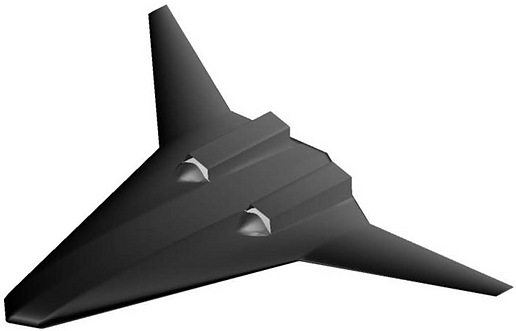 為了進行這一項目,研究人員帶有兩臺完全相同的發動機的蘭姆達機翼概念確定為ESAV。ESAV概念上的進氣口不是二維的外部壓縮進氣口,而只能代表ESAV的配置。
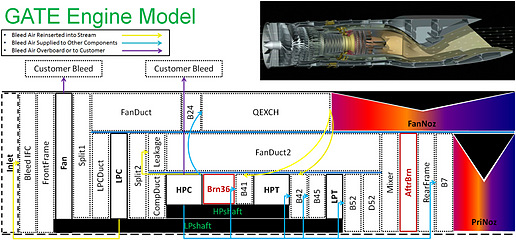 NPSS是一種基于部件的、以目標為導向的發動機循環模擬器,專為實施與推進系統相關的普通任務而設計。圖上為一臺三氣流可變循環發動機。