“我的車還能跑多久?”這是車主在修車時經常問修理工人的一個問題。如果只考慮更換輪胎和剎車的話,也許還能給出一個“最樂觀的答案”,但車里其他部件和系統的壽命,估算起來則復雜得多。有一個很有說服力的例子是,人們經常會擔心:“下次插入鑰匙時車輛還能啟動嗎?”這也說明了為什么預診系統成為越來越受人關注的一個技術領域,因為它能夠預測系統與部件的剩余壽命。在2015 SAE世界大會上,由Delphi公司國際車載通訊部Tim Cavanaugh領導的嘉賓討論會,從通用汽車的車輛健康監控系統談起,對此進行了深入的討論。
重點關注啟動系統的部件
自電子模塊開始用于電動汽車和插電式混合動力車以來,它們就與電池組和控制電子技術息息相關,因為電池容量和汽車里程對車輛來說至關重要。哪怕只有一點電池劣化,也會引起重大問題,特別是對經常需要駕駛較長距離的車主而言。
重型車也會碰到這個問題,正如討參與討論的嘉賓之一,Mahle Powertrain公司的傳動系校驗與控制經理Bernie Porter所說的那樣,“沒人想開一輛隨時會在半路拋錨的車。”而在航空業內對預診關注已久,因為這是強制維修的一部分,對安全與成本之間的平衡非常重要。
盡管Porter認為在汽車上投資巨額開發該技術“很難在商業上獲利”,但通用汽車的綜合汽車健康管理研究員Steven W. Holland指出了客戶滿意度的問題。
Holland向參會人員透露,通用汽車開始研發傳統乘用車的預診系統時,主要關注的是電池、起動機構和燃油泵,因為它們是確保車輛正常啟動的關鍵部件。如果預診結果為“陽性”,那么隨之生成的“汽車健康報告”就能給車主提供非常有用的信息,而不是一些為了誘使他們前去換油或購買其他保養服務的推銷信息。
Holland表示,通用汽車預診系統的理念是以客戶為中心,而且比起高質量,客戶更加看重的是可靠性。如果軟件的預測功能可以達到90%的精確度,準確評估一個部件什么時候可能會失靈,這將大大提升客戶對汽車可靠性的印象。如果一名車主告訴他的朋友,盡管他的愛車啟動和運行都很正常,但他仍獲得了免費更換電池的服務,那么他就已為預診系統做了宣傳。
需要使用4G網絡
汽車的部件或系統可能需要經過特殊設計,因為預診算法需要的信息并非日常可以隨時提供的信息,只有獲得更加充分的信息,才能以較高的準確度判斷是否需要進行部件更換。
盡管這些算法因車而異,而且一個停車-重啟系統可能需要使用1個AGM(吸附式玻璃纖維棉)電池,或兩個常規電池(而非一個電池),但通用汽車首次部署該技術時所使用的電池并未經過特殊設計。Holland表示,最重要的是,不能讓車主在更換電池后發現電池健康評估的結果變差了。任何特定的要求,如電池溫度傳感器,都會安裝在外部,而電壓/電流監控裝置則負責對電路的狀況進行診斷。
這種算法的一個重點是,它能在車主每次啟動車輛,而不僅僅是電壓跌落時提供有關電池、啟動器、燃油泵以及其他系統的詳細信息。具備預診功能的汽車能通過OnStar 4G網絡傳輸這些信息。如果沒有通過4G網絡按需獲得信息的能力,那么算法的配置也將無從談起。
車輛的健康算法并不是基于故障代碼或其他一些明顯的劣化現象開發的。Holland表示,一個修車技師所采集的讀數可能看上去非常正常,但是預測系統的精髓則在于分析讀數的變化,這些變化背后隱藏著可能發生的問題。
燃油泵案例
Holland在討論中介紹了電子燃油泵的案例。一只全新的燃油泵可以提供遠超所需的壓力和油量。所以一旦算法發現,盡管這些數據仍處于可接受范圍內,但其下降速率高于正常水平,那么監控系統便會提高警覺。接著算法會留意硬加速和高負荷可能對此造成的影響,但這些步驟都是在車主發現任何異常情況之前完成的。
有些信息也來自于“隱藏代碼”——這是軟件自帶的算法,在其他任何維修診斷系統中都沒有。這些算法自安裝起開始,就是校準開發流程固有的一部分,永不移除,并且現在人們發現可以將它們用于輔助某些預診決策。
Holland表示,如果一份通用汽車的健康報告提醒車主需要在保修期內更換電池,這份報告必定是正確無誤的,“通用不會承擔任何風險,因為買單的人是我們自己。如果我們不買單,客戶肯定會感到非常不安。”
他還指出,來自各家供應商的所有電子元器件都有一個普遍的問題——專利代碼內嵌在元器件中。“我們需要從那個代碼中獲取與健康有關的參數。”
一些參會者認為,直接將預診決策傳送至汽車經銷商的做法,可能會對售后市場造成沖擊。但也有人指出,汽車健康報告也可能會發送給車主以及由他指定的“優先服務供應商”——這很可能是一家獨立維修店。
為將4G數據計劃的影響降至最低,預診算法的設計非常謹慎。正如Delphi的Cavanaugh所說,“我們不能事無巨細地收集所有信息,而要將數據請求縮減至我們需要的時間和內容范圍內。”
云服務器上的診斷算法
診斷/預診信息被傳送至通用汽車的云端服務器,因此無需安裝任何車載算法。車載算法不僅需要占用計算機容量,還需要進行連續數據總線重新編程,以維持正常運轉。Holland表示,車主可以自行選擇是否需要預診報告。“如果他們需要,”那么通用公司會在5年內提供車載通訊網絡, “如果他們不需要,我們就不提供。”
Holland還對預診分析和“發動機檢查燈”這類提示功能之間的差別做了詳細的解釋。他說,“政府規定我們必須在車上安裝提示功能,當發生問題時,指示燈必須亮起。”他補充道,但是這可能意味著車輛在3個月后才需要維修,也有可能意味著需要馬上處理,又或者發生問題的原因也可能是油箱蓋松動了,不管原因是什么,提示燈都會亮起。“因此車主必須具備一定的經驗,才能選擇在車輛沒有明顯問題的時候,忽略這類提示。”
將來,預診系統還有可能預測自動變速箱等機電系統的壽命。他們已經具備了傳感器,可讀取液壓管壓力、輸入軸和輸出軸的轉速、離合器嚙合狀況等信息。
振動分析
捷克布拉格科技大學的Mohamed El-Morsy提出,未來的預診系統還有可能預測齒輪和軸承的失效。他介紹了一個有關5速手動變速箱的實驗室測試。研究人員在該變速箱的一個齒輪齒表面上制作了一個微小的點蝕,用一個名為Morlet的小波濾波器對其進行分析并用Kurtosis統計方法測量一個振動信號中波峰的數量和振幅。El-Morsy表示其大學正在與斯柯達合作開發該項目,旨在將實驗室研究成果應用到車內變速箱,而這自然會需要使用傳感器。
GM prognostics use 4G for data acquisition, cloud analysis
“How much longer will it last?” is a common question that motorists in for repairs ask service technicians. And although a “best guess” may be fine for deciding when to replace tires and brakes, other vehicle parts and systems raise more time-sensitive questions. “Will the car start the next time I turn the key?” is an example, and that’s where prognostics—predicting remaining service life of systems and components—is becoming a technical area of increasing interest. Panelists took a fresh look at a 2015 SAE World Congress panel led by Tim Cavanaugh, Global Telematics, at Delphi, using a new General Motors vehicle health monitoring system as the springboard.
Focus on starting system parts
Electronic modules have been keeping a close watch on the battery packs and control electronics of electric vehicles and plug-in hybrids since their introduction, because battery capacity and vehicle range are important. Any deterioration is of great concern, particularly for a motorist expecting to make trips of a specific distance on a regular basis.
Heavy-duty vehicle fleets also are in the picture, for as panelist Bernie Porter, Manager of Powertrain Calibration and Controls for Mahle Powertrain noted, “they don’t want a piece of machinery to end up sitting in the middle of nowhere.” Of course, the aviation industry has a long-established focus in this area, as part of required maintenance, seeking to balance safety with cost-effectiveness.
Although Porter said “it’s harder to make a business case” for a major investment in a car, the issue of customer satisfaction was noted by Steven W. Holland, GM Research Fellow for Integrated Vehicle Health Management.
He told attendees that the initial GM entry into prognostics for conventional passenger cars is focused on the battery, starter, and fuel pump, because these are the key components that must be healthy for the car to start. The “positive” nature of the prognostics takes the Vehicle Health Report a giant step past what many motorists consider a sales pitch for oil changes and similar maintenance items.
The GM prognostics approach is customer-centric, Holland said, and added that it’s not really quality but reliability that the customer perceives. If the predictive nature of the software can become 90% accurate in determining when a component falls out of spec, that would greatly enhance the impression of reliability. The motorist who can tell his/her friend that the battery was replaced free even though the car was starting and running fine, would be a salesman for prognostics.
4G connection required
The parts or systems may have to be built to a specific design because the prognostics algorithm needs information that might not necessarily be routinely available so that a decision to call for replacement is made with high confidence.
For GM’s initial foray, the battery is not a special design, although the algorithms vary according to vehicle, and perhaps one AGM (absorbent glass mat) battery or two conventional batteries could be used (instead of one) for a stop-restart system. For the most part, Holland said, the motorist should not experience a loss in effectiveness of the battery health assessment with a replacement battery. Any specific requirements, such as a battery temperature sensor, would be external, and any voltage/amperage monitoring would be in place for diagnostics of electrical circuits.
An important aspect of the algorithm is that there’s detailed information on the battery, starter, and fuel pump—and other systems—every time the motorist starts the car, not just the cranking voltage drop and the time to start. That information is transmitted by the OnStar 4G connection in the cars that have the prognostics feature. Without the ability to get information on demand via 4G, there would be no practical way to deploy the algorithm.
The vehicle health algorithms are not based on trouble codes logged or even some obvious deterioration. The readings a technician takes would look absolutely normal, Holland said. But the sophistication in the prognosis is based on changes in readings that indicate an impending problem.
Fuel pump example
Holland pointed to the electric fuel pump as an example. When new, the pump can deliver a lot more pressure and fuel volume than is needed. So when the algorithm sees numbers that still are within the acceptable range, but are declining at a rate beyond expectations, the monitoring will become more intensive. The algorithm will look for signs of an impending effect on hard acceleration and high loading, but before the driver is likely to notice anything, he said.
Some of the information also comes from “hidden code,” which are algorithms that are in the software but not in any service diagnostics. These algorithms were installed (and never removed) as part of the calibration development process and now have been found to help make some prognostics decisions.
Holland said that when a GM health report calls for battery replacement under warranty, the health report is so robust that “there’s no risk to GM because we’d eventually be paying for it anyway. If we didn’t, we’d just have an upset customer.”
He noted there is an overall challenge posed by all the electronic components from suppliers, who have proprietary code baked in. “We need the indicators of health” from that code, he said.
Some session attendees expressed concern over the possibility that the prognostics decisions, transmitted to the car dealer, would shut out the aftermarket. However, others pointed out that the “vehicle health report” would go to the motorist and his designated “preferred service provider,” which could well be an independent garage.
To minimize the effect on the vehicle’s 4G data plan, the prognostic algorithms are prudent users. As Delphi’s Cavanaugh said, “you don’t want to grab everything. You want to reduce the data requests to just when and what you need.”
Diagnostics algorithms on cloud server
Diagnostics/prognostics information is transmitted to GM’s cloud server, which eliminates the need for onboard algorithms that not only would take computer capacity, but also require continuous data bus reprogramming to maintain currency. The prognostics reports are strictly voluntary for the motorist, Holland explained. GM provides the telematics connection for five years “if they want it. If they say no, we don’t enable it.”
Holland distinguished the prognostics analysis from anything that turns on a Check Engine light. He pointed out that “the government says we must have it and light it when certain things happen.” There’s no difference, he added, between something that’s three months to a needed service, something right now, or even the loose gas cap. “So the motorist has become trained to ignore it (the light) when there’s no obvious problem.”
Prognostics also has a future in predicting future life of such electromechanical systems as automatic transmissions. They already have sensors that read hydraulic line pressure, input and output shaft rpm, and clutch engagements, so predictive capabilities are there.
Vibration analysis
The future also could include ways to detect impending failure of gears and bearings, explained Mohamed El-Morsy, of the Czech Technical University of Prague. He described laboratory testing of a five-speed manual transmission that had a pitting fault introduced on a small part of the surface area of a gear tooth. It was subject to a specific wavelet filter (Morlet) with a statistical measure (Kurtosis) of the number and amplitude of peaks in a vibration signal. Taking the laboratory work into an in-car transmission requires a sensor of course, and El-Morsy said the university is working with Skoda to develop one.
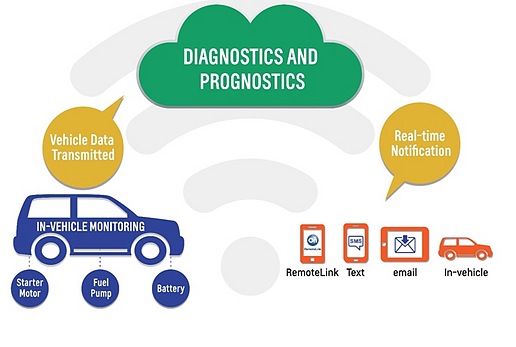 使用實時監控技術的預診系統,可探測到即將發生的問題,并通過發送車內顯示信息、智能手機短信、郵件及遠程提示,將信息告知車主及其選擇的信息接收方。
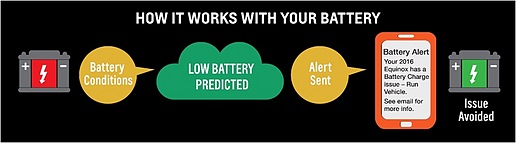 電池失效的預診流程。
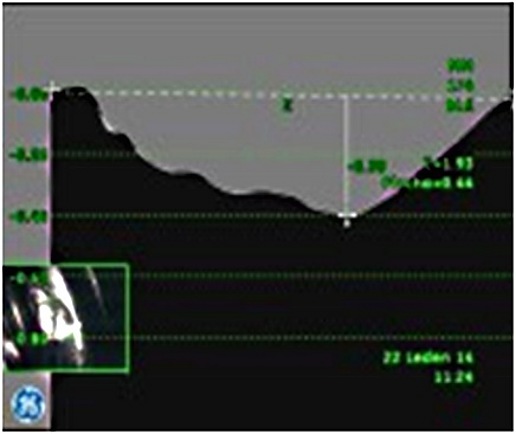 齒輪齒上的點蝕僅占齒輪總面積的3%,低于通常的損壞認定基準值4%,但在振動測試中仍能夠識別出來。