2015年1月1日,美國環保署(EPA)正式宣布有關Tier 4 Final發動機的環保法規,開始執行針對額定功率超過750hp (560kW)柴油發動機的新排放規定,這標志著高功率(HHP)發動機技術新紀元的到來。達到微粒(PM)與氮氧化物(NOx)排放的最低限值要求,是當今HHP發動機制造商必須解決的最重要的技術問題。
每一次排放法規的更新,都提出了清晰的減排目標,但是即便法規再嚴格,康明斯也總能設計出性能更高、運行成本更低的發動機。從Tier 4 Final發動機研發工作啟動伊始,康明斯就致力于設計出比當今北美主流的Tier 2發動機性能更為優越的產品,并同時有效降低發動機的總擁有成本。為了達到這一目標,我們的工程團隊努力了解顧客對于HHP發動機應用的要求,而這些寶貴的信息為我們的Tier 4 Final技術研發作出了重要貢獻。
如今,康明斯非常自豪的宣布,我們的Tier 4 Final HHP發動機技術研發已經完成,而且超越了項目的最初目標。燃油節約可達4%,大修前使用壽命延長了10%,最重要的是,發動機的正常運行時間毫不遜色于目前任何一款康明斯HHP發動機。
這一結論不僅來自于實驗室數據,我們還進行了長達6萬小時的各種路上實測,這使得康明斯得以實現其承諾——按OEM的生產計劃,為其提供動力更強勁的發動機。根據這些路上實測的優異結果,我們可以將Tier 4 Final發動機的生產啟動時間調整至排放法規生效日之前。這意味著QSK19、QSK50、QSK60和QSK95等型號的康明斯發動機將成為業內第一批上市的Tier 4 Final發動機。
康明斯提供的,不僅僅是全行業的第一批Tier 4 Final發動機產品。整個Tier 4 Final研發項目的目標是在不增加排量、不改變發動機速率的情況下實現極低的排放,并同時保持或達到更高的功率輸出水平。康明斯Tier 4 HHP發動機的外型與Tier 2發動機一模一樣,但在內部做了很多改進,包括提高廢氣閥的渦輪增壓性能以提高瞬態響應能力,調整活塞凹坑的設計以提高燃燒的清潔度等,而發動機的核心設計則基本保持不變。
穩健的技術
Tier 4 Final發動機研發項目的驅動力來自康明斯的核心理念——通過我們所掌握的新技術或現有技術、系統和現有部件的改進,滿足HHP應用的耐久性與可靠性要求。我們稱其為“值得信賴的創新。”
為滿足這些要求,我們選擇將柴油發動機業內最為嚴苛的應用工況,即大型采礦挖掘機的運行條件作為研發的起點。這些采礦挖掘機在運轉時通常負載系數達到75%,每年工作時間長達8000小時,對發動機施加的時間負荷之長,沖擊載荷之大,非任何其他機械可以相比。因此,這一極端的負載循環就成為了我們模擬所采用的基數。如果我們的Tier 4 Final發動機可以承受采礦挖掘機的工況要求,就能在其他所有應用要求下表現出色。
康明斯Tier 4 Final發動機系統還有一些其他的優勢。它的維修保養周期延長到500小時,為Tier 2發動機的兩倍。我們還將發動機的大修前使用壽命提升了10%,這意味著以2850 hp(2125 kW)功率運行的Tier 4 Final QSK60發動機可以在大修前持續燃燒1,100,000加侖(4,200,000升)燃油,具體視負載循環而定。
為提高發動機的可靠性,我們的設計團隊分析了Tier 4 Final發動機中所有可能導致非計劃內停工的潛在風險,并采取措施加以預防。康明斯新開發的NanoNet過濾介質就是一個很好的例子。這個用于燃油濾清器的介質專為實現超高燃油潔凈度并隔離灰塵而設計。與傳統介質相比,這一新介質的孔徑更為均一,能夠捕獲并過濾掉更多的有害物質顆粒,從而提升保護效果。
與Tier 2發動機相比,Tier 4 Final發動機在設計之初已將大規模改造問題考慮在內,因此它們可以輕松承受三次大修。這一舉措的另一大好處是,發動機無需在使用壽命的中期進行任何重大維修。Tier 4 Final發動機在實現極低排放標準的同時,竟然能夠同時達到如此高水平的耐久性和性能提升,這超出了絕大多數業內人士的預期。
實現極低排放水平
對Tier 4 Final HHP發動機而言,微粒的去除主要是通過在氣缸內利用高壓實現多次燃油噴射完成的,而氮氧化物的去除則主要是通過SCR后處理技術在尾氣部分實現。缸內清除微粒與將氮氧化物排出發動機的技術,可以簡化減排策略,并充分實現發動機的潛力。
此外,由于無需在氣缸內清除氮氧化物,為降低燃耗而設計的燃燒方程式便得到了極大的寬裕度。該方程式還允許發動機在更高的負載系數下運行,但同時氣缸壓力與活塞速度要求則更為寬松。
SCR后處理技術的優勢在發動機行業早已廣為人知。現在SCR已在所有75-750 hp (56 to 560 kW)級別的Tier 4 Final發動機以及北美洲所有的公路卡車發動機上得到了應用。在北美,康明斯的SCR技術已在超過100萬臺發動機上成功應用,重復證明了該技術的成功。人們清楚地知道,沒有其他任何技術可以在確保極低排放的同時,使發動機達到如此優越的性能和燃油節約水平。
只有康明斯可以將SCR技術應用到馬力高達4400 hp (3280 kW)的HHP發動機上。我們自行設計、生產并整合SCR系統,充分利用康明斯在催化轉換效率、柴油機尾氣處理液(DEF)噴霧模式噴射、以及整合控制邏輯方面的專業知識,專門為HHP發動機開發了下一代SCR系統。
SCR要求使用DEF引發催化劑的化學反應。DEF的使用和儲藏都非常方便,供應豐富,并有助于節省燃油。由于使用了DEF,Tier 4 Final發動機能夠使用更高級的燃燒優化技術以提高發動機效率,并通過SCR后處理技術降低尾氣氮氧化物排放量,從而使節油量得到提升。這一優化成果可以降低燃油和DEF的總消耗量,幫助客戶節省大約3%的總燃油成本。
通過這樣的方法,康明斯選擇的技術變革方向可以為運行商大大節約成本,因為這種程度的燃油節省量,對大排量發動機而言是非常優異的。
康明斯Tier 4 Final發動機還有更多其他優勢,例如每小時可移動更多噸位,以及可在更短時間到達扭矩峰值扭矩等。事實證明,這些優勢使得發動機能在最嚴苛的循環工況以及最高的負載系數下實現巔峰性能。我們確信至今仍未有任何HHP發動機具備比康明斯Tier 4 Final更優越的性能, 這一切都使得我們的Tier 4 Final技術更令人信服。
由康明斯高馬力發動機工程副總裁Jim Trueblood專為《SAE非公路車輛工程( SAE Off-Highway Engineering)》期刊撰寫。
Innovation is at the core of engine design
A new era in high horsepower (HHP) engine technology began on January 1, 2015, the official start date of the U.S. Environmental Protection Agency’s (EPA) Tier 4 Final emissions regulations for diesel engines rated above 750 hp (560 kW). Meeting these very low limits for particulate matter (PM) and oxides of nitrogen (NOx) emissions is the most significant technical challenge that HHP engine manufacturers have faced to date.
With every emissions regulations change, there is a clear target to reduce emissions, but for Cummins, there is always the opportunity to deliver engines with even higher performance and lower operating costs. From the start of our Tier 4 Final development program, Cummins has been committed to delivering engines that surpass the performance levels of the Tier 2 engine population operating in North America today with a lower total cost of ownership. With this goal in mind, our engineering teams went out and captured customer needs for our HHP engine applications and that valuable input went on to inspire our Tier 4 Final technology.
Cummins is very pleased to report that our Tier 4 Final HHP technology has achieved—and surpassed—our original goals for the program, providing fuel savings of up to 4%, extending life-to-overhaul by 10% and—most importantly—enabling engine uptime availability equal to that of any Cummins HHP engine in service today.
Our results were validated not only in the test cell, but also through an extensive series of field tests approaching 60,000 hours, which has enabled Cummins to remain consistent in keeping our promise to deliver more productive engines on schedule for OEM introductions. Based on the impressive results from our field tests, we were able to move the start of our Tier 4 Final engine production ahead of the emissions effect date. This means that Cummins engines such as the QSK19, QSK50, QSK60, and QSK95 will be the first Tier 4 Final HHP engines operating in the industry.
Not only is Cummins able to provide the first Tier 4 Final engines for the industry, Cummins Tier 4 Final approach also means our engines achieve very low emissions levels with no increase in engine displacement needed, no change to engine ratings, and the same, or even improved, power delivery. Each Cummins Tier 4 HHP engine also offers a near identical envelope to that of its Tier 2 predecessor. Upgrades include more efficient wastegate turbocharging to improve transient response and a revised piston bowl design for cleaner combustion, but the base engine is essentially the same.
Robust technology
Our Tier 4 Final program was driven with Cummins core philosophy to utilize new or improved technologies, systems, and components we knew would meet the durability and reliability levels demanded for tough HHP applications. We call this "Innovation You Can Depend On."
To meet these criteria, we took the most severe application in the diesel engine industry—large mining excavators typically operating at 75% load factors for as many as 8000 hours per year—as a starting point. No other machines put more stress or shock load on the engine for more hours. As a result, this extreme duty cycle became our simulation base point. If our Tier 4 Final technology could be counted upon to endure the operating conditions of a mining excavator, we knew it would do well in every other application.
Cummins Tier 4 Final engine systems also provide some other advantages. Service intervals are extended to 500 hours, twice that of the Tier 2 engines. Engine life-to-overhaul is increased by 10% which, for a Tier 4 Final QSK60 rated at 2850 hp (2125 kW), can mean a fuel burn of 1,100,000 gal (4,200,000 L), depending on duty cycle.
As part of the drive to enhance reliability, our design teams analyzed every possible point on the Tier 4 Final engines that could lead to unscheduled downtime and took measures to prevent it. A good example of this is Cummins new NanoNet filter media. This media, which is used in fuel filters, is designed to ensure superior fuel cleanliness and protect the fuel system from dust or dirt ingress. This enhanced protection is achieved with a more uniform pore size compared to traditional media, so that NanoNet captures and retains more harmful particles.
Like their Tier 2 predecessors, the Tier 4 Final engines are designed with rebuild potential in mind, and are easily capable of three overhauls. Another major benefit is that these engines do not require any major intervention at mid-life. It is likely that few in the industry would have expected that this level of incremental durability and performance for HHP engines would have been compatible with the move to meet Tier 4 Final very low emissions.
Achieving very low emissions
For our Tier 4 Final HHP engines, the focus of PM removal was essentially in-cylinder, which is enabled by multiple fuel injection events using higher pressures. For NOx removal, the focus was moved to the exhaust stream using SCR aftertreatment technology. Removing PM in-cylinder and NOx out-of-engine simplifies the emissions reduction strategy and allows the engine’s full potential to be realized.
Also, without the need to remove NOx in-cylinder, the latitude available within the combustion formula to reduce fuel consumption is broadened significantly. It also allows the engine to operate at higher load factors while staying within a more comfortable range of cylinder pressure and piston speed.
The inherent advantages of SCR aftertreatment are well known across the engine industry. SCR is now the key technology employed for all Tier 4 Final engines in the 75 to 750 hp (56 to 560 kW) category, as well as for every on-highway truck engine in North America. Cummins SCR population in North America has already passed the one million systems mark—a testament to the success of this technology. It is clear that no other approach can offer such significant performance and fuel saving benefits while meeting very low emissions.
Only Cummins has been able to replicate these benefits by migrating SCR technology to HHP engines all the way up to 4400 hp (3280 kW). We design, manufacture, and integrate the SCR system ourselves. We have been able to apply the full range of our expertise with catalyst conversion efficiency, diesel exhaust fluid (DEF) spray pattern injection, and integration control logic to develop our next-generation SCR system uniquely suited for HHP engines.
SCR requires the use of DEF to initiate the chemical reaction over the catalyst. DEF is easy to use, easy to store, widely available, and is also an important means for saving fuel. Fuel savings are improved because using DEF enables Tier 4 engines to employ advanced combustion optimization techniques to improve engine efficiency and reduce tailpipe NOx through the SCR aftertreatment. The resulting optimized product consumes less total fuel and DEF, saving customers roughly 3% on total fluid cost.
In this way, Cummins choice of technology shifts a key cost savings benefit to the operator, as this level of fuel savings is significant for large displacement engines.
Cummins Tier 4 Final engines are designed with the ability to do more, such as move more tons per hour or reach peak torque faster. They have been proven to achieve peak performance under the toughest duty cycles and the highest load factors in the industry. We are sure that no other HHP engines have ever been designed with more inherent strength. We think all of this adds up to a very compelling rationale for our Tier 4 Final approach.
Jim Trueblood, Vice-President, Cummins High Horsepower Engineering, wrote this article for SAE Off-Highway Engineering.

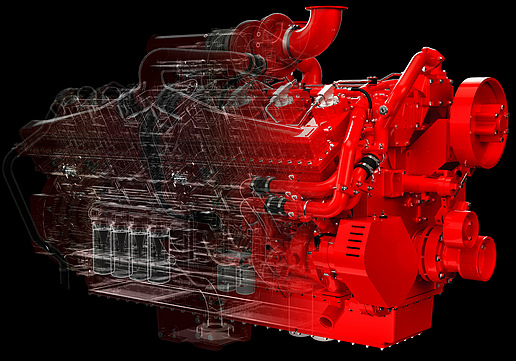 康明斯表示其Tier 4 Final HPP發動機技術已達到并超越該研發項目的初始目標,不僅實現了4%的燃油節約,還將大修前使用壽命延長了10%。圖為康明斯QSK50發動機。
 康明斯高馬力發動機工程副總裁Jim Trueblood。
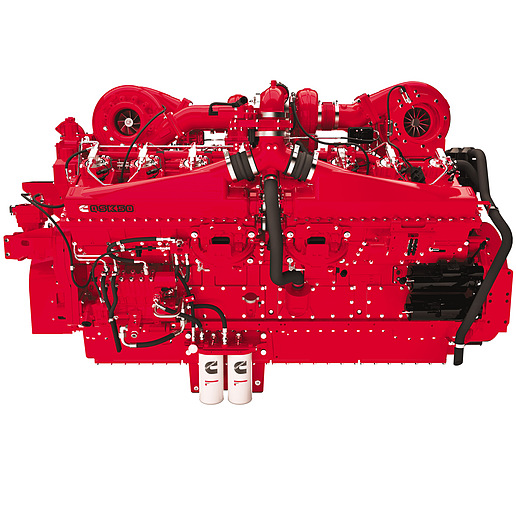 康明斯將Tier 4 Final發動機的生產啟動時間調整至排放法規生效日之前,這意味著QSK19、QSK50、QSK60和QSK95等型號的康明斯發動機將成為業內第一批上市的Tier 4 Final發動機。