十年前,全球?qū)ξ磥碥囕v的二氧化碳減排預(yù)期為:美國至2025年實(shí)現(xiàn)93g/km的標(biāo)準(zhǔn)、歐洲至2020年實(shí)現(xiàn)95kg/m標(biāo)準(zhǔn)(2025年可能達(dá)到70g/km標(biāo)準(zhǔn))、中國至2020年實(shí)現(xiàn)117g/km標(biāo)準(zhǔn)、而日本至2020年實(shí)現(xiàn)105g/km標(biāo)準(zhǔn)。這些目標(biāo)在當(dāng)時(shí)看來簡(jiǎn)直就像天方夜譚。此外,由于官方的燃耗數(shù)據(jù)經(jīng)常不具備代表性,因此在政府要求實(shí)現(xiàn)這些目標(biāo)時(shí),經(jīng)常聽到另一種呼聲,要求放棄這些不切實(shí)際的空想。
預(yù)計(jì)于2017年開始實(shí)施的全球輕型車測(cè)試規(guī)程(WLTP)旨在向汽車買家們提供可靠的燃耗數(shù)據(jù),幫助他們?cè)谶M(jìn)行購車選擇時(shí)能更有信心地進(jìn)行預(yù)算規(guī)劃。WLTP創(chuàng)立的目標(biāo)是改變OEM實(shí)現(xiàn)排放/燃耗合規(guī)的方法,他們將以現(xiàn)實(shí)評(píng)估代以“循環(huán)測(cè)試”,還將引入全新的測(cè)試規(guī)程。
Jon Hilton是英國傳動(dòng)系統(tǒng)公司Torotrak的產(chǎn)品研發(fā)主管。他認(rèn)為,僅僅跟隨不斷更新的法規(guī)要求來提升減排水平是不夠的,必須在汽車現(xiàn)實(shí)能效上實(shí)現(xiàn)根本性的變革,才能滿足二氧化碳和顆粒物等其他污染物的減排要求。
他表示,最大的挑戰(zhàn)在于重新定義內(nèi)燃機(jī)(ICE)的角色。“目前,較溫和的混合動(dòng)力裝置是由一個(gè)120kW的燃燒發(fā)動(dòng)機(jī)和一個(gè)15kW的混合動(dòng)力電源組成的,因?yàn)檫@樣搭配成本最合理。但是,要實(shí)現(xiàn)未來的目標(biāo)必須采用一種與之相反的搭配方式,比如說一個(gè)30kW的發(fā)動(dòng)機(jī)搭配一個(gè)100kW的電機(jī)。但這不意味著內(nèi)燃機(jī)會(huì)降級(jí)成為純粹的增程器。”
Hilton指出,生產(chǎn)這樣一種混合動(dòng)力裝置所面臨的重量、成本和封裝難題,給基于高速飛輪技術(shù)的機(jī)械能回收系統(tǒng)帶來了一線生機(jī)。Hilton已參與過大約20個(gè)相關(guān)的研發(fā)項(xiàng)目。Torotrak公司的Flybrid能量回收系統(tǒng)使用一臺(tái)機(jī)械驅(qū)動(dòng)的飛輪來收集制動(dòng)時(shí)所產(chǎn)生的動(dòng)能,并將其以高效的方式重新傳輸至車輪。(http://articles.sae.org/12401/)。
發(fā)動(dòng)機(jī)減速能手
Hilton解釋道,一般來說,飛輪混動(dòng)裝置的重量相當(dāng)于一臺(tái)同等性能的電驅(qū)動(dòng)系統(tǒng)的三分之一,生產(chǎn)成本為四分之一左右。這是因?yàn)樗褂玫氖浅R娗胰菀字圃斓膫鹘y(tǒng)部件,此外還應(yīng)歸功于其功率密度的優(yōu)勢(shì)。
Hilton認(rèn)為大型飛輪能量供應(yīng)裝置與內(nèi)燃發(fā)動(dòng)機(jī)可以產(chǎn)生協(xié)同效應(yīng)。為了研究如何實(shí)現(xiàn)該效應(yīng),他正與幾家歐洲汽車制造商合作。“傳統(tǒng)上,飛輪的功能是加速,而發(fā)動(dòng)機(jī)的功能則是保持勻速前進(jìn)。但飛輪也能給車輛提供動(dòng)力、啟動(dòng)發(fā)動(dòng)機(jī)、或是為發(fā)動(dòng)機(jī)補(bǔ)充動(dòng)力。為了確保這種加速持續(xù)可行,在再生能量不夠的時(shí)候,必須使用特定裝置對(duì)飛輪的加速進(jìn)行高效的控制。”
Hilton稱,Torotrak在該領(lǐng)域中的研究已經(jīng)推翻了混合動(dòng)力裝置只適用于城市用車的理論。該研究完成了多次場(chǎng)地實(shí)車測(cè)試,并記錄了多種類型的駕駛員、汽車和道路數(shù)據(jù)。由該數(shù)據(jù)得出的精確模擬結(jié)果顯示,飛輪混合動(dòng)力裝置具備非常明顯的優(yōu)勢(shì),即便在野外駕駛中也毫不遜色。
發(fā)動(dòng)機(jī)在穩(wěn)定巡航狀態(tài)下的負(fù)荷較輕,因而制動(dòng)燃耗(BSFC)很難達(dá)到最佳值。但在為飛輪儲(chǔ)能的時(shí)候,發(fā)動(dòng)機(jī)的負(fù)荷比巡航狀態(tài)稍微高一些,因此運(yùn)行效率也更高,Hilton解釋說。一旦飛輪完成蓄能,便可關(guān)閉發(fā)動(dòng)機(jī),利用飛輪儲(chǔ)蓄的能量來驅(qū)動(dòng)汽車。隨后不斷循環(huán)重復(fù)這一過程。
沃爾沃的Flybrid展示車輛,便使用了這一“增速后巡航”的方法,在真實(shí)駕駛測(cè)試中,該車型的燃油效率比只使用內(nèi)燃機(jī)的同車型車輛高出了25%。Hilton打了個(gè)比方,同樣一輛2.0L的轎車在24km(15英里)的郊外道路上行駛時(shí),搭載飛輪混動(dòng)裝置的那一輛的制動(dòng)燃耗可以從470g/kW·h降至280g/kW·h。
在美國FTP75駕駛循環(huán)測(cè)試中使用了一輛1000kg(2200磅)的B級(jí)車,該車搭載了0.9L30kW(40hp)發(fā)動(dòng)機(jī),并配有機(jī)械飛輪系統(tǒng)。燃耗結(jié)果顯示,其二氧化碳排放量為58g/km,相當(dāng)于2.5L/100km。Hilton表示,該結(jié)果符合2030年的歐盟減排目標(biāo)與2035年的美國目標(biāo)要求,而廠商無需為任何新技術(shù)投入成本并承擔(dān)相應(yīng)的風(fēng)險(xiǎn)。他還補(bǔ)充,使用Flybrid技術(shù),現(xiàn)在就能實(shí)現(xiàn)這種汽車的量產(chǎn)。
他同時(shí)表示,機(jī)械飛輪混動(dòng)裝置還有其他潛在優(yōu)勢(shì),包括使發(fā)動(dòng)機(jī)的自動(dòng)減速更容易實(shí)現(xiàn)。這會(huì)使得各種重要技術(shù)突破變得更容易,其中最顯著的優(yōu)勢(shì)為:一臺(tái)轉(zhuǎn)速減半的發(fā)動(dòng)機(jī)因摩擦而造成的能源損失,僅為原來的四分之一。
但是自動(dòng)減速會(huì)降低尾氣中釋放的能量,而該能量本來應(yīng)該用于為渦輪增壓機(jī)增壓。但是,飛輪所釋放的能量將超越渦輪增壓機(jī)的損失,足以實(shí)現(xiàn)標(biāo)準(zhǔn)扭矩,因此無需考慮昂貴的雙渦輪增壓器方案。
Torotrak于2007年開始進(jìn)行Flybrid系統(tǒng)的研發(fā)工作,Hilton說,他們的研究中涵蓋了先進(jìn)飛輪技術(shù)。先進(jìn)的碳復(fù)合材料結(jié)構(gòu),使得飛輪可以在高達(dá)60,000rpm的轉(zhuǎn)速下安全旋轉(zhuǎn)。當(dāng)速度以平方數(shù)級(jí)方式增加的時(shí)候,相應(yīng)儲(chǔ)能將高達(dá)4倍。有趣的是,如果使用質(zhì)量更大的飛輪材料(如鋼材料)反而會(huì)降低安全運(yùn)行的速度,而此時(shí)儲(chǔ)存的能量也會(huì)降低。
為了滿足SAE J1240標(biāo)準(zhǔn)的安全要求,一臺(tái)鋼制飛輪的最低起動(dòng)轉(zhuǎn)速必須是最高運(yùn)行時(shí)的2.6倍。由于不能超過安全工作壓力限值,這一要求將使一臺(tái)與Torotrak飛輪尺寸相當(dāng)?shù)匿撝骑w輪的轉(zhuǎn)速只能限制在20,000rpm左右。
他還指出,碳結(jié)構(gòu)的安全性能從根本上優(yōu)于鋼制結(jié)構(gòu)。因?yàn)樗且环N單纖維的散繞結(jié)構(gòu),每一分層都能產(chǎn)生又長(zhǎng)又輕的纖維,既容易控制,也能更高效的傳遞能量。
Torotrak機(jī)械混合動(dòng)力科技的另一法寶為離合飛輪變速箱(CFT),該變速箱將飛輪內(nèi)置于傳動(dòng)系統(tǒng)中,同時(shí)使飛輪轉(zhuǎn)速可以獨(dú)立控制 不受發(fā)動(dòng)機(jī)轉(zhuǎn)速影響。因此,飛輪可以在不影響到發(fā)動(dòng)機(jī)速度的前提下,在制動(dòng)時(shí)通過能量傳遞實(shí)現(xiàn)增速。此外,飛輪還可以在(定速)巡航與加速過程中釋放能量來驅(qū)動(dòng)汽車。
下一步:變速箱整合
CFT 技術(shù)本來是為Flybrid動(dòng)能回收系統(tǒng)的競(jìng)賽項(xiàng)目而研發(fā)的,但它現(xiàn)在同樣可以提供Hilton稱之為“杰出的”反應(yīng)時(shí)間。只需輕踩制動(dòng)踏板,飛輪便能迅速儲(chǔ)能。在不需損耗電池儲(chǔ)能的前提下(通常在快速儲(chǔ)能時(shí),電池的儲(chǔ)能能力都會(huì)受到損耗),能量傳輸率可以達(dá)到非常高的水平。
此外,傳動(dòng)系統(tǒng)的結(jié)構(gòu)也能在瞬間提供扭矩,從而實(shí)現(xiàn)即時(shí)的加速器反應(yīng),其中包括突然降速——純電動(dòng)系統(tǒng)的強(qiáng)項(xiàng)之一。
無論具有多么誘人的潛力,所有先進(jìn)的汽車系統(tǒng)技術(shù)都必須具備合理的成本,這是OEM和最終用戶對(duì)混動(dòng)系統(tǒng)的一大期望。目前為一輛普通的混合動(dòng)力汽車配備高壓系統(tǒng)、電池組和控制系統(tǒng)的成本會(huì)比一輛只配備內(nèi)燃機(jī)的相同汽車高出20%左右。而Hilton 相信,為一輛高容量(high volume)汽車配備Flybrid系統(tǒng)的成本還將“大大”減少。
這一點(diǎn)非常重要,因?yàn)?/span>Torotrak的下一個(gè)研發(fā)階段是將該系統(tǒng)整合進(jìn)變速箱,使結(jié)構(gòu)變得更緊湊,最終能夠?qū)崿F(xiàn)在高容量(High Volume )乘用車中的應(yīng)用。如果外罩、冷卻系統(tǒng)和潤(rùn)滑系統(tǒng)的部件可以共享,那么便能極大地縮小尺寸(這意味著大約減少30%的部件)、降低重量(減重30%左右)以及單位成本。
Hilton非常看好飛輪技術(shù)的未來,他表示:“實(shí)現(xiàn)發(fā)動(dòng)機(jī)小型化后,可以留出足夠的空間,使飛輪系統(tǒng)整合進(jìn)目前的傳動(dòng)系統(tǒng)。讓OEM可以更方便地應(yīng)用該技術(shù)。”
A decade ago, the current global requirements for future new-car CO2 emissions—USA 2025, 93g/km; EU 2020 95g/km (possibly 70g/km by 2025); China 2020, 117g/km; and Japan 2020, 105g/km—would have seemed like numbers from fantasyland. What's more, the challenges that these figures herald are compounded by the “get real” demands to move away from “official” but often unrepresentative published fuel consumption figures.
The Worldwide harmonized Light Vehicle Test Procedure (WLTP) scheduled for introduction in 2017, is aimed at providing car buyers with fuel consumption figures that will allow them to budget with confidence when choosing a vehicle. The WLTP is set to change OEMs’ approach to achieving emissions/fuel consumption compliance. “Cycle beating” strategies will be out, reality will be in, and new test procedures will be a must.
Jon Hilton, Product Development Director of Torotrak, a U.K-based specialist powertrain technology company, believes that keeping pace with the new developments in legislation will require not just incremental advances but a step-change in real-world vehicle efficiency performance to deliver required lower CO2and other pollutant (such as particulates) emission levels.
The challenges are most likely to be met by redefining the role of the ICE (internal combustion engine), he said. “Today’s mild hybrids may typically consist of a 120-kW combustion engine with a 15-kW hybrid power source because this is the most affordable combination, but reaching future targets will require an opposite approach, with something like a 30-kW engine and a 100-kW electric drive. But that does not mean demoting the ICE to become a mere range extender.”
The weight, cost and packaging challenges of producing such an arrangement with electric hybrid power will provide an opportunity for a mechanical kinetic energy recovery system based on high speed flywheel technology, noted Hilton who has been involved in some 20 projects that have used the technology. Torotrak’s Flybrid energy recovery system uses a mechanically-driven flywheel to capture kinetic energy during braking and efficiently return it to the wheels (http://articles.sae.org/12401/).
Enabler for engine downspeeding
Flywheel hybrids are typically around a third of the weight and a quarter of the cost of an equivalent electric system thanks to their use of familiar and easily manufactured components, and to their inherent power density, he explained.
Hilton has identified the synergies that can exist between a large flywheel energy source and a combustion engine. To explore how they could be harnessed, he is working with several European vehicle manufacturers. “Fundamentally, you use the flywheel for acceleration and the engine for cruising," he said. "The flywheel can also power the car, start the engine or supplement engine power for additional performance. To ensure that the expected acceleration is consistently available, the control system uses the engine to efficiently spin-up the flywheel when there is insufficient regenerated energy.”
He claims that Torotrak’s research in this field has disproved the theory that hybrids are only effective in urban driving. Extensive field trials with data logging covering many types of driver, vehicle and route, had enabled accurate simulation to be achieved with the data showing a clear benefit with flywheel hybrids, even when driving on the open road, he said.
Under steady cruise conditions, when the engine is lightly loaded, BSFC (Brake Specific Fuel Consumption) is rarely at its optimum value. While charging the flywheel, the engine is placed under slightly greater load and therefore operates more efficiently, Hilton explained. Once the flywheel is energized, the engine is switched off and the stored kinetic energy released to power the vehicle, then the cycle is repeated.
This ‘boost and cruise’ approach has contributed to Volvo’s Flybrid demonstrator achieving a 25% fuel efficiency improvement in real world driving, compared to an equivalent pure ICE powertrain. Hilton instanced one case, using a 2.0-L sedan on a 24-km (15-mi) cross-country route, when the predicted BSFC improved from 470 g/kW·h to 280 g/kW·h when charging the flywheel.
Simulation of a 1000-kg (2200-lb) B-segment car with a 0.9-L 30-kW (40-hp) engine mated to a mechanical flywheel system showed 58 g/km CO2, equivalent to 2.5L/100 km fuel consumption, on the U.S. FTP75 drive cycle. This would satisfy the proposed 2030 EU targets and 2035 U.S. targets without requiring the cost and risk of any new technology, Hilton claimed, adding that such a car could be built for production today using the Flybrid technology.
Potential collateral benefits of mechanical flywheel hybrids will bring various additional advantages including making engine downspeeding easier to achieve, he said. This would facilitate significant further improvements; notably an engine running at half its original speed suffers only a quarter of the original friction losses.
But downspeeding reduces the energy in the exhaust available to spool-up a turbocharger. However, releasing energy from a flywheel would overcome this turbo lag, providing the necessary in-fill torque without recourse to a probably costly bi-turbo solution.
Torotrak’s Flybrid system, on which R&D began in 2007, is described by Hilton as incorporating advanced flywheel technology. Its advanced carbon composite construction allows the flywheel to spin safely at speeds up to 60,000 rpm. As energy increases with speed squared, so doubling the speed stores four times the energy within the same package. Ironically, using a flywheel material with greater mass, such as steel, would actually reduce the safe operating speed to a level where the stored energy would be lower, he explained.
To meet the safety requirements of the SAE J1240 standard, the minimum burst speed of a steel flywheel must be 2.6 times the maximum operating speed. To keep within safe working stresses would limit a steel design similar in size to that of the Torotrak flywheel, to around 20,000 rpm.
Carbon construction has a fundamental safety advantage over steel, he noted. Because it is filament wound, any delamination generating long, lightweight fibers that can be easily contained, and which dissipate energy more effectively.
The other key element in Torotrak’s mechanical hybrid technology is the clutched flywheel transmission (CFT) that integrates the flywheel into the powertrain while allowing flywheel speed to remain independent of engine speed. So the flywheel can increase in speed through energy transfer under braking without influencing engine speed. Energy can also be released to the vehicle during the (constant-speed) cruise as well as during acceleration.
Next phase: Transmission integration
After being developed for Flybrid Kinetic Energy Recovery System racing projects, the CFT also offers what Hilton termed “exceptional” response time. This allows the flywheel to be rapidly charged from even a brief touch of the brake pedal. Energy transfer rates can be very high without the degradation of storage capacity suffered by batteries that are subjected to rapid charging.
The powertrain architecture also provides virtually instant torque for immediate accelerator response including rapid step-off, a strong point of pure electric power systems.
All advanced technology automotive systems, however impressive their potential, must be totally cost effective—a major aspect of hybrid credibility in both the OEM’s and the end-user’s analysis. A regular electric hybrid, with its use of a high voltage system and battery pack and controls, may add some 20% to the cost of an equivalent ICE only model. The Flybrid system applied to a high volume vehicle would be “significantly” less, believes Hilton.
This is particularly significant, as Torotrak’s planned next development phase is to see its system integrated into a gearbox, giving it a compact architecture that could eventually lead to high volume passenger car applications. Sharing components such as casings, and cooling and lubrication systems, there would be a substantial reduction in size (~30% fewer parts), weight (also ~30%) and unit cost.
Hilton is very bullish about flywheel technology’s future: “Engine downsizing potentially releases enough space to integrate the flywheel system within the existing package of today’s typical powertrains," he argues. "That makes it much easier for OEMs to introduce the technology.”
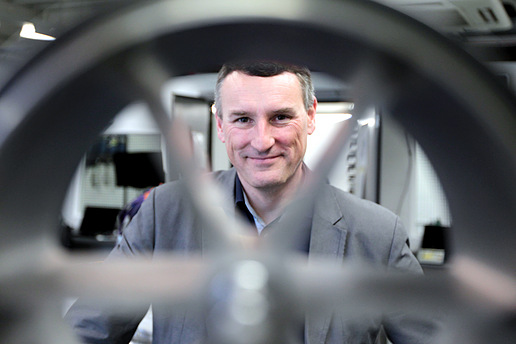 Jon Hilton就飛輪的應(yīng)用發(fā)表觀點(diǎn): Torotrak的研究已經(jīng)證明混合動(dòng)力裝置只適用于城市用車這一理論并不正確。
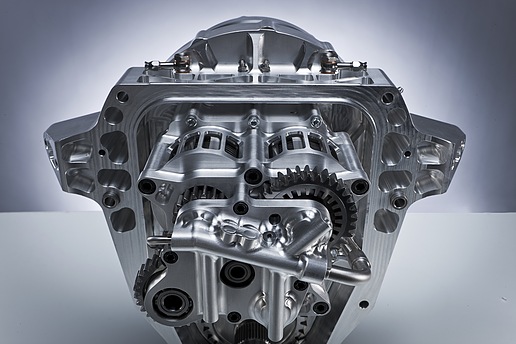 Torotrak快速響應(yīng),離合飛輪變速器(clutched flywheel transmission)