“現有的變速器和動力傳動裝置NVH(噪聲、振動和不平順性)標準已經無法滿足電動車和混合動力車的需要了”,驅動系統設計公司(DSD,英國汽車工程咨詢公司)的總經理Mark Findlay表示。
在接受《汽車工程》的采訪時,Findlay強調,電動車或混合動力車不應當發出齒輪噪音。無論是豪華型還是經濟型量產車,客戶都期待車身工藝(cabin refinement)達到一定水準,而不希望聽到奇怪的噪音。
由于電動車或在電動模式下行駛的混合動力車的車內噪音(background cabin noise)遠低于內燃機汽車,傳統汽車所通用的變速器噪音標準對電動車或混合動力車已經不再適用。更復雜的是,由于電機的運轉速度更快,發出的聲音頻率更高,因此對車主來說聽起來更加明顯,在長途駕駛中可能會讓人感到厭煩。
電動車和混合動力車的NVH問題可能是由齒輪的幾何形狀、變速箱殼體或支撐結構、甚至是裝配套管或周邊支架造的設計所造成的,Findlay解釋說,“所以不能夠說只要優化了齒輪的微幾何特性,或者做了其他某個單一調整,就能夠解決問題”。
應該避免的陷阱
在組件層面上,主要通過峰間傳動誤差(TE,即一對嚙合齒輪在進行統一相關角運動時所產生的偏差)來判斷NVH問題是否是由齒輪設計造成的。Findlay解釋說,這是受到了“一個理想齒型發生的全部偏差”的影響,“是由齒輪運作條件,以及系統中單個組件的剛度所決定的”。
然而最常見的因素是齒輪在負荷狀態下(under load)的嚙合情況。而嚙合又取決于系統中所有要素的瞬時偏向,包括軸與軸承以及承載軸承的殼體。這也就是為什么系統性方法——將動力傳動系統中的所有要素看做是影響NVH的潛在因素的分析方法——對于設計出一個有效的解決方案來說如此重要,Findlay表示。
Findlay還進一步介紹了在創造一個具有較低噪音水平的電動車動力傳動系統時可能會遇到的難點。在系統層面上,由傳動誤差所造成的震動是動力傳動系統發生動態響應的主要原因。變速箱殼與支撐結構扮演了擴音器或者說揚聲器的角色,其設計方式決定了傳動誤差所導致的震動響應,以及隨之產生的噪音。
設計師與工程師需要避免踏入一些陷阱,才能使產品達到令人滿意的NVH水平。
“在變速箱殼的設計中,若只考慮結構要求,可能會放大TE(盡管在目標范圍內)所造成的振動,從而導致產生的噪音超出接受范圍”,Findlay解釋說。另外,如果齒輪的嚙合頻率與變速箱殼或支撐結構的固有頻率一致,則會因為共振而產生更大的噪音
Findlay將DSD稱為這一研究領域的“先鋒”之一,因為DSD從2007年就已經開始采用全系統模擬。Findlay表示,隨著軟件工具越來越強大,了解其優勢與局限性同等重要:“這就相當于一把出色的小提琴,只有在古典提琴手的手中,才能奏出最優美的旋律”。
解決原型問題
無論是何種車輛,若要降低NVH水平,就不可避免地需要加深對基本問題的理解,找出發生NVH問題的根本原因。盡管硬件和軟件供應商進行產品分析的能力正在不斷提升,最終還是需要DSD這樣的專業團隊來開發他們的應用。
在Findlay看來,盡管早期分析能夠排除許多潛在的NVH問題,但是鑒于系統的復雜性,在原型階段仍然可能產生問題。
“我們開發了一種技術,能夠幫助我們盡可能發現在概念階段存在的問題,但是目前它只有在快速響應的應用中才能更好地發揮作用”,Findlay說,“因為存在太多的因變量,模型產生的數據量多于實際時間內能夠評估的數據量。比如你可以生成一副完整的變速箱模態阻尼圖,但是它對應的可能只是多個彎曲情況中的一種”。
因此,要想獲得成功,就需要更加關注具體的要點,也就是說必須對在實際硬件上發現的問題做出響應。Findlay表示,事實證明,這種方式不但具有較高的性價比,而且能夠快速提供解決方案。典型調查“僅需花費幾萬美元”,但卻能夠為整車廠帶來成倍的費用節約。最終的制造成本往往并未增加,而解決方案通常只需要進行細微的工具調整,Findlay補充道。
Findlay援引了一個例子,某一款高端電動車中由于部分齒輪嚙合而導致變速箱發生噪音問題。DSD在六周內為整車廠開發了一套解決方案,將變速箱的關鍵表面速率減少為原來的1/48。
“噪音得到了有效的去除”,Findlay說,“我們使用測量和模擬相結合的方法來改善變速箱的設計,為所有受到影響的齒輪設計了新的宏觀和微觀幾何結構”。現在,這種新的齒輪已經投入量產。
隨著電動系統應用在汽車設計與工程中繼續快速發展,DSD也將繼續進行研究,致力于將常用分析工具轉變為更高效的設計工具,從而在系統層面做到,在硬件生成前的設計階段就能識別并消除不良的相互作用。
Findlay相信,在不久的將來,即使是最小的噪音問題,也會成為高端電動車中無法容忍的瑕疵,而如果能用相對較低的成倍解決問題,將使得經濟型電動車和混合動力車快速縮小與消費者期望之間的差距。
“隨著人們掌握知識的不斷增加,現在已經不應該再存在齒輪噪音了”,Findlay強調說,“工程師的工作重點是在進行預測時將統計制造公差的影響考慮進去,以保證批量生產中使用的所有解決方案的穩定性”。
“Established standards for transmission and driveline NVH are not sufficient for EV and hybrid applications,” says Mark Findlay, Managing Director of DSD (Drive System Design), a U.K.-based automotive engineering consultancy.
There is no excuse for gear noise in either EVs or hybrids, Findlay asserted in an interview with Automotive Engineering. Customer expectations of required levels of cabin refinement do not allow unseemly sounds rising from the “whine cellar” in any production vehicle, whether premium or budget.
Because the background cabin noise in an EV, or a hybrid operating in electric mode, is significantly lower than that of a vehicle with an internal combustion engine, transmission noise levels that were acceptable in conventional vehicles are no longer satisfactory. The issue is further complicated because electric motors operate at much higher speeds and produce higher-frequency tones that are more noticeable to vehicle occupants and can become wearing on longer journeys.
EV/hybrid NVH issues may originate as a result of the gear geometry, the design of the transmission housings or supporting structures, or even the mounting bushings or surrounding sub-frame, explained Findlay. “It would therefore be a mistake to suggest that it can be solved solely through optimization of gear micro geometry, or any other singular approach," he said.
Pitfalls to be avoided
At a component level, the potential contribution to NVH from the gear design is judged predominantly by the peak-to-peak transmission error (TE)—the departure from uniform relative angular motion of a pair of meshing gears. Findlay noted that this is influenced by "all deviations from an ideal tooth form, the conditions under which the gears operate and individual component stiffness in the system."
However, the most common factor is how the gear mesh operates under load. Its behavior is subject to the instantaneus deflections of all the elements in the system, including shafts, bearings, plus the housing which carries the bearings. This is why the system approach—considering every element of the drivetrain as a potential contributor to NVH—is so important to achieving an effective solution, he said.
Detailing the difficulties of creating an acceptably quiet EV drivetrain, Findlay added that at a system level, the vibration caused by the TE acts as the key source of excitation for the dynamic response of that drivetrain. Effectively acting as an amplifier or loudspeaker, the design of the transmission housing and supporting structures dictate the way in which the TE is translated into a vibrational response and subsequent noise.
There are pitfalls to be avoided if satisfactory production levels of NVH are to be achieved by designers and engineers.
“A transmission housing designed with only structural requirements in mind may act to amplify the excitation from TE that is otherwise within targets, creating unacceptable noise," Findlay explained, noting that the effect can be further magnified if the meshing frequency of the gears aligns with a natural frequency of the housing or supporting structures, resulting in resonance and increased noise.
He describes DSD as “one of the pioneers” of this approach, having used whole system simulation since 2007. He said that as software tools have become more powerful, understanding both their strengths and limitations is essential: “It’s analogous to a fine violin that can only be heard at its absolute best in the hands of a classical violinist!”
Tackling prototype issues
Achieving lower NVH levels for any vehicle inevitably requires improved understanding of the underlying issues in order to isolate root causes. While hardware and software providers continually increase the power of their analysis products, it falls to specialist users such as DSD, to develop their application.
In Findlay’s view, while early analysis can filter out many potential NVH issues, due to the complexity of the systems, there may still be issues that arise in the prototype stage.
“We have developed techniques that let us get closer to identifying any issues at the concept stage but at the moment it is best used in fast response applications," he said. "There are so many dependent variables that the model generates more data than can be assessed within realistic timescales. You can generate a complete picture of the modal damping of, say, a transmission case, but it may couple with just one of many bending cases."
Success thus requires a greater focus on the specific area of interest, which inevitably means responding to an issue found in actual hardware. This approach has proven highly cost-effective and quick to provide a solution, he said. Typical investigations “only amount to tens of thousands of dollars” yet can save OEMs many times that amount. Final manufacturing costs are often unaffected and the solutions typically incur just a small tooling change, he added.
Findlay cited the example of a premium EV with a transmission noise arising from certain gear meshes. DSD developed a solution for the OEM within six weeks, which reduced the critical surface velocity of the transmission case by a factor of 48.
“The noise source was eliminated," he said. "A combination of measurement and simulation was used to establish an improved casing design and new macro and micro geometry for all the gears affected." This gear geometry is now in volume production.
As applications of electric systems continue to burgeon within automotive design and engineering, ongoing research at DSD aims to turn commonly used analysis tools into more effective design tools, able to identify and eliminate undesirable system level interactions reliably at the design stage, before hardware exists.
In the immediate future, Findlay believes that even the smallest noise concern will become unacceptable on premium electrified vehicles, while the relatively low cost of overcoming any issues could see budget EVs and hybrids quickly closing the gap.
“With the level of knowledge available today, there is no excuse for gear noise," he asserted. "The priority for engineers is to integrate the effects of statistical manufacturing tolerances into the predictive processes to ensure the robustness of all solutions under series production conditions.”

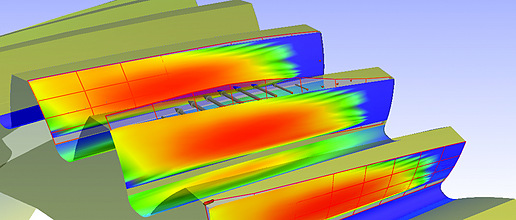 負荷狀態下(under load)齒輪嚙合的模擬情況,取決于系統中所有要素,包括軸和軸承的瞬時偏差。
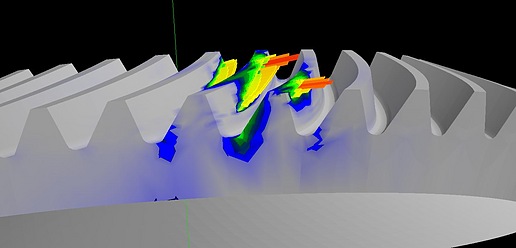 DSD's pursuit of lower NVH involves, at a component level, the potential contribution from the gear design, which is judged mainly by peak-to-peak transmission error.
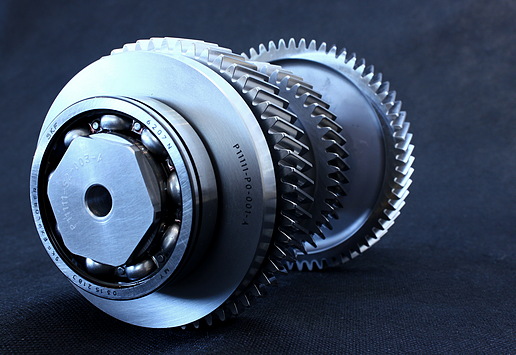 Transmission noise in both EVs and hybrids can be caused by certain gear meshes.
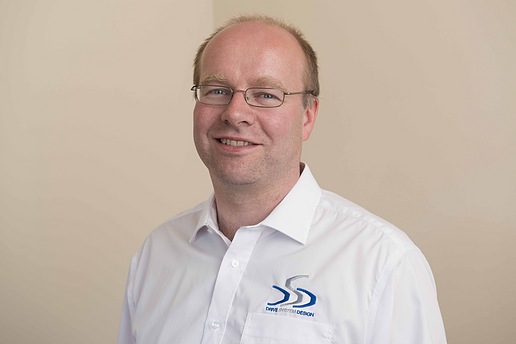 Mark Findlay of specialist consultancy DSD, says there is no excuse for gear noise in EVs or hybrids.