目前兩所英國頂尖科技大學正在牽頭進行的兩個研究項目,一是通過設計來降低催化轉換器的成本,另一個是通過更先進的渦輪增壓與燃燒技術來降低發動機的排放。
在倫敦的帝國理工學院,化學工程學院的研究員Benjamin Kingsbury博士正在領導團隊開發生產流程,以達到大批量生產一款新型催化轉換器的目的,旨在提高汽車燃油效率,并降低生產成本。
而巴斯大學動力傳動系統與車輛研究中心(PVRC)正在開展一個由政府和企業界共同投資的“綠色汽車”項目,該項目總資金達到1.33億英鎊, 由該研究中心新設立的高級推進中心(APC)負責實施。PVRC中心曾主導研發了福特汽車1.0-L I3 EcoBoost發動機。APC由英國汽車協會與行業共同建立,匯聚了先進傳動技術領域的優秀人才,研究領域包括改進燃油效率、降低碳排放、以及將技術轉化為產品等等。
催化劑載體的改進
Kingsbury博士與Kang Li教授、Zhentao Wu博士一起著手進行催化轉換器的研發,后兩位教授也是帝國理工學院化學工程學院的研究員。早期的測試顯示,這項技術可將燃耗降低3%左右,而二氧化碳的排放也會隨之降低。
Kingsbury博士表示,他們研發的催化轉換器設計可以減少80%的貴金屬(鉑族元素)用量,這將大大降低生產成本。此外,該設計還能減輕整個壽命周期內的材料劣化。通常,稀有金屬占到一個催化轉換器成本的70%。而在10萬公里(161,000mi)的測試中,新系統只顯示出4%的劣化率,而一個普通的催化轉換器的材料劣化率則高達35%。
帝國理工學院的一位發言人表示,Kingsbury博士已經就該系統與數家汽車公司進行了接觸。同時,他還成立了一家帝國理工學院下屬的創業公司,負責對系統進行市場推廣。
Kingsbury博士表示,他們并未對汽車中的“Cats(三元催化器)”的基本設計做重大改變,因為這項技術在上世紀70年代中期就已經成為美國輕型汽車排放控制系統的一部分,并在十年后被普及到歐洲。他們所做的,是在設計中加入了閉環反饋機制,對原設計進行了提升,通過將氮氧化物轉化成氮氣和水,大大降低了顆粒物的排放。
“我開發的原型可以降低汽車的運行成本,因為它的燃油用量降低了,”Kingsbury表示。“它可以幫助汽車制造商降低成本,節約燃油成本,并最終降低二氧化碳的排放。”
Kingsbury說,他還對一個現有的制造工藝進行了改進,以優化轉換器的蜂窩狀基材的結構。這一改進的原理,是通過增加基材表面積來提高稀有金屬的分布效果,并減少其用量。增大基材表面積還可以增強系統的化學反應,降低排氣背壓。
帝國理工學院的一篇新聞稿稱,Kingsbury博士已經獲得英國皇家工程院的資助,用于該系統的市場推廣。
與福特合作的ACTIVE項目
作為福特ACTIVE(先進渦輪增壓燃燒內嵌式可變氣門機構發動機)項目的11名研究合作伙伴之一,巴斯大學的PVRC獲得了120萬英鎊的投資。該項目的中心研究項目是1.0-L EcoBoost發動機,目前該發動機已經應用到福特的數個車型上。
這一項目的出發點是為幫助加速下一代低碳技術推出市場,這項技術旨在通過先進渦輪增壓和燃燒系統的開發,輔以尖端的可變氣門機構技術,實現降低二氧化碳排放的目標。
PVRC的汽車工程學講師Sam Akehurst博士解釋說:“PVRC在福特的ACTIVE項目中的主要任務是研究新型渦輪增壓器和新型可變氣門正時技術的基本性能與互動機制。我們將研究由于排氣閥開啟時每個氣缸的排空所造成的發動機排氣脈動氣流和渦輪增壓機構的相互作用機制。”
這一研究將通過兩種方式完成:第一種是直接在發動機上進行研究,第二種是借助PVRC正在研發的一種獨特的“熱脈動渦輪增壓氣站(hot pulsating turbocharger gas stand)”進行研究。這兩種方法都能支持高級模擬技術的驗證,以幫助福特公司了解怎樣才能最好地利用這些新科技。
“研究的目的是同時優化發動機和渦輪增壓器的性能,從而使發動機扭矩、燃油經濟性和瞬態響應的整體狀況都達到最佳水平。” Akehurst博士告訴《汽車工程》期刊的記者。
巴斯大學工程與設計學院院長兼PVRC主任Gary Hawley教授補充道:“我們對該項目的參與延續了我們對EcoBoost發動機研發的巨大貢獻。”他表示,這些成果都是建立在巴斯大學在降低汽車發動機二氧化碳排放方面,特別是在模擬復雜技術與系統的性能和表現方面的實力之上的。
福特的ACTIVE研究項目的參與方包括4所在汽車技術研究方面居于領先地位的英國大學(巴斯大學、拉夫伯勒大學、布拉德福德大學和諾丁漢大學),部件和設備供應商,如大陸、舍弗勒、UEES, Cambustion、AP Raicam,以及像英國石油(BP)這樣的能源公司。
Reducing the cost of catalytic converters through design, and reducing engine-out emissions using advanced turbocharging and combustion techniques, are the focus of recent U.K.-based research projects spearheaded by two leading technical universities.
At Imperial College, London, Dr. Benjamin Kingsbury, a Research Associate in the Dept. of Chemical Engineering, is heading a project to develop a production process for high volume manufacture of a new catalytic converter aimed at both improving vehicle fuel consumption while offering production cost savings.
And the University of Bath’s Powertrain and Vehicle Research Center (PVRC), which had a significant role in the development of Ford’s 1.0-L I3 EcoBoost engine, is taking part in a £133 million government-and-industry-backed “greener cars” program. The work is being carried out by the new Advanced Propulsion Center (APC), a joint industry and government body established by the U.K. Automotive Council to become a hub of excellence for advanced powertrain technology, including improvements to fuel efficiency and reduction in carbon emissions — and to migrate technologies into products.
Catalyst substrate improvements
Dr. Kingsbury developed the catalytic converter together with Prof. Kang Li and Dr. Zhentao Wu, who are also with Imperial College’s Dept. of Chemical Engineering. Early tests indicate a potential fuel consumption benefit of around 3%, with a complementary reduction in CO2 emissions.
Dr. Kingsbury said the catalytic converter’s design uses up to 80% less precious metals (platinum group), which brings significant cost reduction. The design is also said to suffer less through-life degradation. Typically, rare metals represent up to 70% of the cost of a catalytic converter. Laboratory tests indicate a 4% deterioration over 100,000 km (161,000 mi) for the new system, compared to a claimed 35% deterioration for a regular catalytic converter.
A spokesperson for Imperial College says Kingsbury has been in contact with several auto industry companies regarding the new system. He has initiated an Imperial start-up company to market it.
According to Kingsbury, the fundamental design of automotive "cats" has not significantly changed since the technology became an integral part of light-vehicle emissions control systems in the mid-1970s in the U.S., and in Europe about a decade later. The adoption of closed-loop feedback capability improved the original design by markedly reducing emission of particulates via conversion of NOx into nitrogen and water.
“The prototype I have developed could make cars cheaper to run because they use less fuel," Kingsbury said. "It could potentially help manufacturers to reduce their costs and it could also save on fuel costs and ultimately lead to reduced CO2 emissions.”
He explained that he has advanced an existing manufacturing process to improve the structure of the catalytic converter’s honeycombed substrate. The effect is to increase the surface area, which facilitates the rare metals being distributed more effectively and fewer being required. The increased surface area also results in an enhancement of the system’s chemical reaction process. Exhaust back pressure is also reduced, he claimed.
Dr. Kingsbury has received funding from the Royal Academy of Engineering to take his system to the marketplace, according to a release from Imperial College.
Project ACTIVE with Ford
At the University of Bath, the PVRC has been awarded £1.2m to carry out research as one of Ford’s 11 partners on Project ACTIVE (Advanced Combustion Turbocharged In-line Variable Valvetrain Engine), which centers on the 1.0-L EcoBoost, now powering several of the company’s models.
The basis of the project is to help accelerate the introduction of future generation low-carbon technologies aimed at reducing CO2 via advanced turbocharging and combustion system development, complemented by highly sophisticated variable valvetrain technology.
Dr. Sam Akehurst, Lecturer in Automotive Engineering at the PVRC, explained: “The PVRC's role in the Ford-led ACTIVE program is to investigate the fundamental performance and interactions of a new type of turbocharger with new variable valve timing technology. We will study how the turbocharger interacts with the pulsating flow in the engine exhaust due to the blow-down events that occur from each cylinder as the exhaust valve opens."
This will be done in two ways—on engine and by utilising a unique hot pulsating turbocharger gas stand that the PVRC is developing. Both of these methods will support the validation of advanced simulation techniques aimed at assisting Ford in making decisions on how best to use the new technologies.
"The objectives are to optimise the performance of the engine and turbocharger in unison to achieve best performance in terms of overall engine torque, fuel economy and good transient response,” Dr. Akehurst told Automotive Engineering.
Prof. Gary Hawley, Dean of the Engineering and Design faculty, and Director of the PVRC, added: “Our involvement in this project continues the high impact contribution that we made to the development of the EcoBoost engine.” He said it builds on the University’s capability to emulate the performance and behavior of complex technologies and systems to drive down the car-engine CO2 footprint.
Along with Ford, the ACTIVE project involves four of the U.K.’s leading automotive research universities (Bath, Loughborough, Bradford, and Nottingham), as well as component and equipment suppliers including Continental, Schaeffler, UEES, Cambustion, AP Raicam, and the energy company BP.
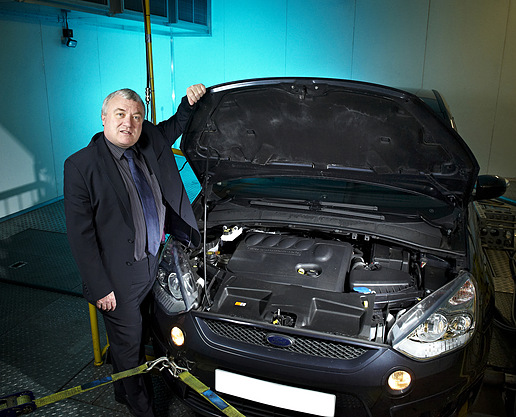 巴斯大學動力傳動系統與車輛研究中心主任Gary Hawley教授
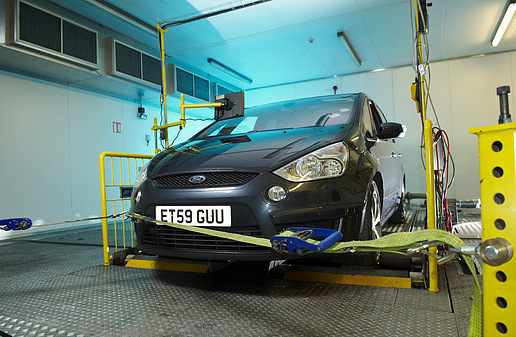 A test cell at the University of Bath's research facility.