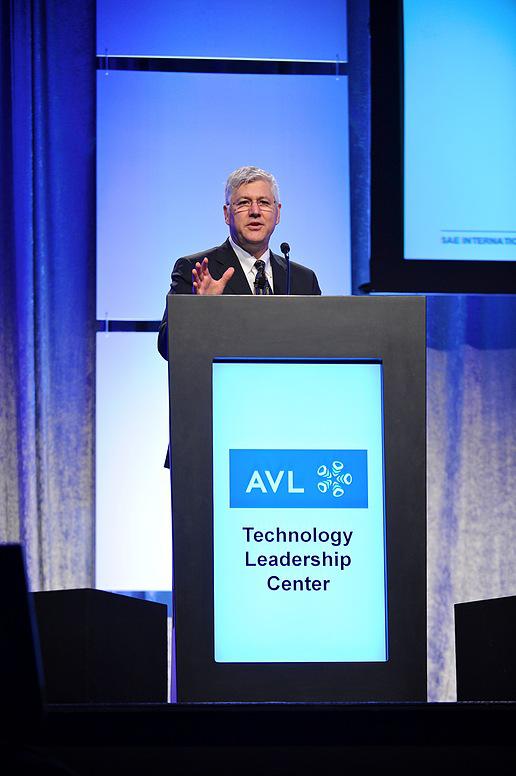
Robert Bienenfeld,美國本田汽車公司環境與能源戰略部的助理副總裁Robert Bienenfeld,在SAE 2014全球汽車年會的“由法規驅動的動力系統變革”分論壇上發表了講話。
乘用車和商用車行業正在努力達到政府關于排放和燃油經濟性的要求,同時消除一些意想不到的潛在問題。
分別由美國國家公路交通安全管理局(NHTSA)、美國國家環境保護局(EPA)、美國加州空氣資源局(CARB)制定的企業平均燃油經濟性(CAFE)、溫室氣體排放和零排放車輛的相關規定,讓工程師和產品規劃人員異常忙碌。
“政府能夠通過稅收和激勵機制影響消費者的行為,同時也能夠通過法律法規和激勵機制來改變汽車制造商的做法”,美國豐田汽車公司環境與能源戰略部的助理副總裁Robert Bienenfeld,在于美國底特律舉行的SAE 2014全球汽車年會上的“由法規驅動的動力系統變革”分論壇上對觀眾這樣說道。
Bienenfeld是SAE 2014全球汽車年會在科博中心(Cobo Center)舉辦的“由法規驅動的動力系統變革”圓桌會議的嘉賓之一,此會議屬于年會上舉辦的AVL系列技術論壇(AVL Technology Leadership Center)中第二天的活動。
“我們希望看到,無論是對消費者還是對汽車制造商,亦或是對整個社會,法規都是公平的,也就是說法規應該在不造成不良后果的情況下,實現人們所期望的社會效益”,Bienenfeld說。
Bienenfeld認為,針對乘用車制定的燃油經濟性法規是公平的,“他們使用戶能夠自由選擇想要的車,汽車制造商也可以在各自的細分市場進行競爭。這些法規對所使用的不同技術一視同仁。在這個相對公平的競技場上,有幾十種不同的技術相互競爭,涌現出巨大的創新力。”
但當提到針對皮卡的燃油經濟性規定時,Bienenfeld的評價就顯得不那么順耳了:“我們看到針對卡車的規定是不平衡的——對小卡車更嚴格,對大卡車更寬松。這是一種很明顯的傾向。我認為,法規應該一視同仁,但事實卻并非如此——至少未來五年不是。這造成的結果是大卡車享有補貼,但汽車和小卡車沒有,這對OEM的競爭來說不是件好事。坦白講,這對消費者也沒什么好處。”
在問答環節,美國環保局交通和空氣質量辦公室主任Christopher Grundler就被提問,要求他就管理的公平性做出評價。
“Robert(Bienenfeld)和我就對卡車管理的公平性這個問題至少已經爭論了三年了”,他說,“當然,怎么看待公平和人們所處的立場有關。坦白講,在我們共同制定了這些標準之后,我們很確信,大型卡車的制造商將無法跟上乘用車進步的腳步”。
“所以我們對前幾年的政策進行了調整,來回應他們提出的數據和觀點。那么這樣做是否是不公平的呢?對本田這種不生產大卡車的公司來說顯然不太有利。但是對于那些生產大卡車的公司來說,我們不做這個改變,他們才會認為是不公平的。”
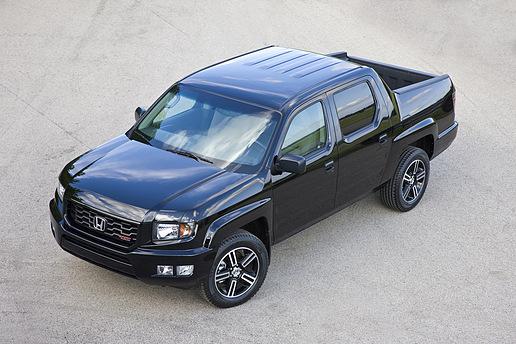
本田生產的唯一的全尺寸皮卡車型將于2014年年中停產。全新的Ridgeline皮卡將在兩年內上市。
由在本田美國阿拉巴馬有限公司生產的全尺寸皮卡Ridgeline將于2014年年中停產。全新的Ridgeline皮卡將在兩年內上市。
另一項影響乘用車的規定是,要求汽車制造商提供一定數量的零排放汽車(ZEV)(通過插電式混合動力車,電池動力車或燃料電池車來完成),使其達到銷售額的一定百分比。除了加州以外,這項有關ZEV的要求已經被紐約州、新澤西州、佛蒙特州、馬里蘭州、馬薩諸塞州、俄勒岡州、康涅狄格州、羅德島和緬因州所采納。
Bienenfeld 說:“這10個州的銷售額占美國總銷售量的30%以上。對于某些公司,這個比例可以達到40%,甚至超過50%”
Bienenfeld認為應該重新思考生產ZEV的比重,因為它與插電式混合動力車(PHEV)有關。“市場上現在已經有一些PHEV了,我們可以看到,它們每年在電動模式下行駛的里程數比你想像的更多。”比南菲爾德之前在接受《汽車工程》訪問時說。
政府法規也在悄然改變著商用車的生產開發的整體情況,從重型皮卡、垃圾車,到校車和拖拉機拖車都是如此。
康明斯公司發動機工程業務部副總裁Jennifer Rumsey說:“從今年開始,美國有史以來第一次將商用車也列入了溫室氣體排放的監管范圍。”
法規的第一個階段將不同應用中的共同組件發動機和整車進行了區別對待。 “這樣來監管一個復雜的行業相對來說比較簡單而有效,而且我們已經開始看到這樣做的好處了。” Rumsey說。
2014年2月宣布的法規的第二階段“旨在推動更深入、更顯著的進步”, Rumsey補充說,“在第二階段必須關注到第一階段所沒有涉及到的技術,比如變速箱和拖車的相關技術,并且要考慮如何充分利用整合這些組件所帶來的優勢”。
作者: Kami Buchholz
Robert Bienenfeld, Assistant Vice President, Environmental and Energy Strategy at American Honda Motor Co., Inc., speaks during the "Regulatory Driven Impacts On Powertrain" session at SAE 2014 World Congress.
The passenger vehicle and commercial vehicle industries are working to meet government regulations for emissions and fuel economy while ironing out potential unintended issues.
CAFE (corporate average fuel economy), greenhouse gas emissions, and zero-emission-vehicles mandates from NHTSA (U.S. National Highway Traffic Safety Administration), the U.S. EPA, and CARB (California Air Resources Board), respectively, are keeping engineers and product planners busy.
“Government can affect what consumers do with taxes and incentives, and government can affect what automakers do with rules, regulations, and incentives,” Robert Bienenfeld, Assistant Vice President, Environmental and Energy Strategy at American Honda Motor Co., Inc., intoned to an SAE 2014 World Congress audience in Detroit.
Bienenfeld was one of the panelists participating on the "Regulatory Driven Impacts On Powertrain" program in the AVL-sponsored ballroom at Cobo Center on day two of World Congress activities.
“We would all like to see that regulations be fair amongst consumers and that they be fair amongst automakers and be fair to society, meaning the rules should achieve the desired social benefits without unintended consequences,” Bienenfeld said.
Fuel-economy regulations for passenger cars are fair, according to Bienenfeld: “They allow customers to choose the cars freely, and automakers can compete within their segments. The regulations are indifferent as to what technologies we apply. And there’s an enormous amount of innovation with literally dozens of technologies competing on a relatively fair battlefield.”
But Bienenfeld’s words were less flattering when he gave his evaluation of fuel-economy mandates on pickup trucks: “What we see is that trucks have slanted regulations—more stringency for smaller trucks and less stringency for larger trucks. That’s a given. But the line should be parallel, and it’s not—at least for the next five years. As a result, it looks like large trucks are subsidized by cars and smaller trucks, which is not good for OEM competition. And frankly, it’s not the best deal for consumers either."
Christopher Grundler, Director of the EPA's Office of Transportation and Air Quality, was asked to comment on mandate fairness during the audience question-and-answer session.
“Robert and I have been arguing about this for at least three years now—this fairness question with respect to trucks," he said. "Of course, fairness is dependent on where one sits. The honest answer is that the manufacturers of large trucks were pretty convincing at the end of our collaboration of creating these standards that they would not be able to meet the same pace of improvement as passenger cars.
“So we changed the slope in the early years to respond to the data and the arguments they presented. So is that unfair? Obviously unfair to Honda, which doesn’t make those large trucks. For the people who do make those large trucks, they thought it would be unfair if we didn’t make this change.”
Production of Honda’s only full-size pickup model ends in mid-2014. An all-new Ridgeline pickup truck will reach the marketplace in less than two years.
Current production of the Honda Ridgeline ends in mid-2014. The full-size pickup (Ridgeline Sport shown) is built exclusively by Honda Manufacturing of Alabama LLC in Lincoln, AL. An all-new Ridgeline will be in the marketplace in less than two years.
Another regulation affecting passenger vehicles requires automakers to deliver a certain number of ZEV credits (via some portion of plug-in hybrid vehicles, battery-electric vehicles, or fuel-cell vehicles) as a percentage of sales. In addition to California, the ZEV mandate has been adopted by the states of New York, New Jersey, Vermont, Maryland, Massachusetts, Oregon, Connecticut, Rhode Island, and Maine.
“And those 10 states count for more than 30% of U.S. sales. For some companies that can be as much as 40% or even 50% of sales,” said Bienenfeld.
A re-thinking of the ZEV credits as it relates to PHEVs is needed, according to Bienenfeld. “Now that there have been some (PHEVs) in the market, we can see that plug-in hybrid vehicles deliver a lot more annual electric miles than you would think,” Bienenfeld told Automotive Engineering magazine.
Government regulations are also changing the product-development landscape for commercial vehicles, which range from heavy-duty pick-up trucks, garbage trucks, and school buses to tractor-trailers.
Said Jennifer Rumsey, Cummins Inc.’s Vice President of Engineering - Engine Business: “Starting this year for the first time ever in the U.S., commercial vehicles are regulated for greenhouse gas emissions.”
Phase one of the regulation treats the engine, which is a common component across many of the different applications, and the vehicle itself separately. “It’s a relatively simple and effective way of regulating a complicated industry, and it’s already providing benefits,” said Rumsey.
Announced in February 2014, phase two of the regulation “is intended to drive further and more significant advancements,” said Rumsey, adding, “It must address additional technologies that aren’t included in phase one, like transmissions and trailers, and consider how to capture adequately the benefits of integrating these components together.”
Author: Kami Buchholz