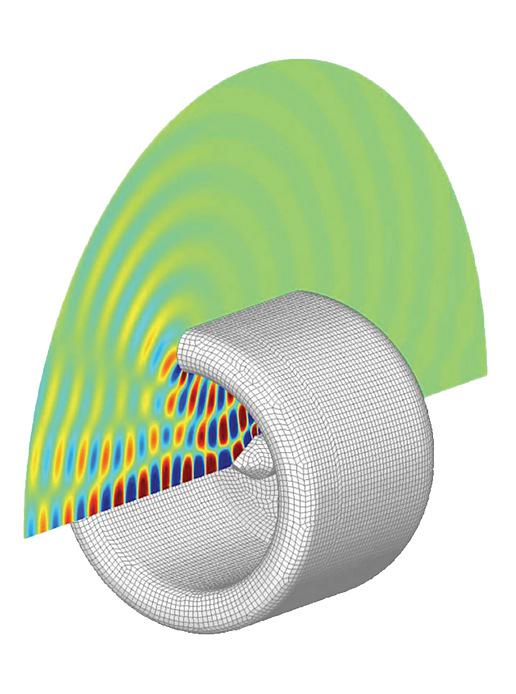
聲學仿真軟件可以描繪出噴氣式發(fā)動機主要部件發(fā)出的聲響,比如發(fā)動機艙、渦輪轉(zhuǎn)子等。
在飛機的設計中,提高燃油經(jīng)濟性、降低排放量的要求日趨緊迫,力度之大以至于忽視了飛機設計過程中另一重要因素:噪音。
噪音同燃油經(jīng)濟性和減排問題一樣,是限制飛機飛行的重要因素。全球各地的機場對起飛和降落小時數(shù)都進行了限制,以此保護機場周圍地區(qū)不受過多的飛機噪音干擾。而同時,搭乘飛機出行的普及和全球經(jīng)濟對紅眼航班的依賴和需求的不斷增加,促使航班的數(shù)量正不斷持續(xù)增加。
當全世界的政府都表示他們愿意使用各種手段限制飛行時間,以此來管理機場的噪音,例如實行夜間禁飛、加收費用、限制噪音水平、采取限額制度等措施,而航空產(chǎn)業(yè)也正著手設計更安靜的機型來應對噪音問題。
在制造商能夠生產(chǎn)出更安靜的飛機之前,他們必須向工程師提供必要的設計流程與技術工具。以現(xiàn)有發(fā)展模式大多數(shù)的生產(chǎn)商都沒有充分考慮聲學方面對此的影響,以至于在生產(chǎn)過程中無法大幅度減少噪音的問題。因此從一種新機型概念誕生伊始,航空工程師就必須要權衡設計創(chuàng)新所帶來的影響,權衡噪音、燃油經(jīng)濟性以及其他所有其他因素。
噪音反作用
20世紀70年代,人們就已經(jīng)開始憂慮飛機噪音過多,因而此后,相關規(guī)定也變得越來越嚴苛。
超音速協(xié)和噴氣式客機大概就是噪音反作用最有名的受害者了。由于噪音太大,歐洲與北美有關當局允許這款英法聯(lián)合機型降落的地點就相對較少。服役30年后這款機型最終退出歷史舞臺,這中間有很多因素影響,不過權威部門的限制也是導致這款機型被停止開發(fā)的原因之一。
房屋業(yè)主的抱怨致使美國國會于1968年授權美國聯(lián)邦航空局(FAA)對新機型設計制定噪音標準。FAA按照噪音標準將飛機劃為三個等級(階段),并安排計劃逐步淘汰噪音最大的機型。
歐洲航空安全組織(Eurocontrol)預測到2018年,歐洲空中交通將增加16%。歐盟國家對II階段的飛機采取了嚴格的控制措施,并考慮提出議案,淘汰在歐盟各機場服役的噪音最大的III 階段機型。
根據(jù)歐盟的信息顯示出,自20世紀70年代起飛機的安靜程度已經(jīng)提升了75%,但即便如此,以上措施的采取也勢在必行。
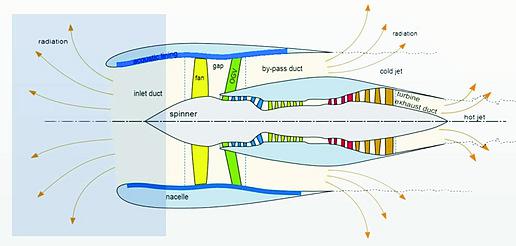
一臺噴氣式發(fā)動機在進氣和排氣時的聲學曲線
目標:安靜高效
即使對于飛機噪音的顧慮一直存在,但是航空燃油的成本又不停地增加,所以制造更加高效的飛機就成了當務之急。但燃油經(jīng)濟性措施與降噪之間存在矛盾,因此噪音控制也顯的尤為重要。
例如,反向旋轉(zhuǎn)的引擎消耗的燃油比傳統(tǒng)引擎更少,但產(chǎn)生的噪音更大。過去,讓飛機部件和機身更加安靜就意味著要靠增加重量來減少震動。不過現(xiàn)在,航空制造企業(yè)正在不斷試驗使用復合材料和高強度金屬來減少重量。不但質(zhì)量輕了,震動也相應的減少了。
不過,平衡噪音和燃油經(jīng)濟性也不是不可能實現(xiàn)的。工程師克服了更大的困難,例如除了使用更新更輕的材料之外,還透過對機身、發(fā)動機艙的設計以及絕緣分布等方式來降低飛機的噪音。
但是這樣也是有條件的。工程師必須要在設計流程進入原型機階段之前,就早早的能夠判斷出噪音減少的效果應用。如果到了后期再做更改那代價就會變的非常高昂,所以如果工程師的設計即使只完成了50%,他們手里的降噪選擇也是十分有限。
同樣,如果不加測試就將降噪的想法轉(zhuǎn)換成設計,那么在原型機階段有可能會發(fā)現(xiàn)這個設計妨礙飛機性能,或者發(fā)現(xiàn)結果得非所愿。為了在流程初期創(chuàng)新的同時將犯錯風險降到最小,工程師就需要工具來模仿單個組件的噪音,比如發(fā)動機艙的噪音,這樣他們才能看到新設計有什么效果、整個飛機的噪音又是如何。
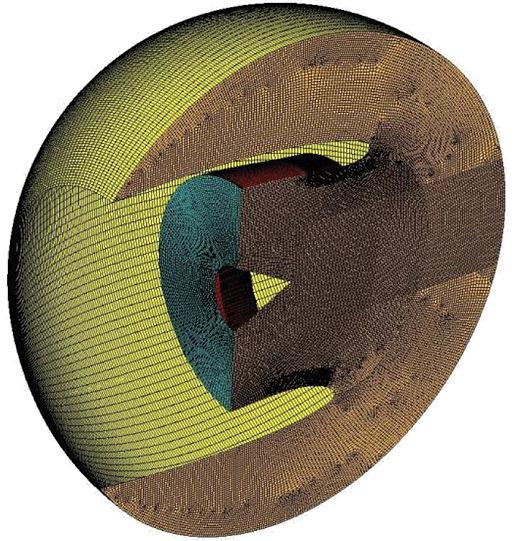
噴氣發(fā)動機的分析網(wǎng)格提供了基礎聲學分析。
聲學仿真軟件工具應用于航空業(yè)已經(jīng)20年了,但即使是這樣,還是有幾家公司在早期設計階段沒有很好地將它融合到流程中。
不過空中客車和羅羅都是例外。他們1999年與FFT公司(Free Field Technologies)(現(xiàn)在叫做MSC軟件公司)合作開發(fā)了Actran聲學仿真軟件,可以模擬整個系統(tǒng)的聲音,而且能同時處理發(fā)動機噪音和機身噪音(由機身周圍的湍流引起)。
但最早的聲學仿真軟件太過復雜,不是每一個工程師都能掌握。是空客能過15年以來不斷改進,將這個軟件進行了“大眾化”。如今,這個聲學仿真軟件已經(jīng)完全融入了他們的設計流程中。
空客的任何一位工程師都可以在設計流程中運用聲學仿真軟件測算。他們可以利用Actran軟件對諸如速度、溫度、高度等參數(shù)值進行變更測算,并獲得最終結果報告。因此空客工程師在流程初期就可以大致知道哪一個設計最有希望。
設計進行到尾聲,他們也可以調(diào)整參數(shù)來獲得最佳性能。這個系統(tǒng)可以消除猜測臆想和不必要的重復,通過不斷模擬仿真不同想法和確認設計的正確性,避免設計晚期犯下代價高昂的錯誤。
不管哪家公司在聲音管理方面遇到什么樣的挑戰(zhàn),至少空客向他證明了將聲學仿真應用貫穿于整個設計流程是可行的。這一方法給工程師提供了他們需要的聲學仿真信息,并通過這些有效信息來制造噪音更低的機型。業(yè)界需要更安靜的飛機來促進成長,但如果成長的代價是導致機場周圍居民生活質(zhì)量下降,那這也實現(xiàn)不了。
Jean-Louis Migeot博士和Jean-Pierre Coyette博士為《航天工程》撰寫了此文,他們是一家MSC軟件公司——FFT(Free Field Technologies)的聯(lián)合創(chuàng)始人。
Acoustic simulation software can depict the sound profiles of key jet-engine assemblies such as the nacelles and turbine spinner.
Greater fuel efficiency and low emission requirements have grown into such an urgent imperative in aircraft design that it often overshadows an equally significant factor in air travel—noise.
Noise is as much a limiting factor on air travel as fuel efficiency and reduction of emissions. Airports around the world restrict takeoff and landing hours to protect surrounding areas from excessive jet aircraft noise. This is at the same time that air travel’s popularity and the world economy’s reliance on overnight air freight are increasing and driving demand for more flights, not fewer.
The aerospace industry has responded to the noise challenge by designing quieter aircraft as governments all over the world have demonstrated they are willing to manage airport noise by restricting flight times in many different ways, such as curfews, surcharges, noise level limits, and quotas.
Before aerospace manufacturers can produce quieter aircraft, however, they must provide engineers with the necessary design processes and technology tools. The current development model in effect at most manufacturers does not fully consider acoustics until too late in the process to achieve significant noise reduction. To balance noise and fuel economy with all of the other considerations that go into designing aircraft, aerospace engineers must be able to weigh the effects of their design innovations from a new aircraft’s inception.
The noise backlash
Concerns about excessive aircraft noise surfaced in the 1970s and have spurred increasingly stringent regulations ever since.
The supersonic Concorde jet liner is probably the most famous victim of the noise backlash. The British-French aircraft was restricted to relatively few landing sites by authorities in Europe and North America concerned about excessive noise. Though many factors influenced the aircraft’s demise after almost 30 years in operation, those restrictions contributed to decisions not to develop a new version.
Homeowner complaints led the U.S. Congress to give the U.S. FAA authority in 1968 to set noise standards for new airplane designs. The FAA designated three generations (stages) of aircraft by noise level and laid out a schedule for phasing out the loudest.
In Europe, where the air travel safety agency Eurocontrol predicts a 16% increase in air travel by 2018, European Union nations have strict controls on Stage II aircrafts and are considering a proposal to phase the loudest Stage III aircrafts out of fleets that service EU airports.
All this comes in spite of the fact that aircraft have become 75% quieter since the 1970s, according to the European Union.
The acoustic profile of a jet engine’s fan intake and exhaust is shown.
The goal: quiet efficiency
Even as noise concerns were swirling around air travel, the seemingly endless increases in aviation fuel costs made more efficient aircraft an immediate necessity. This is significant to noise control because fuel-efficiency measures can conflict with efforts to make planes quieter.
Counter-rotating jet engines, for example, consume less fuel than conventional engines but they’re also louder. Making parts and fuselages quieter has traditionally meant adding weight to reduce vibration. Today, however, aerospace companies are experimenting with composites and high-strength metals to reduce weight. Lightness can increase vibrations.
Nevertheless, it isn’t impossible to balance noise and fuel efficiency. Engineers have surmounted higher obstacles. Even with new and lighter materials, there are opportunities to reduce noise through the shape of the fuselage, engine nacelle design, and insulation distribution, for example.
There’s a proviso, however. Engineers must be able to determine how their noise-reduction adaptations will perform long before the design reaches the prototype stage. Late-stage changes are prohibitively expensive, so engineers have limited options for noise control if a design is even 50% finished.
By the same token, incorporating a noise-saving idea into a design without testing it runs the risk of finding out during prototyping that it affected the aircraft’s performance, or didn’t yield the results it was supposed to. To innovate early in the process while minimizing the risk of costly mistakes, engineers need tools that can simulate the noise profile of a single component, such as the nacelle, so they can see the immediate effect of their innovation, and the overall noise profile of the aircraft.
The analysis mesh of a jet engine provides the basis for acoustic analysis.
Acoustic simulation software tools have been in the aircraft industry for 20 years, though at all but a very few companies they have been poorly integrated into early stage design processes.
Airbus and Rolls-Royce are among the exceptions. They teamed up in 1999 with Free Field Technologies (now an MSC Software company) to develop Actran acoustic simulation software that can model entire systems and handle both engine noise and airframe noise (as induced by turbulent flows around the aircraft).
The earliest acoustic simulation software was too complex for every engineer in the process to learn, but Airbus has worked steadily over the past 15 years to “democratize” it. Today, acoustic simulation is fully integrated into its design processes.
Any engineer in Airbus’ design process can initiate an acoustic simulation calculation. They change values for parameters such as speed, temperature, and altitude in a simulation model and submit it for calculation. Actran runs the simulation and reports the results to engineers. Airbus engineers can use Actran at the beginning of the process to get a broad idea of which design is the most promising.
As they get closer to a final design, they can adjust the parameters for optimal performance. This system eliminates guesswork and needless iteration. It avoids costly late-stage errors through constant simulation that reveals when an idea is going awry.
Whatever a company’s sound management challenges, Airbus shows that it’s possible to infuse acoustic simulation into design processes from beginning to end. This approach gives engineers the acoustic simulation intelligence they need to create quieter aircraft. The industry needs quieter aircraft so it can grow, which it won’t be allowed to do if it reduces the quality of life around airports.
Dr. Jean-Louis Migeot and Dr. Jean-Pierre Coyette, co-founders of Free Field Technologies (FFT), an MSC Software company, wrote this article for Aerospace Engineering.