十多年來,涉足自動駕駛汽車的各公司均遇到了遠超最初預期的難題。因此,該領域遍布著半途而廢的項目。
盡管競爭對手接連折戟,特斯拉本身也屢次未能如期推出自動駕駛出租車,但其決心似乎并未動搖。在加州伯班克華納兄弟影城舉辦的“We, Robot”發布會現場,Elon Musk發布了兩款專用無人駕駛出租車,并公布了其最新上市時間。
第一款車型為CyberCab兩座無人駕駛出租車。這款小型自動駕駛汽車融合了Cybertruck電動皮卡和本田CR-Z的設計,計劃于2026年投產。然而,Musk也承認其設定的投產時間往往過于樂觀。目前為止,特斯拉未能如期投產的項目數量遠超其如期投產的項目。
SAE有幸獲得了試乘CyberCab的機會。其小巧的體型和鷗翼式車門在特斯拉于華納兄弟影城搭建的模擬城市場景中顯得十分和諧。車內空間對兩名乘客來說足夠寬敞,座椅也相當舒適。片場環境使車輛能夠按照既定路線行駛,也沒有真實城市的喧囂與危險,因此車輛的方向盤和踏板理論上并不存在多大風險。但是,這樣的設計仍然令一些有意試乘的觀眾望而卻步。
大屏幕上播放著科幻電影片段與80年代的經典配樂,為CyberCab營造了一個展示技術潛力的舞臺。然而,截至目前,特斯拉尚未正式推出任何一款自動駕駛汽車。
CyberCab完全依賴攝像頭視覺技術,這是特斯拉備受爭議的一項決策。大多數致力于自動駕駛技術研發的公司都會結合使用攝像頭、雷達和激光雷達進行導航。然而,Musk在向粉絲宣布CyberCab的售價將低于3萬美元的同時,還強調,“這款車完全依賴人工智能視覺技術,因此不需要昂貴的設備。”
喬治梅森大學梅森自動駕駛與機器人中心主任Missy Cummings教授在接受SAE采訪時表示:“我認為僅憑計算機視覺技術,不可能實現穩定可靠的自動駕駛,甚至駕駛輔助功能。”
Cummings表示:“我認為本次發布會毫無新意。特斯拉要想在其描述的網絡環境中實現真正的自動駕駛,至少還需要十年的時間。不過我很喜歡特斯拉的20座廂式車Robovan,我認為它應該重點研究該項目。從經濟效益的角度而言,這種車型的研發更具意義,而且在短期內可能更容易成功(前提是特斯拉不再堅持完全依賴視覺技術)。”
特斯拉突然轉向研發20座無人駕駛廂式車的舉動令人十分意外,畢竟Musk曾對公共交通表達出不屑的態度。這款廂式車旨在緩解通勤或前往機場途中的交通擁堵。
不過,在一場SAE參與的視頻會議中,密歇根大學Mcity常務董事Greg McGuire指出,特斯拉發布會上并未提及任何關于無障礙通行(特別是針對乘坐輪椅的乘客)的內容。McGuire對CyberCab的創意大為贊賞。他表示:“我認為兩座的設計頗具意義,因為單從汽車與人體的動能比來看,體積更小、重量更輕的汽車必定有助于打造一個更安全的城市。汽車的重量越輕或速度越慢,對自行車騎行者和行人來說安全性就會越高。”
但McGuire也表達了與Cummings相同的擔憂,認為特斯拉的自動駕駛技術恐怕到2027年也無法準備就緒。McGuire表示:“據我了解,特斯拉全自動駕駛系統的性能目前還未達到L4級自動駕駛的一般標準。到2027年,他們真能達到L4級水平嗎?在Mcity的模擬測試環境中,我們發現特斯拉的技術仍存在一些關鍵的技術障礙。”
多年來,特斯拉方面不斷承諾自動駕駛汽車和無人駕駛出租車即將面世。2016年,首席執行官Elon Musk在一次財報視頻會議和一篇關于特斯拉發展規劃的博客文章中均提到了這一承諾(現已刪除)。2019年,他宣布這些汽車將于當年年底上路。2020年,Musk再次承諾無人駕駛出租車將于當年年底準備就緒。
公眾質疑是可以理解的。太平洋汽車公司(AutoPacific)的產品和消費者分析經理Robby DeGraff在發給SAE的電子郵件中提到:“回顧他對完全自動駕駛(FSD)、Roadster電動跑車、Cybertruck皮卡做出的種種承諾,公眾的疑慮也在情理之中。如果安全性能夠得到保障,我還是非常看好這項技術的前景的。但我認為CyberCab的價格不可能低于3萬美元,而且也不太可能在Musk設定的如此緊迫的時間投產。因此,關于價格和投產時間的承諾,我們大可不必當真。”
雖然特斯拉可能對無人駕駛出租車持樂觀態度,但公眾可能尚未準備好接受這種交通工具。DeGraff表示:“在CyberCab正式上路之前,特斯拉仍需完成大量工作,比如滿足受監控全自動駕駛汽車相關的法規要求,更重要的是贏得公眾信任并令其安心。我們的研究顯示,消費者普遍對更高級的自動駕駛技術持謹慎態度,尤其是他們自己車上使用的技術。因此,可以說公眾對無人駕駛出租車的需求并不高。”
結束CyberCab試駕后,隨著車門緩緩打開,我們也下了車。盡管特斯拉的目標是展示完全無人駕駛,但這些車輛實際上還是會受到遠程監控。當遇到難以決策的情況時,人類駕駛員必須接管車輛,以避免類似于Cruise自動駕駛出租車在舊金山造成的堵車事故變成常態。漫步于影城中時,我們注意到,在矗立著巨大屏幕的特斯拉燈光秀舞臺后方的一棟建筑中,其員工正在密切監控數面墻上的監視器。
監視器屏幕上顯示了CyberCab和示范中的其它特斯拉自動駕駛汽車的攝像頭捕捉的畫面。工作人員正在實時監控這些車輛。這就是自動駕駛實際面臨的問題之一 —— 必須受到遠程監控并配合臨時的人為干預,才能確保安全駕駛。
發布會現場的大屏幕上播放著特斯拉設想的自動駕駛世界的宣傳片,其中展示了車主可以在CyberCab的行駛過程中觀看電影的情節,以及車主在接送鄰居時賺取一些額外報酬的情節。然而,現實情況往往更為復雜,現實的交通狀況也比模擬環境更為混亂。特斯拉必須制造出能夠在現實世界的各種復雜環境中安全行駛的汽車。
只是,Musk再次設定了一個許多人都認為不切實際的交付時間。
For over a decade, the autonomous vehicle problem has been far more difficult than originally expected for every company involved. The landscape is littered with abandoned attempts.
Tesla doesn't seem to be fazed by the failure of competitors and even its own many missed deadlines to bring autonomous taxis to the market. At its We, Robot event at the Warner Bros. studio in Burbank, CA, Musk appeared onstage to unveil a pair of dedicated robotaxis and a new timetable for the availability of autonomous vehicles.
The first vehicle is the two-seater Cybercab. A cross between the Cybertruck and the Honda CR-Z, the small autonomous vehicle is set to go into production in 2026. Although, Musk did admit a tendency to be optimistic with timelines. At this point in its history, more public Tesla deadlines have been missed than kept.
SAE Media had a chance to ride in the Cybercab. Its small stature and gullwing doors did feel in place in the faux-city Tesla put together on the Warner Bros. lot. The interior was roomy for two people, and the seats were comfortable. The lack of a steering wheel or pedals, while not alarming in the operating domain of a movie set with prescribed routes without the hustle and bustle (and dangers) of a real city, could make some of the public pause before riding.
A large screen offered up bits of sci-fi movies, and a soundtrack straight out of the ‘80s blared in our ears. It was a demo of the potential of the vehicle. As of right now, Tesla does not have a self-driving vehicle on the market.
One of the more controversial decisions by Tesla is to rely entirely on camera vision. Most other companies working on automated driving are using cameras in conjunction with radar and lidar to navigate the world. "I want to emphasize that the solution that we have is AI vision. So there's no expensive equipment needed," Musk told the crowd of fans as he announced that the CyberCab would cost under $30,000.
"I do not think self-driving (or even driving assist) can be reliably accomplished with computer vision." Missy Cummings, professor and director of Mason Autonomy and Robotics Center at George Mason University, told SAE.
"I saw nothing new in the reveal,” Cummings said. “Tesla is at least 10 years away from achieving real self-driving in the network they describe. But I did love their 20-person shuttle and wish they would focus on this. The economies of scale make more sense and they likely could be more successful in the short term (but only if they stop insisting on vision only).”
And a Robovan?
The pivot to a 20-person Robovan was a surprise. Musk has noted his disdain for public transportation in the past. The van would reduce congestion during commutes or trips to the airport. However, during a call with SAE Media, Greg McGuire, managing director of Mcity at the University of Michigan, noted that there was zero mention of accessibility (particularly for wheelchair-bound riders) at the event.
McGuire did like the idea of the CyberCab. "I think the two-seater idea is actually pretty interesting because a smaller form factor vehicle, lighter weight, will definitely contribute to a safer city in terms of just the sheer kinetic energy of a vehicle versus a human. Either bicycle or pedestrian, you know, the less that vehicle weighs, or the slower it's going, the better."
McGuire also echoed Cummings’ concern that the Tesla technology would not be ready by 2027. "The performance of Tesla's full self-driving stack is not – from what I've seen – ready for general Level 4 operation. Will they be there by 2027? At Mcity, we still think there's a couple of key scientific barriers," McGuire said.
Tesla, for its part, has been promising that autonomous vehicles and robotaxis are just around the corner for years. In 2016, CEO Elon Musk mentioned it during an earnings call and in his master plan blog post, which has since been deleted. In 2019, Musk announced that the vehicles would be on the road by the end of that year. In 2020, Musk again said that the robotaxis would be ready by the end of that year.
Being skeptical of Musk's claims is understandable. "Recall all the past promises about FSD, the Roadster, the Cybertruck, etc. While I’m excited about the prospect of the technology –should it actually prove to be safe – I don’t think it’s realistically going to be available at a sub-$30k cost, nor will the Cybercab enter production within the ambitious timeline Musk suggested. You can pretty much toss both of those comments right out the window," Robby DeGraff, manager of product and consumer insights at AutoPacific, told SAE Media in an email.
While Tesla might be bullish on robotaxis, the general public might not be ready, "There’s much work to be done before these things hit the road, regulations to be met, and, equally important, public trust and assurance need to be gained for supervised FSD. Generally speaking, our research shows that consumers remain very hesitant about more advanced forms of autonomy in vehicles, especially ones of their own. There’s not much demand for it," DeGraff said.
Behind the CyberCab
At the end of the ride in the CyberCab, the door swung open and we exited the vehicle. While Tesla wants to do away with individual drivers, these vehicles are typically monitored remotely, and when they get confused, a human needs to interact so that situations like those that have happened in San Francisco with Cruise vehicles blocking the roadway don't become the norm. While walking on the studio lot, in the building behind where Musk and Tesla had set up a stage with enormous screens and a light show, we noticed walls of monitors being watched.
On the screens was the view of the world from the cameras of the CyberCabs and other Tesla models participating in the autonomous demo. Humans were keeping tabs on the vehicles. This is one of the realities of autonomous vehicles. Remote monitoring of the vehicles themselves with occasional human intervention to keep the vehicles on track.
A movie studio made for a great backdrop of an autonomous world where traffic just means more time to watch a film and every car is making someone some extra cash while ferrying their neighbors around. The reality is much tougher, and the world is far more chaotic. Tesla needs to build vehicles that can navigate the real world with all its insanity and, once again, Musk set himself up with a timeline that many don't believe is possible.

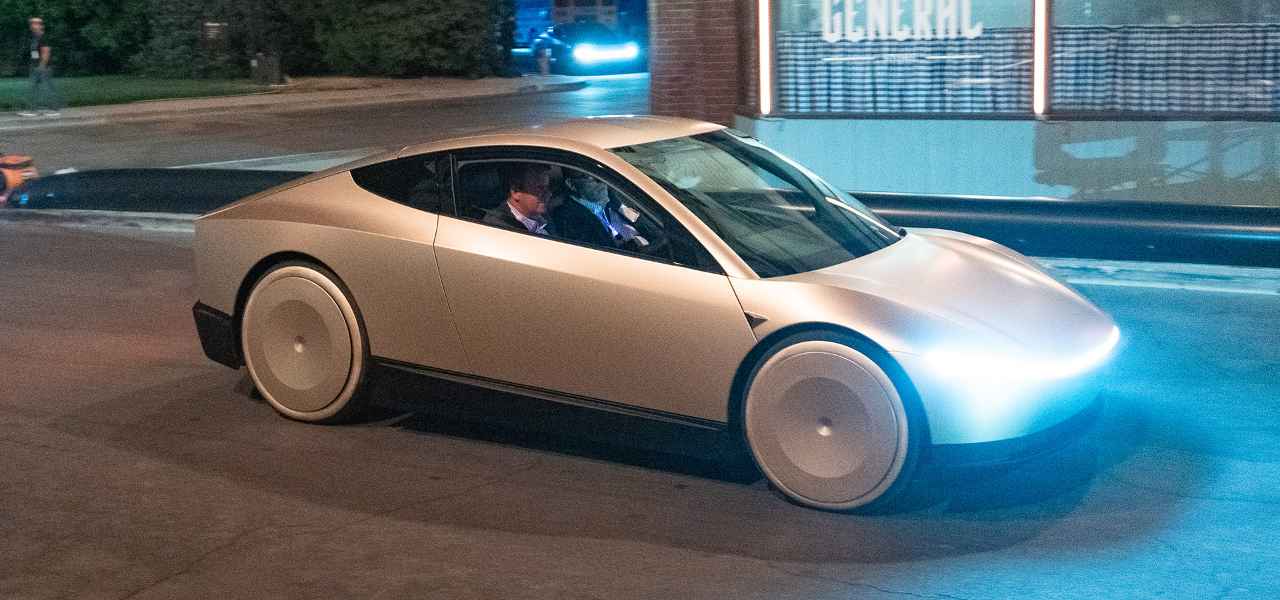 2024年10月,特斯拉新款兩座CyberCab無人駕駛出租車在華納兄弟影城舉辦的發布活動上亮相。(Roberto Baldwin)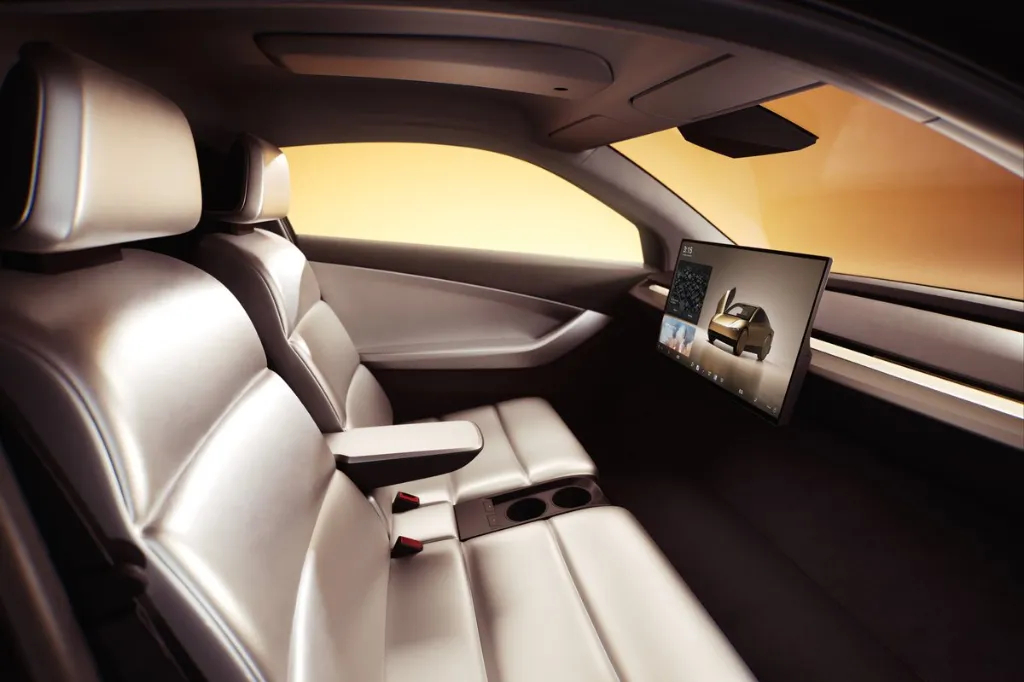
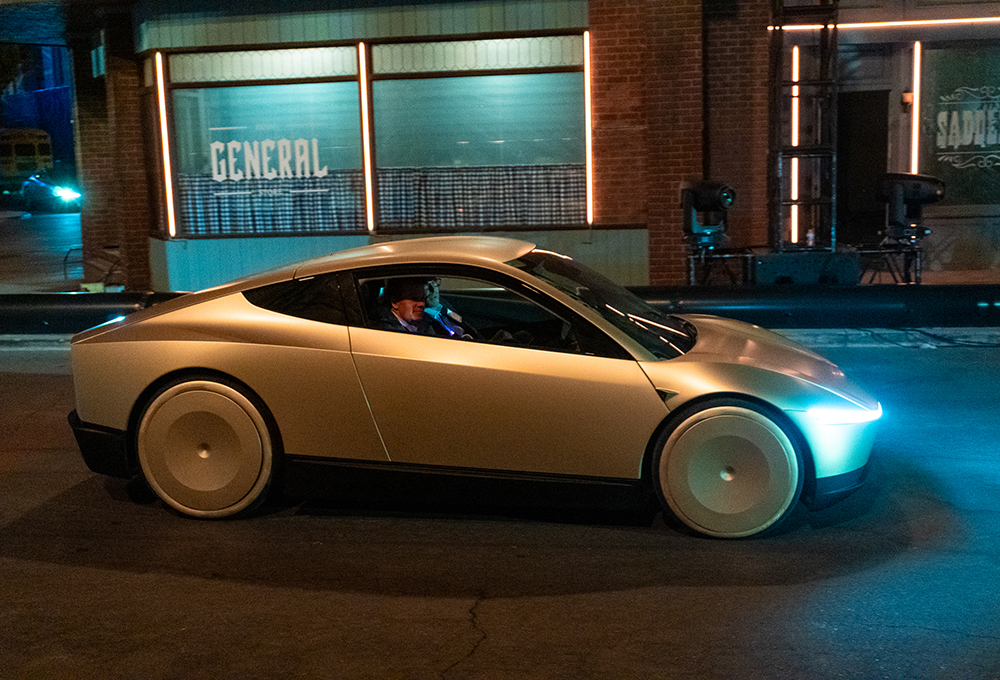 雖然特斯拉首席執行官Elon Musk表示,CyberCab只需使用人工智能視覺就能實現自動駕駛,但一些自動駕駛專家對此并不以為然。(Roberto Baldwin)
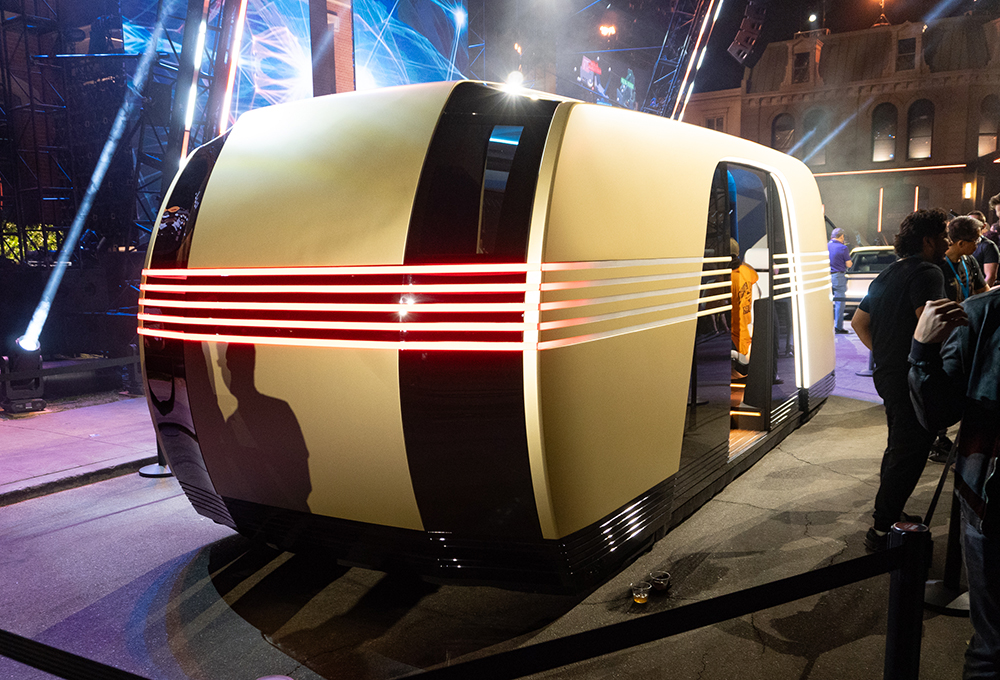 特斯拉還在CyberCab活動期間展示了一輛可以搭載20人的廂式車Robovan。(Roberto Baldwin)
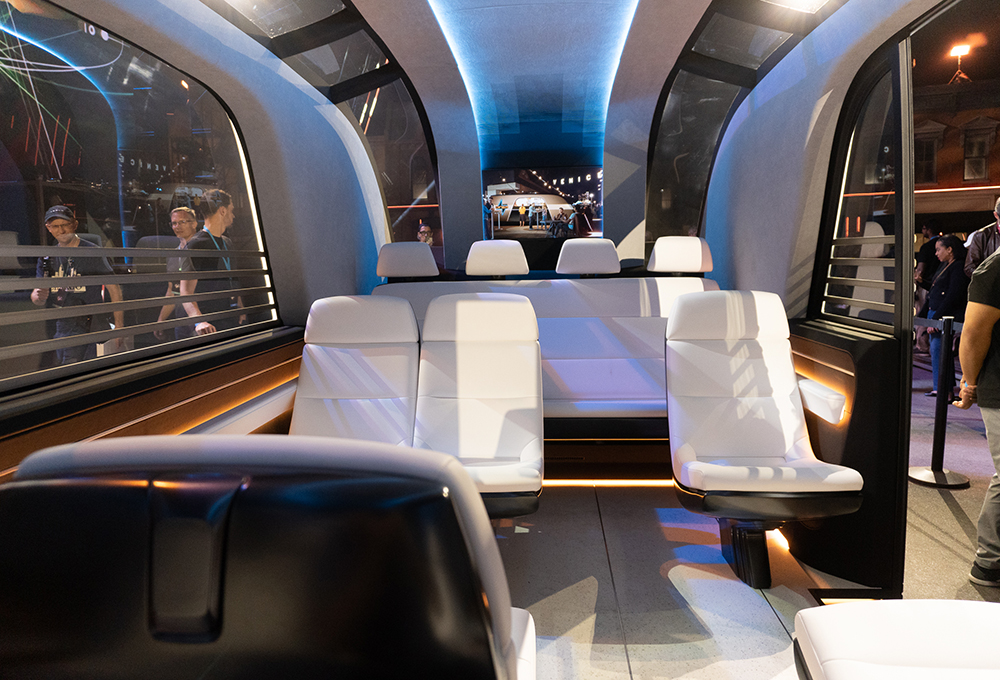 Robovan的座艙內飾。(Roberto Baldwin)