交通基礎(chǔ)設(shè)施專家 Kirk Steudle 反思了網(wǎng)聯(lián)化自動(dòng)駕駛汽車快速發(fā)展的現(xiàn)狀及未來(lái)面臨的挑戰(zhàn)。
“汽車機(jī)械和電氣工程師的工作領(lǐng)域是車輪上方,而土木工程師則是車輪下方。”Kirk Steudle 開(kāi)玩笑說(shuō),“盡管雙方都得花點(diǎn)時(shí)間才能理解對(duì)方的行話,但由于網(wǎng)聯(lián)自動(dòng)駕駛汽車的出現(xiàn),這兩個(gè)行業(yè)必須團(tuán)結(jié)起來(lái),共同解決社會(huì)大眾的交通出行問(wèn)題。”
Kirk Steudle 是一名長(zhǎng)期耕耘在“車對(duì)路”領(lǐng)域的注冊(cè)工程師,去年 10 月從密歇根州運(yùn)輸部長(zhǎng)一職光榮退休,職業(yè)生涯中曾取得了無(wú)數(shù)成就。在 Steudle 的領(lǐng)導(dǎo)下,密歇根州運(yùn)輸部大力推動(dòng)網(wǎng)聯(lián)汽車和自動(dòng)駕駛技術(shù)的發(fā)展,該州也迅速在相關(guān)技術(shù)的開(kāi)發(fā)、測(cè)試和基礎(chǔ)設(shè)施標(biāo)準(zhǔn)制定方面走在了全美前列。此外,Steudle 還在退休前一年兼任美國(guó)交通運(yùn)輸中心(American Center for Mobility,下簡(jiǎn)稱 ACM 中心)的臨時(shí)首席執(zhí)行官。ACM 中心占地 500 英畝,位于安阿伯市附近,是全美自動(dòng)駕駛汽車試驗(yàn)和測(cè)試的主要場(chǎng)地之一。
Steudle 在退休后加入交通網(wǎng)絡(luò)工程與集成方案提供商 Econolite 公司,擔(dān)任公司交通系統(tǒng)集團(tuán)高級(jí)副總裁。近期,Steudle 與《自動(dòng)駕駛汽車工程雜志》探討了交通行業(yè)目前的發(fā)展?fàn)顩r及未來(lái)可能面臨的挑戰(zhàn)。
“回首 2006 年,當(dāng)時(shí)智能手機(jī)還沒(méi)有誕生。美國(guó)國(guó)防高級(jí)研究計(jì)劃局(DARPA)的確已經(jīng)推出了自動(dòng)駕駛汽車挑戰(zhàn)賽,但各州的交通運(yùn)輸主管部門所關(guān)注的并不是自動(dòng)駕駛或自主駕駛,而是網(wǎng)聯(lián)汽車及相關(guān)基礎(chǔ)設(shè)施。”Steudle 回憶道,“此外,當(dāng)時(shí)還有大量有關(guān)‘國(guó)家為什么也要參與其中’的討論,有人問(wèn)道:為什么汽車行業(yè)不能自己玩自己的?畢竟交通運(yùn)輸部門也管不到安全帶或穩(wěn)定性控制。”
事實(shí)證明,政府與行業(yè)的合作對(duì)加快技術(shù)推廣至關(guān)重要。福特(Ford)和通用汽車(General Motors)合作開(kāi)展的“防撞度量標(biāo)準(zhǔn)伙伴關(guān)系(CAMP)”就曾攜手美國(guó)高速公路安全管理局(NHTSA),推動(dòng)了防撞措施在乘用車中的部署以提升交通安全,并證明了 V2I(車對(duì)基礎(chǔ)設(shè)施)技術(shù)的重要作用。
2011 年,美國(guó)運(yùn)輸部在安娜堡推出了安全試點(diǎn)模型部署項(xiàng)目(Safety Pilot Model Deployment),“真正將合作的主題暴露在所有人的目光之下,”Steudle 表示,“事實(shí)證明,我們可以讓不同的汽車制造商開(kāi)始交流,并且取得不錯(cuò)的結(jié)果。”在智能交通系統(tǒng)世界大會(huì)(ITS World Congress)有關(guān)“安全試點(diǎn)”項(xiàng)目的演示環(huán)節(jié)中,美國(guó)運(yùn)輸部長(zhǎng) Ray LaHood 從演示車中款款走出,并宣布:“這將挽救無(wú)數(shù)民眾的生命。”Steudle 介紹說(shuō),“運(yùn)輸部長(zhǎng)明白,這可能會(huì)改變游戲規(guī)則。”
交通信號(hào)和通信
Steudle 斷言,“技術(shù)演示(SAE 也曾安排過(guò)此類自動(dòng)駕駛汽車演示活動(dòng))有助于揭開(kāi)自動(dòng)駕駛技術(shù)的神秘面紗,從而推動(dòng)自動(dòng)駕駛技術(shù)的發(fā)展。因此,這類演示多多益善。”不難想象,讓政策制定者真正先坐到網(wǎng)聯(lián)汽車和自動(dòng)駕駛汽車中非常重要。他補(bǔ)充說(shuō),在這些自動(dòng)駕駛汽車試駕中,“為車輛配備一名測(cè)試駕駛員可以在一定程度上讓乘客更放心”。
Steudle 觀察到,很多州市都呈現(xiàn)出斥巨資升級(jí)交通信號(hào)系統(tǒng)以使其適用于互聯(lián)自動(dòng)駕駛汽車的趨勢(shì)。“目前,蜂窩網(wǎng)絡(luò) V2X/5G 和DSRC 通信技術(shù)之間尚未決出勝負(fù)。坦率地說(shuō),任何基礎(chǔ)設(shè)施提供商或哪個(gè)州的運(yùn)輸部均無(wú)法獨(dú)立作出決定,到底如何選擇要看汽車公司和電信公司的共同決定。”Steudle 補(bǔ)充說(shuō),美國(guó)政府與中國(guó)不同,“不會(huì)直接選定一種技術(shù),然后統(tǒng)一推行。”
但 Steudle 同時(shí)指出,由于蜂窩網(wǎng)絡(luò) V2X/5G 與 DSRC 通信技術(shù)之間的爭(zhēng)論尚未塵埃落定,公共機(jī)構(gòu)在進(jìn)行交通信號(hào)設(shè)施投資時(shí)紛紛不約而同地采用了“對(duì)沖”的思路。“如果確定未來(lái)到底會(huì)用哪種技術(shù),實(shí)施起來(lái)會(huì)更快。但大家必須慎之又慎,不能花了大價(jià)錢,卻買了一堆很快將被淘汰的技術(shù),就比如早些年間的‘Betamax’卡帶。”在此背景下,一些機(jī)構(gòu)正在同時(shí)投資雙種通信技術(shù),“以確保旗下產(chǎn)品可以為未來(lái)的各種可能性做好準(zhǔn)備。”Steudle 認(rèn)為,蜂窩網(wǎng)絡(luò) V2X/5G 通信技術(shù)將是終極解決方案,但現(xiàn)在還為時(shí)尚早。
在 Steudle 擔(dān)任部長(zhǎng)期間,自動(dòng)駕駛汽車的公路測(cè)試是密歇根交通部“最主要的辯論話題之一”。他解釋說(shuō),“現(xiàn)在大家的討論重點(diǎn)是大家能接受多少起事故?但無(wú)論如何,如果什么都不做,每年將繼續(xù)有大約 37,000 人因交通事故身亡。從長(zhǎng)遠(yuǎn)來(lái)看,我堅(jiān)信自動(dòng)駕駛汽車將有助于減少道路交通事故。”
“到 2025 年,一些新技術(shù)的出現(xiàn)和現(xiàn)有技術(shù)的大幅提升將給交通出行行業(yè)帶來(lái)巨變,比如車輛導(dǎo)航系統(tǒng)精度提升等。”Steudle 預(yù)測(cè),“到時(shí)候會(huì)有很多可以在高速公路工況下提供脫手駕駛功能的車型,可以替代駕駛員完成絕大部分工作,但它們還并不是真正的自動(dòng)駕駛汽車。”這也是 Steudle 認(rèn)為業(yè)界必須區(qū)分的兩個(gè)重要概念。
建立公眾對(duì)自動(dòng)駕駛技術(shù)的信心
最近,《自動(dòng)駕駛汽車工程》與 ACM 中心首席技術(shù)官兼首席安全官 Jeff Rupp 探討了 ACM 中心在制定互聯(lián)和自動(dòng)駕駛車輛標(biāo)準(zhǔn)方面的作用。
“我認(rèn)為 ACM 在制定新標(biāo)準(zhǔn)方面可以發(fā)揮的關(guān)鍵優(yōu)勢(shì)在于,幫助我們的行業(yè)客戶在標(biāo)準(zhǔn)尚未真正落地之前就能開(kāi)始探索與測(cè)試。”Rupp 說(shuō),“隨著新流程逐漸成型,我們可能成為首個(gè)有能力進(jìn)行測(cè)試,并提供公開(kāi)可用數(shù)據(jù)的單位。我們可以為行業(yè)提供一些信息,這有助于互聯(lián)和自動(dòng)駕駛汽車行業(yè)贏得公眾的信心。"
Rupp 指出,新的自動(dòng)駕駛汽車相關(guān)標(biāo)準(zhǔn)僅適用于整個(gè)車輛系統(tǒng),也包括相關(guān)通信技術(shù),比如 DSRC、V2V 或 C-V2X 等。“目前,行業(yè)在選擇通信技術(shù)方面尚未達(dá)成統(tǒng)一,也沒(méi)有哪種技術(shù)占據(jù)絕對(duì)優(yōu)勢(shì)。各家公司都馬不停蹄地不斷探索。”Rupp 觀察到,“行業(yè)認(rèn)識(shí)到,最終大家必須達(dá)成共識(shí),也就是對(duì)安全有共同的定義。公司可能很難判斷何時(shí)該從相互競(jìng)爭(zhēng)、各自保密的傳統(tǒng),開(kāi)始轉(zhuǎn)變?yōu)閿?shù)據(jù)共享和共同協(xié)作的新模式。NHTSA 已經(jīng)開(kāi)始向這一目標(biāo)努力。大家都想這么做,也意識(shí)到必須這樣做。”
Transportation-infrastructure expert Kirk Steudle reflects on the rapid progress toward the connected-AV future and the challenges ahead.
“In the auto industry, mechanical and electrical engineers work from the tire up. Civil engineers work from the tire down,” quips Kirk Steudle. “And although it’s taken a while for both to understand each other’s jargon, the connected-and-autonomous vehicle is forcing them all together—to solve problems for society’s mobility.”
Steudle, a registered professional engineer, has been at the vehicle-to-road nexus his entire career. Last October he retired as director of the Michigan Dept. of Transportation where, among many achievements, his leadership helped put the state and its core industry in the vanguard of connected-car and AV-related developments, testing, and infrastructure standards. During his final year at MDoT, he also served as interim CEO of the American Center for Mobility, the new 500-acre AV proving ground and test center near Ann Arbor.
Now senior VP of the Transportation Systems Group at Econolite, a traffic-network engineering and integration company, Steudle spoke with SAE’s Autonomous Vehicle Engineering about transportation’s evolution and the challenges ahead.
“Looking back to 2006, ‘smart’ phones hadn’t yet been invented. The DARPA Challenge for self-driving vehicles was happening, but at the state DoT level we weren’t talking about automated or autonomous driving; we were talking about connected vehicles and the infrastructure,” he recalled. “And there was significant conversation asking why should states be involved: Why can’t the auto industry work this out themselves? After all, DoT’s aren’t involved with seat belts or stability control, went the argument.”
Government-industry collaboration has since proved to be vital in accelerating progress. The Crash Avoidance Metrics Partnership (CAMP) between Ford and General Motors, working with NHTSA, helped implement crash-avoidance countermeasures in passenger cars to improve traffic safety, and proved V2I (vehicle-to-infrastructure) technology could work. The U.S. DoT’s Safety Pilot Model Deployment, launched in 2011 in Ann Arbor, “put this subject on the front stage,” Steudle said. “It proved that we could have different auto- makers talk to each other and that it could be successful.”
In a demonstration at ITS World Congress that sprung from the Safety Pilot program, U.S. Transportation Secretary Ray LaHood stepped out of a demo vehicle to declare, “This is going to save people’s lives,” Steudle explained. “He understood that this could be game-changing.”
Traffic signals and communications
Getting policymakers into the seats of connected and autonomous vehicles is important, because the demos (such as those conducted by SAE) “help demystify the technology. The more demos we can do, the better,” Steudle asserted. “Having a test driver behind the wheel provides a level of comfort to the passenger” in these activities.
Steudle sees a trend in states and cities investing heavily in their traffic-signal systems—updating the technology and adapting it for the increased use of connected AVs. “The competing communications protocols—cellular V2X/5G and DSRC—still have to be worked out. That’s frankly not going to get solved by an infrastructure provider or a state DoT,” he explained. “It’s going to get decided by the auto companies and the telecoms.” Unlike in China, government in the U.S. “is not going to select and mandate a technology.”
But he noted that public agencies are hedging on their traffic-signal investments because of the C-V2X vs. DSRC battle. “If we knew which technology we’re going to use, implementation could accelerate. But the agencies have to be careful they’re not buying a bunch of Betamax.” As a result, some are specifying dual communication modes—”to make sure their stuff is ready for the future.” Steudle believes that cellular/5G is the ultimate solution—when it arrives.
The subject of on-road testing of AVs was “a huge debate” at Michigan DoT during Steudle’s tenure as director. “The big public discussion is, how many crashes are too many?” he observed. “But if we do nothing, some 37,000 people will continue to be killed each year. In the long run, I believe autonomous vehicles will help reduce road fatalities.”
Looking ahead six years, Steudle forecasts “technologies not invented yet, and far greater precision in those currently employed such as vehicle guidance, will trans- form a lot of things related to mobility. By 2025,” he said, “I think we’ll have lots of models offering true hands-free driving for freeway use. They’ll be heavily driver-assisted, not autonomous”—an important distinction which he believes industry needs to better define.
Building public confidence in AV tech
During a recent visit to the American Center for Mobility, AVE spoke with Jeff Rupp, the CTO and chief safety officer, about ACM’s role in creating standards for connected and self-driving vehicles.
“I think ACM’s niche related to new standards under development is in helping our industry clients explore and try out new test methods or procedures before they become a standard,” he said. “As new procedures develop, we may be the first to test them out and show publicly-available data. We would provide some transparency to the industry and in doing so help the public develop confidence in what the industry’s doing.”
New AV-related standards will only apply to the whole vehicle system—which Rupp noted might include off-board communication—DSRC, V2V or C-V2X. “There’s no standardization yet, no winning technology. Everyone’s still exploring at breakneck pace,” he observed. “The industry recognizes that eventually there needs to be a point where collectively we say, ‘How safe is safe enough?’ It’s tough for these companies to decide when it’s okay to move from a competitive, secretive mode, to a data-sharing and collaborative mode. NHTSA’s trying to encourage that now. Everyone wants to do it and know they need to do it.”
Author: Lindsay Brooke
Source: Autonomous Vehicle Engineering

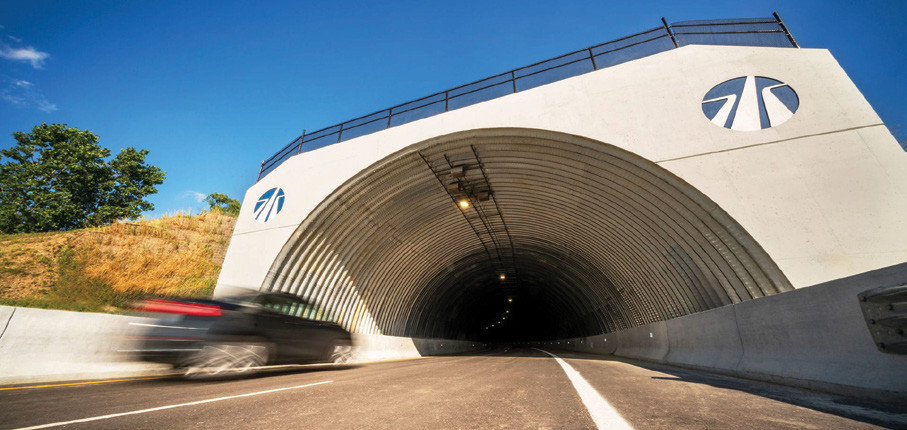 自動(dòng)駕駛汽車示范區(qū)American Center for Mobility位于密歇根伊州普西蘭蒂市,是公私領(lǐng)域合作的成功范例。圖為該中心用于測(cè)試信號(hào)干擾的隧道。
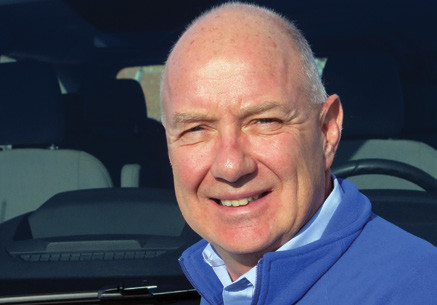 Econolite 高級(jí)副總裁 Kirk Steudle 是全球公認(rèn)的運(yùn)輸系統(tǒng)和相關(guān)技術(shù)專家。
 ACM 首席技術(shù)和安全官 Jeff Rupp