今天,無論是卡車運營商還是商用車供應商,都在努力提升車輛的安全性,他們一方面正在推動高級駕駛輔助系統(ADAS)的標準化,另一方面則在探索車對車(V2V)通信技術的應用潛能。盡管V2V通信擁有眾多好處,但該技術能否普及開來依然是個未知數。
全球規模最大的幾家汽車管理公司的高管是汽車安全的積極倡導者。比如在近期由沃爾沃(Volvo)卡車與聯邦快遞(FedEx)共同舉行的V2V技術演示會上,FedEx 的CEO John Smith就反復強調要提升車輛安全性。而他的同事則具體闡述了公司將為車隊全面安裝安全系統的計劃。
聯邦快遞通信主管MicheleEhrhart女士表示:“在今年年底,我們將為公司的所有車輛配上碰撞緩解、側翻穩定性控制以及車道偏離預警功能。并且,除了最陳舊的車輛外,我們其余的所有車輛都安裝了自適應巡航控制系統(ACC)系統。”
卡車制造商們也進而紛紛表示,買家們都愿意為安裝汽車安全系統而支付更多的費用。人身安全是無價的,而保護車輛和貨物的經濟回報是可以估量的。
戴姆勒(Daimler)卡車部門北美福萊納卡車(Freightliner Trucks)分部戰略總經理 Kary Schaefer 表示:“由于安全系統能夠減少交通事故,并提高車輛的運行時間,因此車輛安全性的提升能夠大幅提高車輛駕駛過程中的經濟性。需要指出的是,主動安全系統與車輛推進系統及網聯系統,并稱為汽車行業的三大投資領域。”
在卡車供應商與運營商的共同努力下,ADAS系統的配置率有所上升。除此之外,研究者們也開始探究起V2V通信技術的潛在優勢。汽車行業目前采用的V2V通信技術大多基于標準版5.9 GHz頻段專用短程通信技術(DSRC),用于車輛與車輛以及車輛與路邊信號裝置的“交流”。值得一提的是,越來越多的公司開始測試V2V通信技術應用于車輛編隊行駛的好處。由于編隊中的車輛能夠互相告知制動時間,因此行車安全性得到了極大提升。此外,V2V技術的應用還能夠縮短車距,幫助整個車隊節約10%的油耗。
ZF公司ADAS系統、車輛自動化與商用車技術研發部門主管Dan Williams 先生表示:“V2V通信技術將被首次應用于車輛編隊。而車輛與基礎設施通信(V2I)技術的應用,能夠幫助車輛在有限的區域環境里互相傳遞較為有價值、且獲取成本不高的信息。”
V2V技術的應用可以有效縮短安全車距,并確保整個卡車編隊做到同時減速。此外,沃爾沃還將V2V通信與自適應巡航控制(ACC)系統相結合,提供了更高的冗余,以確保當編隊頭車放緩速度時,其它車輛也相應立刻放緩速度。
Volvo卡車北美分部產品規劃副總裁KeithBrandis先生表示:“我們在標準ACC系統的基礎上加上了V2V通信技術。這樣,當卡車編隊頭車減速行駛或剎車時,后續車輛就能夠利用協作式ACC系統的DSRC技術獲取頭車的行駛信息。”
雖然研究人員預測V2V通信技術能夠為車隊運營商帶來巨額利潤,但該技術的應用前景卻受到了質疑。具體而言,如果采用編隊控制系統對車隊進行控制,那么即使較小規模的車隊也能夠獲取一定的運營利潤;如果車隊規模較大,就能獲得更大的利潤。但在車隊規模較小的情況下,額外支付費用再添置車輛網聯技術就顯得沒有必要。
Williams先生表示:“在這樣一個混合環境中,采用V2V通信技術有時候能夠幫助我們獲取到有用信息,有時候卻不能。如果獲取的信息不可靠,那么司機在做出安全決策時也就不會參考這一信息了。”
如今,美國國家公路交通安全管理局(NHTSA)遲遲沒有推出有關強制新車安裝V2V通信設備的規定,這進一步引發了人們的猜測。而蜂窩通信技術的提倡者們則進一步進行宣傳,稱5G通信技術能夠提供足夠的帶寬,給汽車行業帶來很多好處。
以蜂窩通信技術為基礎的V2V技術簡稱為C-V2V技術。由于采用了未來幾年內有望普及的蜂窩調制解調器,該技術可以省下原先的DSRC鏈接技術的成本,因此已經引起了一些汽車制造商們的興趣。由于汽車或卡車的C-V2V技術配置率均較低,因此一些汽車公司開始考慮出售5.9-GHz頻段DSRC技術,不過這一想法遭到了大多數DSRC技術支持者的反對。
Brandis先生表示:“我們正在與美國聯邦通信委員會(FCC)合作共同保護我們的無線頻段。如果我們獲得的帶寬變窄,那么我們發出的數據量也會有所減少。由于汽車在未來發送的數據量將會越來越多,因此這一問題事關汽車未來發展。”
如果將來通信基礎設施能夠做到處理大量的數據,那么我們距離實現所有車輛的自動化也就不遠了。具體來說,無人駕駛汽車在接收到與路況及天氣狀況相關的數據后,能夠有效提升行駛安全。車與車之間能共享路邊行人的信息,以及實時交通流量信息。V2V通信技術所獲取的數據,通常比車載傳感器所獲取的數據涉及面更廣。因此,隨著自動駕駛卡車的不斷普及,提高環境數據的數量與置信度變得至關重要。
Williams繼續解釋說:“傳感范圍的大幅提升有助于車輛更好地發現周圍的交通安全隱患,使橫向與縱向的控制更好地結合起來。而這些自動駕駛功能的實現,將提升商用車的安全性與效率,并進而提升汽車的自動化程度。第一批自動駕駛車輛將用于導航難度相對較低的任務中,如在偏遠地區的公路上將礦物從礦井運輸至火車站,或在特定高速公路上保持同車道行駛。”
Truck owners and commercial-vehicle suppliers are ramping up their safety efforts, making more advanced driver-assistance systems (ADAS) standard while looking at the potential benefits of vehicle-to-vehicle (V2V) communications. Though V2V can bring many benefits, widespread usage remains shrouded with questions.
Support for improved safety comes from some of the top executives of the largest vehicle fleets. FedEx CEO John Smith repeatedly commented on the need for improved safety during a recent Volvo Trucks-FedEx V2V demonstration. Associates detailed the push to fully equip the FedEx fleet with safety systems.
“By the end of the year, we will have collision mitigation, rollover stability control and lane-departure warnings on all our vehicles,” said FedEx communications director Michele Ehrhart. “We already have adaptive cruise control on all but the oldest vehicles.”
Truck makers are moving in lockstep, noting that it’s easy for buyers to justify the cost of safety systems. Safeguarding human lives is priceless, but protecting vehicles and cargo has a definable financial payback.
“There’s a very strong business case for improving safety,” said Kary Schaefer, general manager of strategy for Daimler Trucks North America’s Freightliner Trucks. “Every accident that safety systems prevent provides more uptime for the fleet. Active safety is one of three major areas of investment for the industry, along with propulsion and connectivity.”
As suppliers and owners move to equip more vehicles with ADAS, researchers are also exploring the potential benefits of V2V. The industry has standardized 5.9 GHz dedicated short-range communications (DSRC) to let vehicles talk to each other and communicate with roadside beacons. Many companies are testing V2V’s benefits for platooned convoys. When vehicles can tell each other when they’re braking, safety can be improved. Tightening distances between trucks can bring fuel savings up to 10%.
“The first use of V2V communication will be platooning,” said Dan Williams, director of ADAS and autonomy, commercial vehicle technologies, at ZF. “Vehicle-to-infrastructure communication could allow more cost-effective information in a restricted area environment.”
Safely shortening following distances means ensuring that trucks slow down synchronously. Volvo provides redundancy by closely linking adaptive cruise control (ACC) with V2V communications. That helps ensure that all vehicles immediately react when the lead vehicle slows.
“We’re using our standard ACC and adding a layer on top, using V2V,” said Keith Brandis, vice president for product planning at Volvo Trucks North America. “Cooperative ACC uses DSRC to let trailing vehicles know immediately when the lead truck is slowing or braking.”
Researchers feel V2V brings major financial benefits, but its usage remains in question. Platooning brings benefits even if the operating fleets are small. Greater benefits occur when more trucks can communicate, bringing broader safety improvements. It can be difficult to justify connectivity costs when only a few vehicles can talk to each other.
“In a mixed environment where sometimes this information might be available, sometimes not, it can become a source of potentially useful information, but if it is unreliable you may not want to base safety decisions on this data source,” Williams said.
The National Traffic Highway Safety Administration's (NHTSA) tardiness in mandating a rollout date has created questions around adoption. Cellular promoters say that 5G connections provide enough bandwidth to provide many of the benefits.
Called C-V2V, it is gaining some interest from automakers who feel they can eliminate the cost of a DSRC link by using cellular modems that are likely to be on most cars in a few years. Given the lack of usage in cars and trucks, some groups have discussed selling some of the 5.9-GHz DSRC spectrum. That’s not palatable for most DSRC proponents.
“We’re working with the FCC to protect our wireless spectrum,” Brandis said. “If we get narrower bandwidth, it will restrict the amount of data we can send. That’s important for the future, when even more data will be sent.”
Having a communications infrastructure capable of handling lots of data is viewed as an important element in the drive to automate all driving. Data on road and weather conditions can help autonomous vehicles navigate safely. Vehicles could also share information about pedestrians near roadways, as well as providing real-time traffic info. V2V input is often viewed as sensor information that extends farther than on-board sensors. Increasing the volume and confidence levels of environmental data will be important as autonomous trucks move from limited applications to mainstream driving.
“Further out, we will use more sensing to identify safety issues all around the vehicle, and combine longitudinal and lateral control,” Williams said. “These associated functions will help to improve safety and efficiency of commercial vehicles, and lead to increasing levels of automation. The first automated vehicles will appear in duty cycles that are relatively easy to navigate, such as hauling from a mine pit to a railhead on a remote road, or maintaining a lane on a limited access highway.”
Author: Terry Costlow
Source: SAE Truck & Off-highway Engineering Magazine
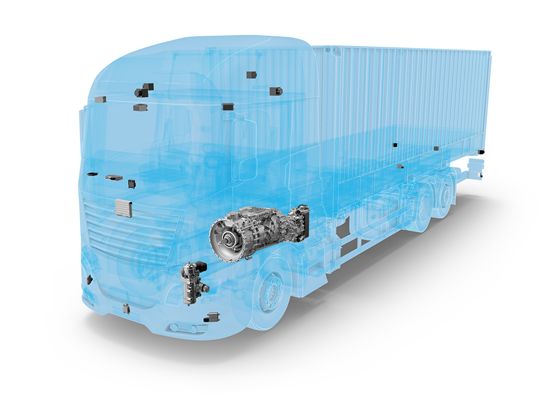 各種ZF傳感器所獲取的數據能夠服務于車輛的傳動系統與制動系統,從而提高車輛的安全性。(圖片來源:ZF公司)
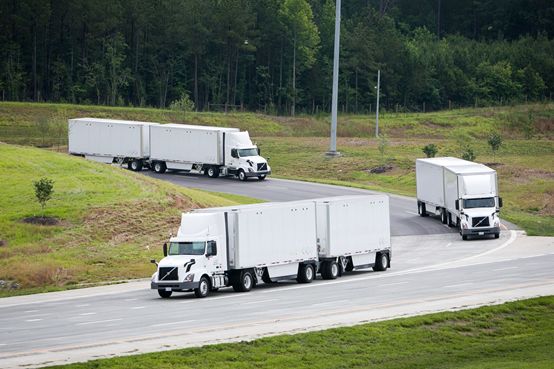 編隊行駛可以帶來很多好處,但是V2V認證的規則仍然不明朗。