一些小型封閉區域,比如車內的CO2積聚,可能給乘客帶來潛在健康威脅。多年以來,絕大多數車輛空調系統的外部空氣吊門均采用了缺口設計,因此還有一些“新鮮”空氣可以進入車內。而且即使沒有缺口,由于車身的密封性本身相對較差,而且乘客無法關閉送風開關(最低只能調至低速凈化模式),因此車內空氣問題并非如此嚴峻。
然而,為了進一步優化空調性能,一些較新款車型已經可以關閉空氣循環(或開至Max A/C檔位),隔絕外部空氣進入車內。目前,這種措施甚至還可以作為一種燃料經濟性優化手段,在美國EPA的燃料經濟評分中獲得加分。無論如何,哪怕僅僅為了乘客的舒適度,在一些溫度較高的州內,直接隔絕車內空氣流通的情況非常常見。
當人們在炎熱天氣下的選擇“Max A/C”模式,即空調開到最大時,車輛的HVAC空調將隔絕車輛的內外空氣流通。
為滿足舒適度要求,CO2含量不得超過0.1%
不過,這種做法將給車艙內的空氣質量帶來顯著影響,CO2積聚將影響乘客的呼吸系統健康。正如康奈可(Calsonic Kansei)北美公司高級測試研發經理G.D.Mathur博士在WCX17 – SAE 2017全球汽車年會上的發言中所指出的,為了保證乘客的舒適度,車內的CO2濃度不能超過0.1%。按照美國環保署目前的規定,車內的CO2濃度在短時間內(15分鐘)的積聚濃度不得超過3%,最大不得超過4%。但事實上,環保署的此項規定是專門針對使用R-744空調系統(CO2為制冷劑)的車型,主要目的也是為了判斷車輛是否存在CO2制冷劑泄露,而非由乘客呼吸引起的CO2積聚。
美國供暖制冷空調工程師學會(American Society Heating, Refrigeration and Air ConditioningEngineers, ASHRAE)表示,環境中的CO2濃度通常為400 ppm,而為了保證舒適度,車艙內的CO2濃度不應超過環境濃度以上700 ppm,也就是說車內的CO2濃度最高不得超過1100 ppm (0.11%)。
CO2傳感器可以用于監測車內的CO2濃度積聚,但汽車行業更多將這種設備用作一種定時措施(比如10到20分鐘循環一次)。然而,汽車廠商還需要保證最大循環,從而滿足EPA的要求,拿到相應的得分。
Mathur認為,盡管行業已經針對該領域進行了一些建模和極限測試,但為了充分覆蓋車輛老化帶來的影響,我們還需要更多、更好的數據。通常來說,大多數新車的車門和車窗邊緣均采用了三重密封設計,但密封效果將隨著時間的推移而退化。研究人員可以針對車上人員數量、車內空間大小、空氣泄露情況和出風口流量等因素,建立CO2積聚模型。不過,車內人員的活動狀態也會對CO2的積聚帶來很大影響,比如幾位乘客都保持安靜,和父母大聲管教孩子,這兩種情景下的CO2水平肯定不同。
此外,不同乘客的肺活量也存在較大差異,一些圍繞R-744空調系統的研究顯示,人類呼吸系統產生的CO2在3.8%到5.8% (38,000-58,000 ppm)之間。Mathur已經將人員的平均肺活量量化為1.65升/分鐘,他說這個水平也與自己之前的研究相一致。實驗表明,車內的CO2濃度在短短4到5分鐘內即會達到1,100 ppm,也就是超過舒適范圍。這也就是說,對于行程超過500英里/800公里的長距離行車來講,8小時的旅程很可能讓車內的CO2濃度到達到危險水平。
CO2對車禍的影響
Mathur指出,美國亞利桑那州交通運輸部已經記錄了多起因CO2濃度積聚引起的交通致死事故。這個判斷是通過遇難者的血液檢測得出的。
Mathur表示,雖然他沒有具體的數據,但該研究還需要考慮一氧化碳 (CO)對結果的可能影響。他觀察到,當車艙內沒有正壓時,CO很容易通過車輛的排氣和底部接縫進入車艙,具體水平根據具體車型及相應排氣系統有很大差異。不過,一旦CO濃度達到30 ppm,就有可能導致乘客頭痛。
在Mathur的演講之前,SAE室內氣候控制標委會(SAE Interior Climate Control Committee)也在最近一次會議上討論了相關問題,并呼吁成立專門工作小組。該工作小組將僅關注車上人員的呼吸產生的CO2問題,而非R-744系統可能發生的泄露問題。參與人員將針對汽車內部空間大小、乘客數量、空氣交換率、駕駛循環及發動機熄火/閑置等條件下的可接受CO2濃度達成共識。相關測試將在一個CO2氣缸中完成,具體設計將根據不同車輛的傳感器和空調設置而進行調整。
High carbon dioxide concentration in a small area, such as a passenger car cabin, is a health hazard. For many years the outside air flap door on most HVAC systems was notched, so that in recirculation there was some “fresh” air flowing into the cabin. Even without the notch, the car body was relatively leaky and the blower switch didn’t have an off position, only a low speed to purge stale air.
To improve A/C performance, the recirculation switch (or Max A/C position on HVAC switch) in newer cars permits shutting off outside air. Now there’s even a U.S. EPA fuel economy credit because this approach improves A/C fuel economy. However, just for passenger comfort, in states with high ambient temperatures, shutting off outside air is common.
Comfort level just 0.1%
This has an obvious effect on passenger compartment air quality, and CO2 buildup from human respiration can affect passengers. As Dr. G.D. Mathur, senior manager for test and development at CalsonicKansei North America, pointed out in a 2017 SAE World Congress (WCX17) presentation, just 0.1% concentration is the comfort limit. EPA’s short term exposure limit (15 min) of 3% and a maximum exposure of 4% in the breathing zone was promulgated only for R-744 air conditioning (carbon dioxide used as a refrigerant), to cover a large leak, not a human-caused buildup.
ASHRAE (American Society Heating, Refrigeration and Air Conditioning Engineers) says the comfort limit for CO2 concentration is 700 ppm over the ambient level, which is approximately 400 ppm, for a total of 1100 ppm (0.11%).
CO2 sensors provide one avenue for automotive control, but more likely is the timed approach used by some car manufacturers (10-20 minutes at a time in recirculation). However, there is a need to maintain maximum recirculation to meet the intent of the EPA credits.
For all the modeling and the limited testing that has been done in this area, Mathur noted that better data is needed to cover vehicle ageing. Most new vehicles start life with triple sealing of the doors and glass areas, but seals deteriorate over time. A researcher can model CO2 buildup based on number of passengers against cabin volume, air leakage and blower flow rate. However, there is great variability in exhalation CO2 for passenger activity level (sitting quietly vs. parent screaming at youngster in high activity, for example).
There also is a major difference in human lung capacity, and work on R-744 air conditioning systems has led to studies on that subject, showing a range of 3.8% to 5.8% CO2 (38,000-58,000 ppm) in human respiration. Mathur’s research led him to quantify lung capacity at 1.65 L/min, which he said matched well with previous work he had performed. It indicates a buildup to 1100 ppm –just over the comfort level—within the first 4-5 min of a simulated test drive. With a vehicle range of over 500 mi/800 km, an eight-hour trip can raise CO2 concentration to dangerous levels.
CO2 effect on car crashes
Mathur noted several deaths recorded by the Arizona Dept. of Transportation were blamed on crashes from CO2 buildup affecting the driver. The attributions were validated by blood analysis of the crash victims, indicating the issue is real world.
Although he had no specific data, Mathur said that research also needs to consider possible contributions from carbon monoxide (CO). He observed that in recirculation there is no positive pressure in the cabin, so with exhaust and underbody seams leakage, CO can penetrate. The level would be subject to great variability based on the exhaust system and car. If it reaches a level of 30 ppm, it is likely to cause passenger headaches.
Prior to Mathur’s presentation, the SAE Interior Climate Control Committee had discussed this subject at its last meeting and a call was issued for a working group. The purpose was described as to focus only on occupants respiration, not leakage from an R-744 system. Participants would agree on vehicle interior volume, passenger volume, air exchange rate, drive cycle, also engine off and at idle. Testing would be performed with a CO2 cylinder, and specific settings for vehicle sensors and HVAC operation, including possible preconditioning.
Author: Paul Weissler
Source: SAE Automotive Engineering Magazine
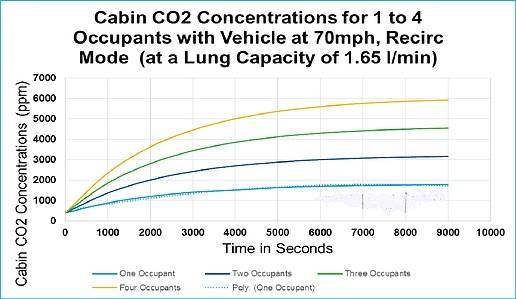 在車上有4個人的情況下,車艙內的CO2水平將在短短1.5小時內增加至0.6% (6000 ppm)的水平。
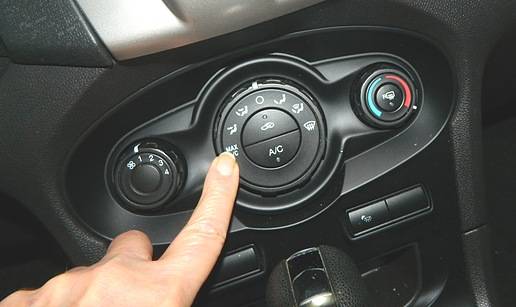 當人們在炎熱天氣下的選擇“Max A/C”模式,即空調開到最大時,車輛的HVAC空調將隔絕車輛的內外空氣流通。
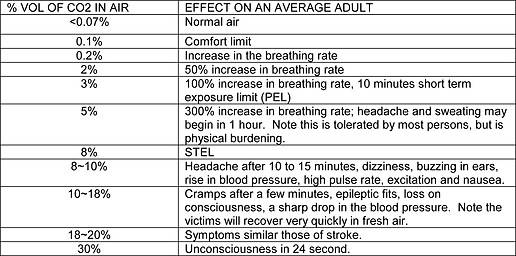 車內二氧化碳水平及其對乘客的影響。