“真實(shí)世界”的油耗和排放測(cè)試已經(jīng)逐漸成為廠商新車/動(dòng)力系統(tǒng)評(píng)估的重中之重,但也同時(shí)給這個(gè)本已相當(dāng)復(fù)雜的領(lǐng)域帶來(lái)了新的挑戰(zhàn)和潛在經(jīng)濟(jì)負(fù)擔(dān)。長(zhǎng)久以來(lái),虛擬測(cè)試一直都是汽車開(kāi)發(fā)的重要組成部分,可以為控制成本做出巨大貢獻(xiàn),但這種技術(shù)在協(xié)助廠商滿足“真實(shí)世界駕駛排放(RDE)”的合規(guī)要求方面是否真的有效,仍是人們的主要擔(dān)憂之一。
英國(guó)專業(yè)軟件公司rFpro在虛擬道路和賽道測(cè)試方面擁有豐富的經(jīng)驗(yàn),這家公司旨在協(xié)助廣大型汽車廠商利用虛擬工具,開(kāi)展真實(shí)世界駕駛排放測(cè)試。(閱讀相關(guān)文章:用于輔助自動(dòng)駕駛汽車的路面建模技術(shù))
rFpro公司的技術(shù)總監(jiān)ChrisHoyle指出,廠商可以借助一款駕駛模擬系統(tǒng),建立一個(gè)讓駕駛員完全沉浸其中的完整虛擬環(huán)境,從而實(shí)現(xiàn)更加全面的在環(huán)測(cè)試(DIL)。Hoyle聲稱,在這種測(cè)試環(huán)境下,車輛可以對(duì)駕駛員的行為做出反應(yīng),這在以前是無(wú)法實(shí)現(xiàn)的。
“只要使用得當(dāng),虛擬測(cè)試工具可以協(xié)助汽車廠商在汽車研發(fā)的早期階段做出一些關(guān)鍵選擇,從而避免無(wú)謂地投入大量資金。”Hoyle告訴《汽車工程雜志》記者,“過(guò)去,新車的排放測(cè)試通常在真實(shí)賽道進(jìn)行,測(cè)試結(jié)果也常因駕駛員的不同而產(chǎn)生巨大差異。如今,這種測(cè)試已經(jīng)被RDE技術(shù)所取代,而虛擬測(cè)試工具也在這里找到了新的用武之地。”
Hoyle表示,RDE測(cè)試并不能排除駕駛員和路況對(duì)測(cè)試結(jié)果的影響。然而,通過(guò)選擇更多水平不一、習(xí)慣不同的駕駛員進(jìn)行測(cè)試,廠商可以更加全面地掌握車輛在不同條件下的行為,從而為未來(lái)的新車驗(yàn)收測(cè)試積累更多信心。于此同時(shí),這將為廠商節(jié)省大量經(jīng)濟(jì)和時(shí)間成本。
Hoyle表示,“我們的一個(gè)客戶估計(jì),借助DIL模擬器將汽車研發(fā)后期的一些測(cè)試環(huán)節(jié)提前進(jìn)行,并根據(jù)測(cè)試結(jié)果及時(shí)進(jìn)行調(diào)整,可以節(jié)約超過(guò)30%的相關(guān)成本。”
早在許多年前,虛擬測(cè)試技術(shù)就已經(jīng)得到了大家的認(rèn)可。如今,這種技術(shù)可以更加廣泛地適用于更多領(lǐng)域,為應(yīng)用的性能測(cè)試提供一個(gè)沒(méi)有天氣或交通狀況干擾的可重復(fù)測(cè)試環(huán)境。Hoyle解釋說(shuō),“盡管虛擬測(cè)試也會(huì)對(duì)人類駕駛員的行為做出反應(yīng),但如果人類駕駛員在虛擬場(chǎng)景中的行為和反應(yīng)并非與現(xiàn)實(shí)世界一模一樣,這種虛擬測(cè)試幾乎沒(méi)有什么價(jià)值。”
在常規(guī)的汽車研發(fā)項(xiàng)目中,為了在RDE測(cè)試階段之前,確保車輛可以實(shí)現(xiàn)設(shè)計(jì)性能,廠商可能需要負(fù)擔(dān)大量的額外開(kāi)支。為了優(yōu)化對(duì)車輛的校準(zhǔn),深入理解一些與駕駛員行為有關(guān)的因素非常重要,比如有些駕駛員在巡航時(shí)的節(jié)流調(diào)速水平不高,又或是不能及時(shí)預(yù)判前方車流減速等。
通過(guò)道路測(cè)試量化車輛排放與駕駛員駕駛習(xí)慣之間的關(guān)系十分耗時(shí)耗力,非常困難。Hoyle聲稱,rFpro公司開(kāi)發(fā)的DIL模擬器可以參考駕駛員的典型行為,創(chuàng)造一個(gè)足夠真實(shí)的虛擬測(cè)試環(huán)境。他說(shuō),這款模擬器可以協(xié)助廠商對(duì)汽車的虛擬排放性能有更全面的把握。人類駕駛員手握這款模擬器就可以取得與“真實(shí)世界駕駛測(cè)試接近的測(cè)試結(jié)果。”
過(guò)去的駕駛模擬器通常對(duì)駕駛員行為的反應(yīng)太慢,無(wú)法創(chuàng)造一個(gè)足夠真實(shí)的環(huán)境,引領(lǐng)駕駛員做出與“真實(shí)世界”中完全相同的“真實(shí)”反應(yīng)。但借助最新一代的細(xì)微動(dòng)作捕捉平臺(tái),rFpro設(shè)計(jì)的軟件可以提供毫無(wú)延遲的反應(yīng)速度、超高分辨率的逼真畫(huà)質(zhì),以及擁有弧度、坡度、起伏和坑洼等一系列豐富細(xì)節(jié)的道路模型,從而為使用者提供Hoyle口中的“前所未有的真實(shí)”體驗(yàn)。
通過(guò)rFpro公司的虛擬測(cè)試工具,汽車廠商可以對(duì)車輛“受人類駕駛員影響”和“由電腦控制”的因素加以區(qū)分并單獨(dú)處理。
作者:Stuart Birch
來(lái)源:SAE《汽車工程》雜志
翻譯:SAE中國(guó)辦公室
New virtual tools tackle real-world emissions testing
“Real-world” fuel consumption and emissions testing is becoming central to OEM new car/new powertrain programs. But it brings new challenges and potentially financial headaches to a highly complex area. A major concern is the efficacy of virtual testing—long established as part of vehicle development and a huge contributor to cost saving—in meeting real world driving emissions (RDE) legislation requirements.
Helping to achieve that is the aim of U.K. software specialist rFpro, which has extensive experience in virtual road and track (via F1) testing; seehttp://articles.sae.org/14181/ and http://articles.sae.org/13603/.
Chris Hoyle, rFpro’s Technical Director, states that creating a fully convincing virtual environment, in which a driver feels totally immersed, enables driver-in-the-loop (DIL) testing with a driving simulator to be applied, for what he claims as the first time, in areas where human reaction to a situation affects the vehicle’s behavior.
“Used effectively, virtual testing enables critical decisions to be made early in an automotive engineering program and certainly long before any commitment to significant financial investment," Hoyle told Automotive Engineering. "One such area, not previously associated with simulators, is emissions testing because when RDE tests take the place of today’s artificial rolling road test cycles, variations between different drivers will significantly influence the results obtained.”
RDE tests will be influenced by driving style and road conditions, said Hoyle. But the capability to evaluate the vehicle’s behavior under repeatable laboratory conditions using drivers of different abilities and with different habits in order to maximize confidence ahead of approval testing, can provide a massive saving in costs and time.
“One of our clients estimates that over 30% of the costs incurred in developing driving attributes could be saved by frontloading the engineering activity on a DIL simulator with subjective feedback,” he noted.
Virtual technology testing has been accepted for many years, its scope having broadened to embrace evaluation of the effects of a very wide range of areas under repeatable conditions, without weather or traffic variations. However, where human driver input is required, virtual testing "is of little value unless that driver responds to the test scenario in exactly the same way as he or she would do in a ‘real world’ situation,” explained Hoyle.
The need to ensure, in advance, that a vehicle will achieve the target results during RDE testing threatens to add significant additional cost to the typical development program. Understanding driver influenced variables, such as poor throttle modulation when cruising, or failure to anticipate traffic ahead reducing speed, will be central to optimizing the calibration of the vehicle.
Quantifying the influence of driving habits on vehicle emissions is difficult and time consuming using on-road testing. Software developed by rFpro for DIL simulators creates a sufficiently high level of realism that drivers behave in a representative way, claims Hoyle. He said this gives manufacturers the necessary confidence that a car’s virtual emissions performance, in the hands of a human driver using the simulator, "will be equivalent to its ‘real world’ results.”
Historically, driving simulators have reacted too slowly to driver input to create the realism necessary to trigger driver behavior that is fully representative of ‘real-world’ driving. But when used with the latest generation of lighter motion platforms with faster responses, rFpro’s software is designed to provide what Hoyle regards as “unprecedented realism” via use of lag-free, high resolution graphics and finely detailed road surface models including cambers, gradients, bumps and potholes.
This allows vehicle manufacturers to identify and isolate those aspects of human driving which differ significantly from computer controlled operation.
Author: Stuart Birch
Source: SAE Automotive Engineering Magazine

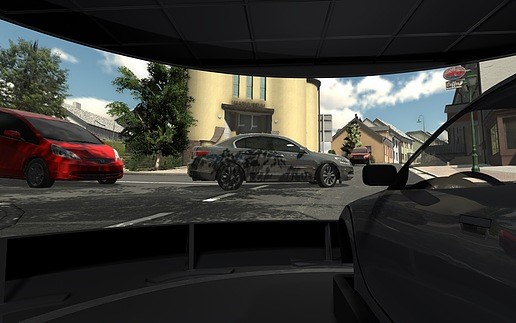 多位軟件專家認(rèn)為,逼真的虛擬技術(shù)是真實(shí)世界駕駛排放測(cè)試(RDE)領(lǐng)域的下一個(gè)前沿課題。
 rFpro公司的技術(shù)總監(jiān)Chris Hoyle表示,過(guò)去,真實(shí)世界駕駛排放測(cè)試并不在模擬器的工作范圍之內(nèi)。