長(zhǎng)久以來(lái),汽車(chē)研發(fā)的主題總是離不開(kāi)“重點(diǎn)”(換言之,就是“妥協(xié)”),在概念設(shè)計(jì)與工程制造之間找到平衡至關(guān)重要。
隨著CAD和CAE軟件解決方案的不斷進(jìn)步,可以說(shuō)設(shè)計(jì)與工程之間“水火不容”的緊張關(guān)系已經(jīng)得到一定程度的緩解,如今這種情況將進(jìn)一步得到改觀。據(jù)了解,捷豹路虎(JLR)及其密切合作的伙伴,也就是模擬軟件開(kāi)發(fā)專(zhuān)家埃克斯公司(Exa Corp.)表示,如今設(shè)計(jì)軟件已經(jīng)非常精密。到2020年,由于軟件方面的進(jìn)步,汽車(chē)廠商在進(jìn)行車(chē)輛研發(fā)時(shí)可能不再繼續(xù)需要實(shí)體原型車(chē)。
當(dāng)然了,在汽車(chē)研發(fā)的最后階段,打造一輛可以真正駕駛的原型車(chē)仍必不可少。但這兩家公司表示,憑借埃克斯公司的綜合可視化工具,以及捷豹路虎在軟件應(yīng)用方面超過(guò)十年的經(jīng)驗(yàn),這對(duì)合作伙伴將打造一款最先進(jìn)的模擬仿真研發(fā)平臺(tái),并利用該平臺(tái)逐步擺脫汽車(chē)研發(fā)中對(duì)實(shí)體原型車(chē)的依賴(lài)。
埃克斯歐洲公司巴黎分公司總裁Jean-Paul Roux解釋說(shuō):“通過(guò)類(lèi)似埃克斯PowerFLOW CAD工具中集成的可視化模塊,汽車(chē)廠商得以在汽車(chē)設(shè)計(jì)的各個(gè)階段內(nèi)獲得超真實(shí)的渲染效果,為設(shè)計(jì)師的工作提供便利。”
他斷言,汽車(chē)的研發(fā)流程復(fù)雜多變,隨著汽車(chē)廠商“逐步邁向未來(lái)”,那些使用常規(guī)軟件進(jìn)行溝通交流的日子早已成為過(guò)去。
他強(qiáng)調(diào)說(shuō),舉例而言,如果能夠更加清晰地了解一項(xiàng)新設(shè)計(jì)將對(duì)車(chē)輛的空氣動(dòng)力學(xué)性能帶來(lái)哪些影響,我們就可以在設(shè)計(jì)師與工程人員之間搭建一條更加開(kāi)放的溝通橋梁。“這樣一來(lái),除了完成自己的工作,雙方還能同時(shí)考慮對(duì)方的難處和目標(biāo)。事實(shí)上,這種作法并不會(huì)捆住設(shè)計(jì)師和工程人員的手腳,反而可以協(xié)助他們推出外觀更加大膽且更加富有表現(xiàn)力的設(shè)計(jì),還能同時(shí)提升車(chē)輛的空氣動(dòng)力性能。”
Roux表示,通過(guò)這些精密的可視化工具,汽車(chē)廠商得以“在最大程度”捕捉車(chē)輛周?chē)臐撛跉饬骰蛭饬鳎@是現(xiàn)有風(fēng)道做不到的:“可視化工具允許設(shè)計(jì)與工程團(tuán)隊(duì)及時(shí)了解一些概念的變化,這點(diǎn)非常重要,因?yàn)檫@些變化可能會(huì)直接導(dǎo)致一些組件形狀及其制造方式的改變。”
據(jù)了解,捷豹路虎在旗下XE轎車(chē)的研發(fā)中應(yīng)用了埃克斯公司的軟件系統(tǒng),并最終在并未過(guò)多犧牲外形的前提下,成功將車(chē)輛的空氣動(dòng)力性能提升至0.26 Cd的超高水平。埃克斯道路交通應(yīng)用部副總裁Ales Alajbegovic告訴《汽車(chē)工程》雜志,雖然很多競(jìng)爭(zhēng)對(duì)手可能會(huì)覺(jué)得不可思議,但事實(shí)上,捷豹路虎在XE轎車(chē)的研發(fā)過(guò)程中并未使用任何空氣動(dòng)力實(shí)體原型車(chē),一切有關(guān)空氣動(dòng)力性能的優(yōu)化,均是通過(guò)埃克斯公司的Power FLOW模擬工具完成的。
捷豹路虎特種車(chē)輛部(SVO)總監(jiān)、前任汽車(chē)設(shè)計(jì)總監(jiān)Mark Stanton表示,“在所有現(xiàn)行捷豹路虎量產(chǎn)車(chē)型的研發(fā)中,我們均利用了埃克斯的軟件工具來(lái)提升車(chē)輛的空氣動(dòng)力性能。此外,捷豹路虎F-Pace跨界車(chē)的研發(fā)也采用了模擬軟件解決方案。具體來(lái)說(shuō),通過(guò)埃克斯的軟件,我們?cè)谘邪l(fā)中實(shí)現(xiàn)了完美的提升平衡,從而為用戶(hù)帶來(lái)了真正動(dòng)力十足的駕駛體驗(yàn)。
“我們還使用埃克斯的仿真軟件來(lái)減少車(chē)輛的空氣阻力,”Stanton繼續(xù)表示,“我們?cè)谲?chē)輛的前保桿上設(shè)計(jì)了一些孔洞,從而優(yōu)化車(chē)輛前角的氣流流動(dòng),提高車(chē)輛的空氣動(dòng)力學(xué)性能。
Stanton表示,“所有這一切都是在虛擬環(huán)境中完成的。在此之前,我們未曾制造任何實(shí)體原型車(chē)。我們非常信任這些虛擬工具,只有在整個(gè)研發(fā)流程的最后階段才采用了一輛實(shí)體原型車(chē)進(jìn)行最終的驗(yàn)證。”
設(shè)計(jì)與工程聯(lián)手
埃克斯公司設(shè)計(jì)與可視化總監(jiān)Paul Stewart補(bǔ)充說(shuō),同一項(xiàng)目中的設(shè)計(jì)師和工程人員所關(guān)注的要點(diǎn)不同,工作時(shí)間安排也有差異,如果溝通不足的話(huà),可能會(huì)經(jīng)常處于不同步的狀態(tài)。
“然而,如今一部分汽車(chē)廠商已經(jīng)發(fā)現(xiàn),埃克斯PowerFLOW等CAE軟件中集成的可視化工具有助于促進(jìn)設(shè)計(jì)與工程團(tuán)隊(duì)之間的溝通交流。”
Stewart表示,對(duì)于設(shè)計(jì)師與工程人員而言,模擬軟件可以協(xié)助雙方實(shí)時(shí)直觀地了解任何設(shè)計(jì)變化:“這并不意味著設(shè)計(jì)師不得不在一些更加大膽的設(shè)計(jì)項(xiàng)目中前瞻后顧,不能放開(kāi)手腳,恰恰相反,由于這種整體設(shè)計(jì)流程從最開(kāi)始的階段就鼓勵(lì)跨部門(mén)的合作,設(shè)計(jì)師反而可以拿出更富有表現(xiàn)力且切實(shí)可行的設(shè)計(jì)方案。”
從空氣動(dòng)力性能優(yōu)化到整車(chē)驗(yàn)證
埃克斯的發(fā)言人表示,捷豹路虎對(duì)自己定下的2020年目標(biāo)非常有信心。通過(guò)與我們長(zhǎng)達(dá)十多年的合作,這家汽車(chē)廠商已經(jīng)顯著降低了汽車(chē)設(shè)計(jì)過(guò)程中對(duì)原型車(chē)的依賴(lài),特別是在研發(fā)的早期階段。
Stanton已經(jīng)確認(rèn),捷豹路虎計(jì)劃在2020年前實(shí)現(xiàn)基于純軟件模擬的整車(chē)驗(yàn)證。屆時(shí),汽車(chē)研發(fā)將直接從虛擬世界進(jìn)入最終量產(chǎn)環(huán)節(jié),中間無(wú)需原型車(chē)的參與。“如今,埃克斯軟件在捷豹路虎汽車(chē)研發(fā)中的地位非常重要。2014年,我們?cè)诎?怂管浖系姆抡鎽?yīng)用時(shí)間為3600多萬(wàn)CPU小時(shí),這相當(dāng)于7000小時(shí)的實(shí)體車(chē)風(fēng)道測(cè)試,所以你可以看到模擬仿真軟件對(duì)我們來(lái)說(shuō)非常重要。”
Stanton補(bǔ)充說(shuō):“捷豹路虎正在努力擺脫對(duì)實(shí)體原型車(chē)的依賴(lài),而虛擬設(shè)計(jì)在這種轉(zhuǎn)型中非常關(guān)鍵。借助虛擬設(shè)計(jì),捷豹路虎可以遠(yuǎn)遠(yuǎn)領(lǐng)先其他公司,提前實(shí)現(xiàn)所有項(xiàng)目要求,并在早期階段及時(shí)驗(yàn)證車(chē)輛的質(zhì)量。”
同時(shí),埃克斯公司的Alajbegovic斷言,在產(chǎn)品研發(fā)階段,使用模擬工具進(jìn)行整車(chē)驗(yàn)證,可以節(jié)省大量的財(cái)務(wù)和時(shí)間成本。
“通過(guò)借助虛擬仿真進(jìn)行設(shè)計(jì),汽車(chē)廠商最大的收獲在于可以提前發(fā)現(xiàn)問(wèn)題,從而避免在研發(fā)最后階段的返工。”Alajbegovic表示,“事實(shí)上,在項(xiàng)目后期發(fā)現(xiàn)的問(wèn)題,并進(jìn)行問(wèn)題的糾正,可能會(huì)將新車(chē)上市的時(shí)間推遲1到2個(gè)月,而廠商可能因此損失數(shù)億美元。此外,如果發(fā)現(xiàn)的問(wèn)題需要更換生產(chǎn)設(shè)備和工具才能解決,這也同樣會(huì)讓廠商花費(fèi)數(shù)百萬(wàn)美元。但如果使用了虛擬工具,我們則更有把握在規(guī)定的成本和時(shí)間范圍內(nèi)完成車(chē)輛設(shè)計(jì)。”
Alajbegovic補(bǔ)充說(shuō),除了這些流程上可能節(jié)省的開(kāi)支,降低或擺脫對(duì)實(shí)體原型車(chē)的依賴(lài),本身就可以顯著降低成本。“單說(shuō)原型車(chē)本身,打造一輛不能駕駛的陶土原型車(chē)大約需要50到100萬(wàn)美元,而為了進(jìn)行早期測(cè)試,傳統(tǒng)汽車(chē)廠商通常需要2到3輛原型車(chē)。”他說(shuō),“此外,由于對(duì)沿用件與原型零部件的不同選擇,一輛可以駕駛的原型車(chē)的成本可能有所差異,但仍在50到100萬(wàn)美元之間,而為了進(jìn)行實(shí)際測(cè)試,汽車(chē)廠商一般需要100到200輛可以駕駛的原型車(chē)。”
2002年,埃克斯公司在巴黎設(shè)立了辦公室,從而進(jìn)一步擴(kuò)大了公司的客戶(hù)群。除了捷豹路虎,如今埃克斯的客戶(hù)還包括寶馬(BMW)、德?tīng)柛#―elphi)、電裝(Denso)、菲亞特克萊斯勒(FCA)、福特(Ford)、本田(Toyota)、現(xiàn)代(Hyundai)、日產(chǎn)(Nissan)、標(biāo)致(Peugeot)、雷諾(Renault)、豐田(Toyota)、大眾(VW)等多家汽車(chē)廠商與非公路設(shè)備制造商。
作者:Stuart Birch和Bill Visnic
來(lái)源:SAE《汽車(chē)工程》雜志
翻譯:SAE 中國(guó)辦公室

Jaguar, Exa say simulation to eliminate prototypes by 2020
Finding the right ratio of "emphasis" (aka "compromise") between design and engineering priorities has long been part of the enduring magic behind the conception and creation of vehicles.
Today's increasingly advanced CAD and CAE software solutions have arguably eased this tension and reduced the longstanding conflict to more of a mere tussle, but now it's going a step further: Jaguar Land Rover (JLR) and its close partner, simulation-software expert Exa Corp., say design software has become so sophisticated that by 2020 they can eliminate the need to build physical prototypes of a new vehicle under development.
At later stages of development, there always will be the need for driveable prototypes, of course. But the two companies said Exa's integrated visualization tools—and Jaguar's decade-plus of focused experience in applying them—create a technology platform for state-of-the-art, simulation-driven development that they project can eventually eradicate prototypes.
Jean-Paul Roux, Paris-based President of European Operations for Exa, explains: “Carmakers that utilize visualization modules integrated within CAE software, such as Exa PowerFLOW, are beginning to reap the benefits of immersive, photorealistic rendered representations of every stage of the design process.”
Long gone are the days of “stock” presentation software for communicating intricate and continually changing design phases as carmakers “step into the future,” he asserted.
He emphasized, for example, that gaining a clearer understanding of which design feature impacts which area of aerodynamic performance on a vehicle plays an integral part in creating a more open discourse between the design studio and engineers: “This allows both parties to undertake the creative process with one another’s priorities and objectives in mind, actually resulting in bolder and more expressive design concepts with greater aerodynamic capabilities.”
Roux added that large-scale, latent- or minute-flow dynamics now can be detected to what he terms “the utmost degree of accuracy” with these sophisticated visualization tools—and such intricate views are not available in the wind tunnel: “This provides design and engineering teams with a level of insight into their conceptual alterations, in real-time, which revolutionizes what components look like and how they are created.”
JLR used Exa’s system for the XE, which particularly helped to achieve excellent aerodynamics (a best Cd figure of 0.26) without requiring excessive styling compromises. In what may amaze many rivals, JLR did not use a single physical aerodynamic prototype during development of the XE — all aerodynamic optimization was done exclusively through Exa PowerFLOW simulation, Ales Alajbegovic, Exa’s Vice President of Ground Transportation Applications, told Automotive Engineering.
Mark Stanton, JLR’s Director of Special Vehicle Operations (SVO) and formerly its Director of Vehicle Engineering, said, “We use Exa for all of our current-production vehicles to work on development the aerodynamic properties of those vehicles. Another example is the F-Pace (crossover). Here we use Exa to achieve perfect lift balance—you have seventy 'counts' of lift on the front and rear, which really contributes to the sporty driving experience of the vehicle.
“We've also used it [Exa simulation software] to help improve the aerodynamic drag,” Stanton continued. "We have apertures in the front bumper which we use to turn the airflow around the front corner to really improve the aerodynamic efficiency of the vehicle.
"All of this," he said, "was done in the virtual world before we ever had any physical properties. We really only validated with a physical (prototype) right at the end of the process, as we have all of the confidence in these virtual tools."
Aligning design with engineering
Paul Stewart, Exa’s Design and Visualization Director at the company’s Burlington, Massachusetts, headquarters, added that when working on different timescales—perhaps with conflicting objectives—it had not been uncommon for designers and engineers to find themselves out of sync when working on the same project, particularly when day-to-day contact may be limited.
“What some carmakers have now discovered, however, is that simulation-driven design can help repair this disconnect thanks to integrated visualization tools provided in CAE software such as Exa PowerFLOW.”
Stewart said that for both designers and engineers, simulation software provides an “intricate” real-time understanding of design alterations: “This doesn’t mean that designers are now having to concede ground on more daring projects—quite the opposite, as this holistic approach to design encourages multidisciplinary collaboration right from the start of the development process, resulting in expressive yet feasible designs.”
Beyond aerodynamics to full-vehicle validation
Jaguar is confident about its 2020 timeframe for eliminating prototype builds largely because its decade of collaboration with Exa has generated an "evolution" of prototype reduction, starting with the elimination of earliest prototype phases, said the Exa spokesperson.
Stanton confirmed the company is aiming to achieve full-vehicle verification exclusively through digital simulation by 2020, going straight from virtual into the final physical production vehicle: “The use of Exa software now is really key in what we do at Jaguar Land Rover. We used over 36 million hours of CPU time in 2014 on Exa and that’s the equivalent of about 7000 physical wind tunnel tests, so that’s pretty immense!”
He added: “We are trying to ‘left shift’ (from physical) our engineering, and virtual engineering is absolutely a key part of that shift. It enables us, far earlier, to validate that we have met all requirements for the program and ensure that we have the quality baked in right up front.”
Meanwhile, Exa’s Alajbegovic asserted that full-vehicle verification by simulation likely will generate immense cost and time reductions in the product-development process.
“The most significant cost savings when an automaker commits to virtual design comes from avoiding late changes and fixes,” he said. “Late-discovery and fixes that prompt a one- or two-month delay of the market launch can cost an automaker hundreds of millions of dollars. Problems requiring tooling changes also cost several million dollars. (Improved) ability to design vehicles on cost and time will be enabled using virtual design.”
Apart from process savings, reducing or eliminating prototypes also will have a significant bottom-line impact, Alajbegovic added. “Considering just the prototype vehicle costs (not including testing costs), static clay models may cost between $500,000 to $1 million per unit and traditional automakers may build two or three models for early testing,” he said. “Drivable prototypes may cost between $500,000 - $1 million per unit (depending on the carryover versus prototype-parts content), with automakers building between 100-200 driving prototypes for physical tests.”
Roux opened the company’s Paris office in 2002, further expanding the company’s client list. Together with JLR, that lineup now includes BMW, Delphi, Denso, Fiat Chrysler, Ford, Honda, Hyundai, Nissan, Peugeot, Renault, Toyota, VW and major commercial vehicle and off-highway companies.
Author: Stuart Birch & Bill Visnic
Source: SAE Automotive Engineering Magazine

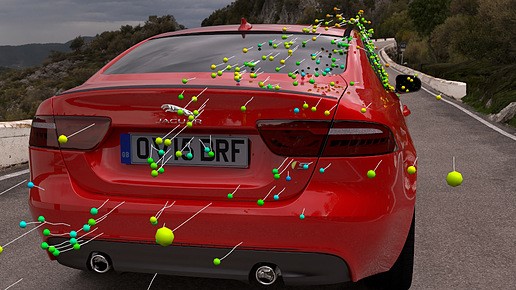 埃克斯空氣動(dòng)力模擬仿真軟件在一輛捷豹XE上的應(yīng)用。
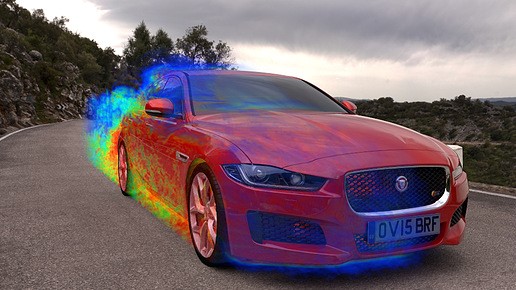 這輛捷豹XE轎車(chē)并不是真的燒著了,只是采用了埃克斯的可視化軟件的仿真功能。
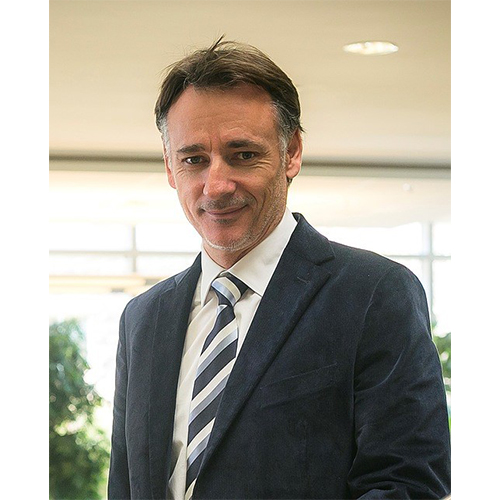 埃克斯歐洲分公司總裁Jean-Paul Roux。
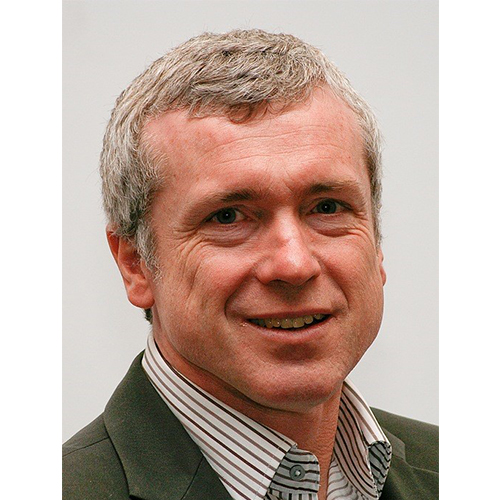 捷豹路虎特種車(chē)輛部(SVO)總監(jiān)Mark Stanton。
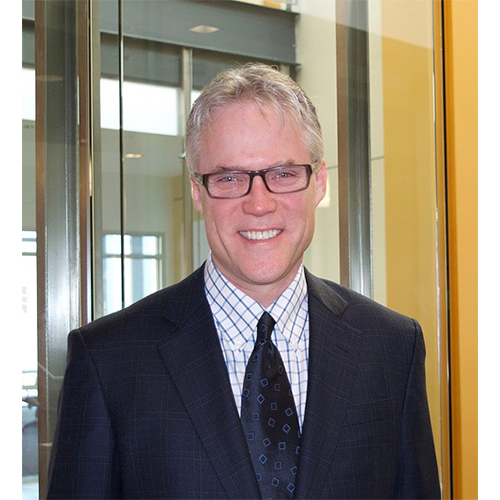 埃克斯設(shè)計(jì)與可視化總監(jiān)Paul Stewart表示,借助仿真工具進(jìn)行設(shè)計(jì),可以讓設(shè)計(jì)師與工程人員之間的溝通更加便利。