今年初,吉凱恩航宇(GKN Aerospace)公司表示,已經向一個大型研究項目交付了公司研發的機翼元件。該項目會在一架測試飛機的機翼上進行試驗,測試與測量自然層流(NLF)設計的優勢。據悉,歐洲的清潔天空(Clean Sky)智能固定翼飛機(Smart Fixed Wing Aircraft,下簡稱SWFA)計劃旨在通過減少飛行阻力,降低下一代飛機的燃料消耗和尾氣排放。該大型計劃的經費50%來自歐盟,也同時獲得了多方的參與和支持,吉凱恩參與的歐洲突破性層流翼驗證機(Breakthrough Laminar Aircraft Demonstrator in Europe,下簡稱BLADE)項目也是該計劃的一部分。
吉凱恩航宇公司高級工程技術副總裁Russ Dunn表示,“通過SFWA計劃下的BLADE項目,我們可以推進有潛力的創新技術、概念和功能,進一步提升飛機的燃料經濟性。”
吉凱恩航宇公司提供的關鍵機翼前緣總成和上蓋,目前已經用于空客(Airbus)A340試飛機右翼的NLF翼截面。由于采用了全新的設計方法和創新制造技術,吉凱恩得以提供一種具有超高耐受性的特殊表面,從而達到NLF級別的性能表現。
在2017年的飛行試驗中,該翼截面將承擔測試NLF機翼結構性能與特點的任務,從而協助驗證預期可以取得的經濟和環境效益:根據預測,采用NLF機翼可以將飛機的飛行風阻降低8%,燃油經濟性提升大約5%。
“無論能夠帶來多少空氣動力學優勢,設計與制造NLF機翼的關鍵挑戰仍在于嚴格控制機翼的表面。”Dunn表示,“消除機翼表面的突起、縫隙、粗糙、不平整處,以及緊固件的接頭至關重要,因為這些都會讓飛機落入更加傳統的‘湍流(turbulent flow)’性能級別。吉凱恩航宇的團隊曾利用民用飛機項目中的結構設計和研發流程,打造了一批整合式共固化(co-cured)復合上蓋,以及具有超高耐受性的機翼前緣表面。結果,我們的第一批零部件質量非常高,已經交付給飛行測試項目使用。”
幾年前,為了基于地面演示(ground based demonstrator,簡稱GBD)而研發的機翼是一款面積為4.5 m x 1 m的機翼前緣。該前緣連接在部分機翼翼盒(partial wing box)之上,非常具有代表性。這種前緣設計可以將機翼分為兩個區域,允許吉凱恩的工程師探索兩種截然不同的設計哲學。
其中,“基礎”部分采用了常見于絕大多數金屬前緣的傳統設計,即為翼肋增加了一層整體復合皮。而“創新”部分則采用了更加激進的設計,從而解決基礎設計不能達到NLF級耐受性需求的問題。本部分采用了一款輕質前緣夾板,結合使用了電熱機翼除冰保護(wing ice protection)技術、防腐蝕涂層,以及沒有采用緊固件的外表面。
在Krueger創新設計中,團隊還采用了增材制造工藝,打造機翼支撐結構,替代基礎設計中的鋁制翼肋。這樣一來,僅需三根翼肋就能完成支撐前緣壁板的任務,分別為一根中央翼肋和二根端部翼肋。這樣的設計能夠確保機翼前緣可以在任何正常工作溫度下,保持合理的空氣動力學性能。與基礎部分相比,創新部分使用的元件和緊固件數量更少,因此質量也更輕,可以極大地提高能效。
本項目由吉凱恩航宇的3個英國技術中心合作完成,分別為英國國家復合材料中心(National Composites Center)、位于盧頓的吉凱恩航宇,以及位于布里斯托爾的吉凱恩航宇增材制造中心。
作者:Jean L. Broge
來源:SAE 《航空航天工程》雜志
翻譯:SAE 上海辦公室
Innovative GKN wing structure contributes to Clean Sky next-gen aircraft
GKN Aerospace announced in January that it has delivered wing components as part of a major research program to test and measure the benefits of natural laminar flow (NLF) designs during trials on the wing of a flight test aircraft. The Breakthrough Laminar Aircraft Demonstrator in Europe (BLADE) project is part of the Clean Sky Smart Fixed Wing Aircraft (SWFA) program, an extensive, 50% European Union-funded, multi-partner activity aimed at lowering fuel consumption and emissions by reducing drag on next-generation.
“The SFWA BLADE program is allowing us to progress innovative technologies, concepts and capabilities with the potential to bring about a step change in aircraft fuel consumption,” said Russ Dunn, Senior Vice President, Engineering and Technology at GKN Aerospace.
GKN Aerospace has delivered the critical leading edge assemblies and upper covers that form part of the NLF wing section on the starboard wing of the Airbus A340 flight test aircraft. These structures offer NLF levels of performance through the adoption, by GKN Aerospace, of a totally new design approach and the application of novel manufacturing technologies that deliver the ultra-high tolerances and exceptional surface finish required.
During flight tests, taking place in 2017, this wing section will be used to test the performance characteristics of NLF wing architecture, helping prove predicted economic and environmental benefits: An NLF wing is expected to reduce wing drag by 8% and improve fuel consumption by approaching 5%.
“The key challenge with designing and manufacturing an NLF wing, with the many aerodynamic benefits that promises, stems from the need to tightly control the wing surface,” said Dunn.“It is vital to eliminate features such as steps, gaps, surface roughness and waviness or fastener heads as these all lead to more traditional ‘turbulent flow’ performance levels. The GKN Aerospace team has created these integrated, co-cured composite upper covers and very high tolerance leading edge surfaces using the same structured design and development process applied in commercial aircraft programs. As a result, our first part was of very high quality and has been delivered for the flight test program.”
The ground based demonstrator (GBD) of the wing developed a couple years ago was a 4.5 m x 1 m section of flight-representative wing leading edge attached to a partial wing box assembly. The leading edge accommodated a Krueger flap in two sections, which allowed GKN engineers to investigate two very different design philosophies.
The first "baseline" section applied a monolithic composite skin to the traditional rib design seen on the majority of metallic leading edges today. The second "innovative" section applied a more radical design to address issues experienced meeting NLF tolerances with the baseline design. This section comprised a lightweight leading edge sandwich panel incorporating electro-thermal wing ice protection technology with an integrated erosion shield and fastener-free outer surface.
Additive manufacturing processes were used to create a novel support structure for the Krueger mechanism, replacing the aluminum ribs in the baseline design. This allowed the leading edge panel to be supported by just three composite ribs: a single central rib and two closing ribs. These maintain the correct leading edge aerodynamic profile over the complete range of operating temperatures. The innovative section had a lower component and fastener count, was significantly lighter, and had greatly improved performance predictions compared to the baseline section.
The overall project was a collaboration between three GKN Aerospace technology centres in the U.K.: a team at the U.K.’s National Composites Center, at GKN Aerospace in Luton, and at the GKN Aerospace additive manufacturing center in Bristol.
Author: Jean L. Broge
Source: SAE Aerospace Engineering Magazine
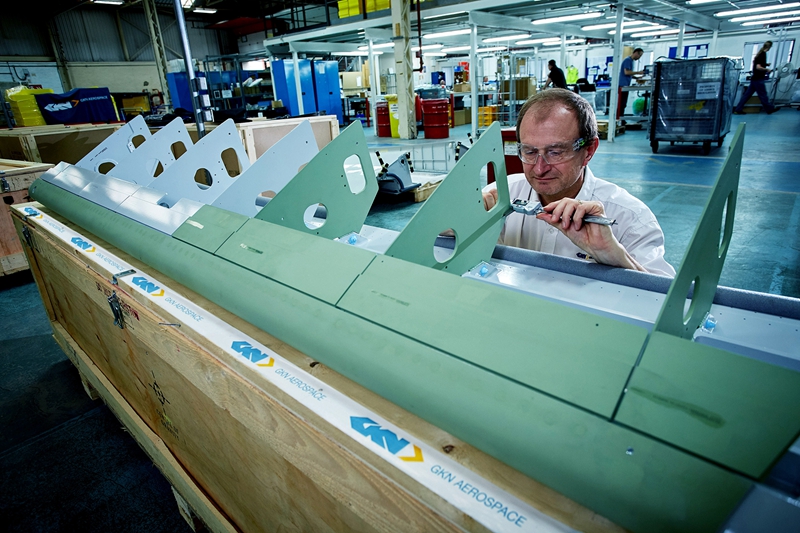 吉凱恩航宇的創新機翼前緣總成,已交付給空客的清潔藍天BLADE項目。
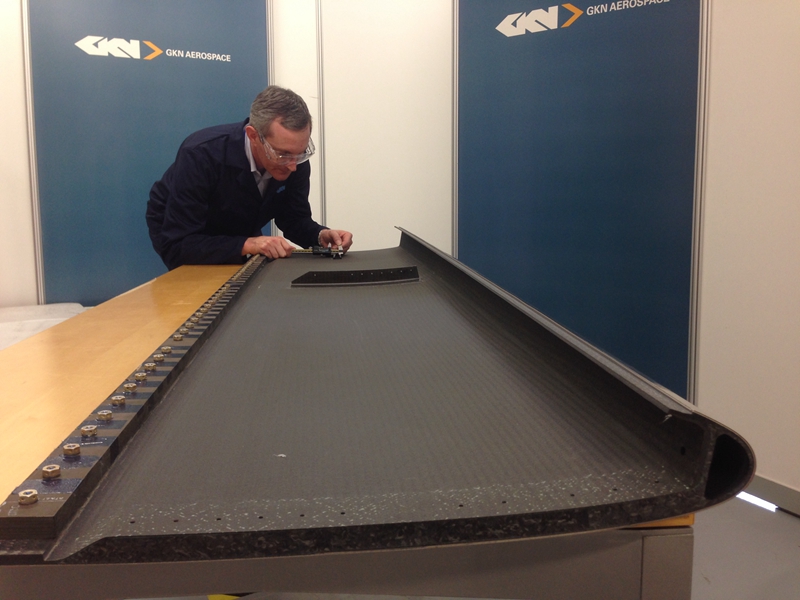 Clean Sky的SFWA項目中生產的創新機翼前緣復合夾板,圖為地面展示階段的產品。