自上市以來,豐田普銳斯(Toyota Prius)的全球總銷量已經超過350萬輛。不難想象,豐田汽車公司肯定希望能夠延續這款標志性混合動力轎車的迅猛勢頭。為了實現這一點,豐田選擇將籌碼押在汽車行業都認可的正統升級上,而非完全投入到突然興起的電驅動大潮之中。
經過升級,2016款普銳斯擁有更長、更低,而且更寬的車身。此外,豐田還特別處理了車輛混動系統中的汽油機部分。豐田稱,普銳斯采用了一款1.8升的自然吸氣阿特金森汽油發動機(型號:2ZR-FXE),其熱力學效率高達40%,完全可以與渦輪增壓柴油機媲美。
在接受《汽車工程雜志》采訪時,豐田的副總工程師Kazuaki Shingo介紹了公司在借助豐田全新的全球平臺(Toyota New Global Architecture,下簡稱TNGA平臺),研發2016款普銳斯時曾遇到的種種挑戰(見 http://articles.sae.org/14485/)。
豐田的首要任務是對普銳斯進行優化,使其擺脫固有形象,不再僅僅是一款強調“環保優勢”的車輛而已。2016款普銳斯是豐田首款采用TNGA平臺的車型,但完全保留了現行版本2700mm的軸距。
雖然軸距相同,但2016款普銳斯的尺寸比之前長61mm、低20mm、寬15mm,車頂最高點也前移了170mm,車輛尾部線條因此更加平緩。該車的自動格柵(automatic grille shutter)可按要求阻斷流向散熱器的氣流,車輛底板的底殼則能使下方氣流順暢地通過車輛懸掛。正因這些改變,新款普銳斯的風阻系數(coefficient of drag)得到了進一步降低,從現行版本的0.25CdA成功降至0.24CdA。此外,車輛座椅H點的位置也下移了58mm,可以給駕駛員帶來更像“汽車”的駕乘感受。
新款普銳斯摒棄了之前的后橫梁設計,采用了一款雙叉臂后懸掛系統。與真正的獨立后懸掛相比,這種懸掛系統能夠給駕駛員帶來更棒的駕乘和操控體驗。前懸掛則延續了現行版本的設計,采用了相當常見的麥弗遜。
豐田的工程師用鋁制制動卡鉗替代了原先的鑄鐵元件,從而減輕了車重,而且他們還從車輛的17吋鋁制車輪中成功削減了0.7kg的重量。
豐田對輪胎的選擇相對自由,不會局限在某一家供應商。這是因為只選擇“一家”供應商意味著可能面臨更多風險,比如福特(Ford)就曾因為供應商的產品存在缺陷,而不得不召回旗下Explorer和Firestone車型,又比如鄧祿普(Dunlop)輪胎在日本的生產就曾因神戶地震而中斷,從而引發供貨不足。很顯然,豐田并不想受到供應商的牽制。因此,普銳斯可以搭配的輪胎種類非常豐富,包括鄧祿普Enasave、優科豪馬Avid、普利司通Ecopia,以及通伊歐NanoEnergy輪胎。
2016款普銳斯的車身采用一體化設計,其扭轉剛度比之前提升了60%。這主要是由于豐田增加了這款車中的高強度鋼用量。此外,該車的發動機蓋和后門框還結合使用了鋁材,進一步減輕了車輛重量。總體來說,不同版本的普銳斯,重量也存在一定差異。目前最輕的版本為普銳斯Eco,重約1365kg,而最重的則為頂配普銳斯Four Touring,重約1397kg。
普銳斯采用了豐田的碰撞預防技術——主動安全P套裝(Toyota Safety Sense P),其功能包括碰撞前制動、行人監測、車道偏離預警與協助、動態巡航控制,以及自動遠光燈開啟等功能。除了完備的P套裝外,豐田公司還推出了一款適用于緊湊型車輛的主動安全C套裝(Toyota Safety Sense C),與P套裝相比,C套裝不具備前向雷達功能。
2016款普銳斯還配備了一款彩色平視顯示器(HUD),可直接在駕駛員的視線內顯示車輛數據。這非常有用,因為一般來說,這些信息都是顯示在位置較低的儀表盤上,而駕駛員必須下移視線才能看得到。
豐田還有效提升了普銳斯的車內舒適度,在地板上鋪了覆蓋更全面,也更厚的一片式吸音墊,解決了之前存在的吸音墊縫隙問題。車輛空調系統采用的是電動壓縮機,在運行時更加安靜。在取暖方面,該車還采用了一款電陶瓷加熱器,與主發動機冷卻加熱器相比,其加熱速度更快。
普銳斯Eco采用了可以阻隔紅外線的耐熱擋風窗,可在夏季時持續減少射入車內的紅外線,減緩車內溫度的上升,從而降低空調的負載。
車輛的動力系統也有助于維持一個舒適的車內環境,其尾氣系統中的熱交換器可將尾氣熱量傳送至冷卻回路,而冷卻回路則與車輛加熱系統相連。這種設計可以縮短發動機開始供熱所需的時間,而且還能在寒冷天氣條件下加快車輛啟停系統的啟動。
為了達到40%的熱效率,關鍵手段之一是對發動機進行有效的熱控制。2016款普銳斯對廢氣再循環(Exhaust Gas Recirculation,下簡稱EGR)系統的利用率高達20%。豐田混合動力車輛系統規劃部集團經理Kentaro Tomo表示,使用EGR系統可以降低發動機的泵送損失,因為發動機的節氣門可以開的更大。
他說,“為了實現這一應用,我們在往回送氣前,必須先降低尾氣的溫度。”因此,普銳斯在將尾氣送回發動機進氣口前,會先將其導入加熱器核心回路中的回流管,使氣體先通過ERG系統的熱交換器。
然而,僅對尾氣進行循環冷卻還不夠。“如果僅進行循環冷卻,不能保證發動機燃燒性能的穩定。”Tomo提醒說,“因此,我們還對發動機的進氣口進行了一些改進,確保湍流可以進入燃燒室內。”這里的改進指的是優化進氣口的設計,而非導片的使用,導片僅在需要時起用。
Tomo介紹說,在達到40%的熱效率后,豐田又開始著眼于更高的目標,希望將這一數字提升到50%。目前,豐田正在探索各種新技術,試圖在無需采用非均質充量壓燃技術的情況下,實現50%的熱效率目標。
普銳斯首先是一輛混合動力車,因此豐田也沒有忽略這款車的電動特性優化。新款普銳斯采用了電機與發動機平行的設計布局,而不是將電機安裝在曲柄一端,并為其搭配飛輪。這種設計能縮短電機的封裝長度,而且還可搭配減速齒輪,提高電機的最高轉速。豐田稱,與之前相比,新設計可以將系統的寄生損失降低20%。
新款普銳斯的DC/DC逆變器可在低負載的情況下減小自身的電流輸出,從而協助提升車輛的燃油經濟性。新車型的逆變器體積比之前更小,可以在發動機艙內騰出更多空間,用于放置之前一直裝在車尾的輔助電池。
車輛的鋰離子電池組擁有56個單體電池,其體積比過去的鎳氫電池組小38%,可以直接安裝在車輛后座之下,而且后座地面無需抬高,在座椅收起后可以用于載貨。
為了使入門級車型價格更具競爭力,在美國境內出售的基本款二代普銳斯仍將采用與老版相同的鎳氫電池。豐田稱,鎳氫電池在其他市場內也將繼續受到歡迎。
豐田稱,由于混合動力系統的峰值功率很難判斷,在普銳斯的燃油經濟性官方數據上一直存在一些爭論。豐田的官方數據是以日本自動車研究所(Japanese Auto Institute)的標準為基礎進行測量的。按照該標準,普銳斯汽油機和電動機協同工作時的輸出功率為90kW(121hp)。
但按照SAE的標準,普銳斯汽油發動機的輸出功率為53kW(95 hp),輸出扭矩為142 N·m,電機的輸出功率則為53kW(71 hp),輸出扭矩為163 N·m。
總的來說,普銳斯(Eco版本除外)的EPA認證燃油經濟性分別為54mpg(城市工況)和50mpg(高速公路工況)。而在車輛裝配更少部件、車重更輕,并且采用硬質輪胎,從而胎壓更高的情況下,普銳斯能夠取得58mpg(城市工況)和53mpg(高速公路工況)的燃油經濟性成績。
二代普銳斯的燃油經濟性有一定程度的提升,應該可以繼續滿足該車型關注環保的核心用戶需求。但是新版車型更優越的行駛動態性能和低懸掛外觀是否能夠贏得其他用戶的青睞,仍有待驗證。
作者:Dan Carney
來源:SAE《汽車工程雜志》
翻譯:SAE 上海辦公室
Prius is re-engineered on Toyota New Global Architecture
With 3.5 million Prius hybrids sold worldwide since its launch, Toyota is understandably keen to maintain the iconic hybrid-electric’s momentum. To that end, the company has relied on upgrades familiar to automotive orthodoxy rather than the upstart electric drive crowd.
In the case of the 2016 Prius, that means bodywork that is longer, lower, and wider. There’s also special attention to the gasoline portion of the car’s gas-electric drivetrain. Toyota claims 40% thermodynamic efficiency for the Atkinson cycle 2ZR-FXE 1.8-L I4 naturally aspirated gasoline engine under the Prius’s hood, a number that rivals turbodiesels.
In an Automotive Engineering Q&A, Assistant Chief Engineer Kazuaki Shingo discussed the challenges of developing the 2016 Prius on the Toyota New Global Architecture (see http://articles.sae.org/14485/).
Toyota’s first order of business was to make the Prius a better car to try to escape its niche as a rolling political statement. It is the first vehicle on the Toyota New Global Architecture, though it returns on exactly the same 106.3-in (2700-mm) wheelbase as the outgoing car.
Even with that similarity, the 2016 Prius is 2.4 in (61 mm) longer, 0.8 in (20 mm) lower, and 0.6 in (15 mm) wider than the outgoing car. The peak of the roof is moved forward 6.7 in (170 mm), providing for a longer taper to the rear. Automatic grille shutters close off airflow to the radiator when it isn’t needed, and underbody covers smooth the flow of air around its suspension. These changes whittle the car’s coefficient of drag down another notch to 0.24 from the old car’s 0.25. The driver’s H-point sits 2.3 in (58 mm) lower than before, imparting a more car-like feel behind the wheel.
A double-wishbone rear suspension replaces the old car’s torsion beam axle, with the predictable improvement in both ride and handling quality from this change to truly independent rear suspension. The front suspension continues with ubiquitous MacPherson struts.
Engineers trimmed unsprung weight by replacing cast iron brake calipers with aluminum ones and by carving 1.5 lb (0.7 kg) from the weight of each of the car’s 17-inch aluminum wheels.
Toyota uses a wide base of suppliers for its tires, as carmakers recall the pinch of supplies that can occur due to defects, as with the Ford Explorer/Firestone recall, or with manufacturing disruptions such as the earthquake in Kobe, Japan, interrupted production of Dunlop tires there. So the Prius comes on Dunlop Enasave, YokohamaAvid, Bridgestone Ecopia, and Toyo NanoEnergy tires.
The new suspension is tied together by a unibody that has 60% better torsional stiffness than before. Increased use of high-strength steel contributes to the improved stiffness, and it combines with aluminum in the hood and rear door frames to also save weight. The lightest Prius Eco is 3010 lb (1365 kg), while the most thoroughly equipped Prius Four Touring weighs 3080 lb (1397 kg).
The Prius gains the suite of Toyota Safety Sense P crash prevention technologies including pre-collision braking, pedestrian detection, lane departure alert and assist, dynamic cruise control, and automatic high beams. The "P" in the system's name differentiates it from a lesser system on Toyota's compact models designated "C," which lacks the forward radar of the P system.
There is also a color headup display providing vehicle data directly in the driver’s line of sight, which is good because the car’s instrument cluster is located in the center of the dashboard.
Toyota addresses cabin comfort with a thicker, more complete one-piece sound-deadening mat for the floor, with none of the gaps of the previous model’s mat. The air conditioner features a quieter electric compressor and for heat, the car has an electric ceramic heater to warm the cabin more quickly than the main engine-coolant heater does.
The Eco model employs a heat-resisting infrared-cut windshield that substantially reduces transmission of infrared rays to the cabin for a lighter air conditioning load in summer.
The car’s powertrain has a feature to assist with cabin comfort, a heat exchanger in the exhaust system that transfers exhaust heat to the coolant circuit that is routed to the car’s heater core. This shortens the time needed for the engine to provide heat and quickens the availability of fuel-saving engine stop/start in cold weather.
Thermal control is a key aspect of the engine’s ability to achieve 40% thermal efficiency. The car runs as much as 20% exhaust gas recirculation. Using EGR reduces pumping losses because the engine can run with its throttle plate open wider, according to Kentaro Tomo, Toyota’s Group Manager for the hybrid vehicle system planning department.
“In order to do that, before we return it, we need to lower the temperature of the exhaust gas,” he said. So the Prius uses the return line of the heater core circuit to flow through a heat exchanger for the EGR just before exhaust gas flows into the engine’s intake side.
However, cooling recirculated exhaust isn’t enough. “Combustion is not stable if you pay attention to that only,” Tomo warned. “For that reason, we made improvements to the intake port to make sure that turbulence is brought to the combustion chamber.” This is done though the design of the port, and not through the use of flaps that operate only when needed.
Having achieved 40% efficiency, Toyota’s sights are now set on reaching 50%efficiency for gasoline engines, according to Tomo. The company is researching techniques that might let it reach that level, even without employing heterogeneous charge compression ignition, he said.
Since it is a Prius, Toyota did not ignore advances on the electric drive side. The car’s electric motor is now mounted parallel to the gasoline engine, rather than to the end of its crankshaft with the flywheel. This reduces package length of the combined motors and it gives the electric motor a higher speed range through a reduction gear. Toyota claims this arrangement cuts parasitic losses by 20% compared to the old layout.
The DC-DC boost converter can now reduce its output current in low-load situations, which also aids in fuel efficiency. The car’s inverter is smaller than before, allowing space under the hood for the auxiliary battery, which used to consume space at the rear of the car.
The 56-cell lithium-ion battery pack is 38% smaller than the old nickel-metal hydride pack and now fits entirely beneath the rear seat, permitting an unobstructed flat load floor when the rear seats are folded.
In the U.S., the base Prius Two will sell with a NiMH battery like the old car to provide a low entry price. This battery will continue to be popular in other markets, Toyota said.
Because of difficulty determining peak system power in a hybrid-electric drivetrain there is some debate over official rating, Toyota said. The company has chosen theJapanese Auto Institute standard as its benchmark, and according to that rating, the Prius’s gasoline and electric engines produce a total of 121 hp (90 kW) when working together.
SAE net power for the gasoline engine is 95 hp (71 kW) and 105 lb·ft (142 N·m), while the electric motor is rated at 71 hp (53 kW) and 120 lb·ft (163 N·m).
Together, the changes produce EPA fuel economy ratings of 54 mpg city and 50 mpg highway for all Prius models other than the Eco. That one is rated at 58 mpg city and 53 mpg highway as a result of lighter weight from less equipment and harder tires with a higher specified air pressure.
This increased efficiency should continue to satisfy the car’s core environmentalist customer base, but it will remain to be seen whether the improved driving dynamics and lower-slung looks expand the car’s appeal to customers with less ideological motivation.
Author: Dan Carney
Source: SAE Automotive Engineering Magazine
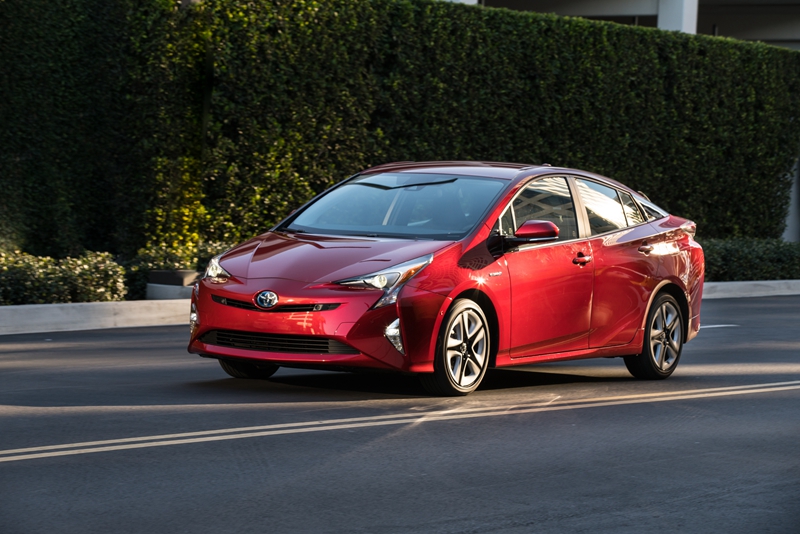 豐田希望新款普銳斯的顏色更加激動人心,圖為Hypersonic紅色款。
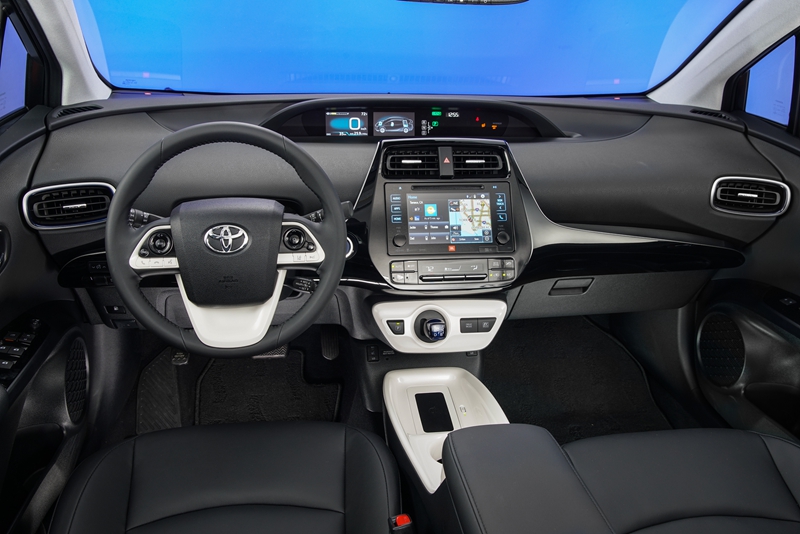 2016款普銳斯保留了之前的中心儀表盤設計,但又在駕駛員的視線前方增加了一款全新的彩色平視顯示器。
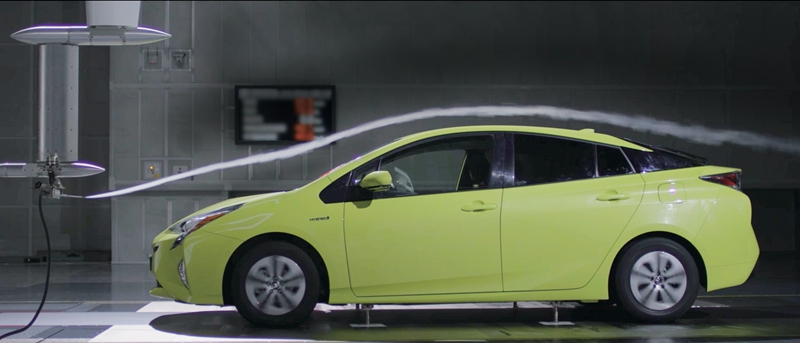 新款普銳斯的底盤更低、車身形狀更長,風阻系數僅為0.24CdA。
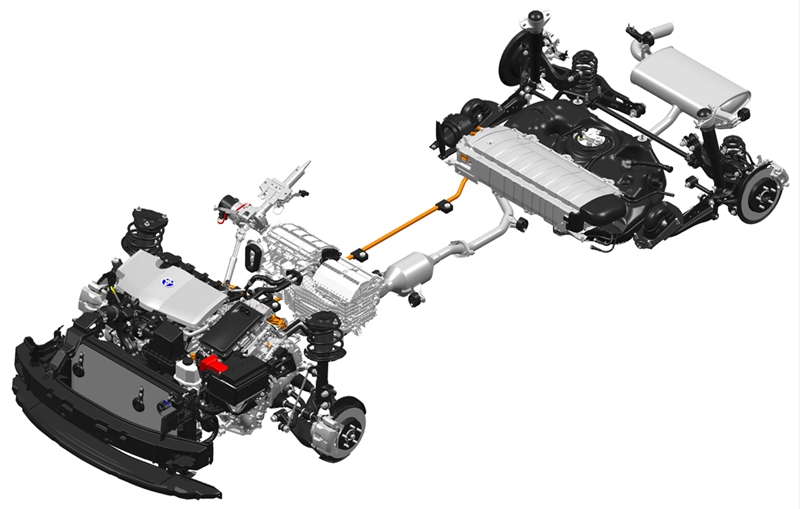 由于元件尺寸有所減小,豐田得以在新款普銳斯的發動機艙內騰出更大空間,用來安裝輔助電池,此外還能將牽引電池置于后座下方,騰出了完整的載貨空間。
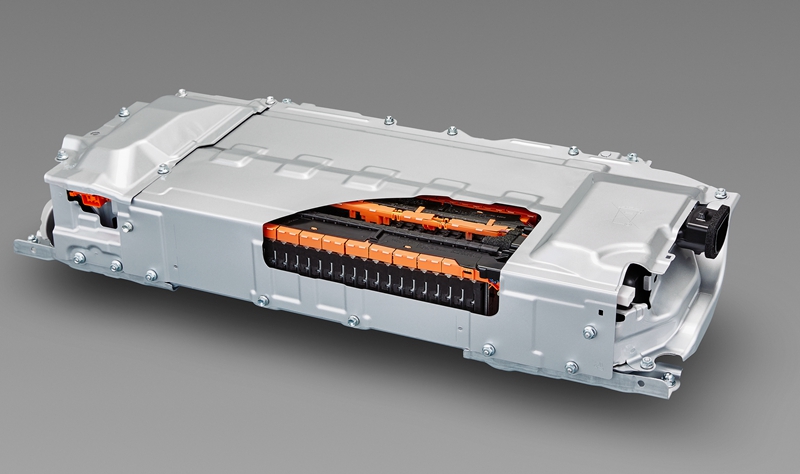 新型鋰離子電池組的體積比之前的鎳氫電池小38%。