根據美國國家安全委員會統計發布的數據表明,自2007年以來,在美國的因交通事故而死亡的機率得到了大幅的下降。其最大的功臣就是“汽車碰撞測試”所帶來的成果,汽車制造商通過運用這一系列的測試數據不斷來提供汽車的安全性能。
現如今,測試和工具開發團體的碰撞測試的方向正不斷向如何防撞擴展。由SAE編輯們舉辦的《碰撞測試的未來》系列在線技術研討會中,4名行業專家就防撞和碰撞防護領域的一些最新進展展開了討論。點擊此處跳轉至在線技術研討會頁面。(注冊后您可以在線觀看視頻及下載相關PPT,但您觀看視頻時可能需要使用VPN。)
如何防撞是美國公路安全保險研究所(IIHS)的重點研究發展領域,最近他們特地建造了一個專門用于研究如何防撞的試驗場,用于下一階段的測試。
IIHS高級研究工程師Becky Mueller表示:“我們未來的所有研究將圍繞著以下兩大方針展開,一是,如何盡可能的避免事故的發生?二是,那事故萬一真的發生了,我們又怎么樣才能將其嚴重程度降到最低?”
在2013年,IIHS率先推出一項“正向防撞測試”。任何一款車輛若想獲得“頂級安全+(Top Safety Pick +)”獎項殊榮,必須具備防撞技術,并在一系列的測試取得高分。
Mueller補充道,目前IIHS也在針對如何減少夜間的碰撞機率不斷努力。IIHS計劃在未來的一年左右,推出一項有關“汽車前照燈”的新評價項目,駕駛員視野及防眩光將是主要考核課目。
盡管防撞是眼下的熱門話題,但車輛的耐撞性依然是評價車輛安全性能的核心重點。設計工具提供商為了幫助OEM提高車輛的性能,也正在從各個方面進行研究并提出了相關策略。汽車輕量化概念的提出,目的是在于在提高汽車的燃油經濟性、降低汽車制造成本,但是這一切對于安全性能來說著實是一大挑戰。
“安全方面的政策越來越嚴,但要如何在有限的預算內滿足這些要求更是難上加難”,Simulia戰略項目總監Marc Schrank表示,“但越來越多的全新輕量化技術在提高安全性能方面也起到了重要的作用。”
高強度鋼、鋁、鎂、碳纖維復合材料的應用,使得設計變得越來越困難,因為仿真工具無法精確模擬預估碰撞后的情況。但精確的仿真預判對于汽車制造商來說異常重要,因為精確仿真的存在他們可以直接在早期的量產車上進行測試,而不必專門為此制造一輛原型車。
“碳纖維是一種很有意思的材料,它在給我帶來機遇的同時,也給帶來了挑戰,” Schrank表示。“它能夠吸收大量的能量,但回彈性往往卻都不佳。形變表現與金屬相比簡直是鮮明的對比。”
近年來,虛擬測試能夠檢測的項目數量迅速增加,與此同時測試時間卻正在大幅度的縮短,這使得我們能夠獲得更真實的數據,提高迭代速度。
“測試速度越來越快,模型尺寸也明顯變大了,” Altair的高級業務發展總監Jean Michel Terrier表示。“現在一天之內就可以完成500多萬個元素的碰撞仿真測試。”
盡管仿真測試能給我們帶來許多好處,但在線研討會的專家們也指出,真實測試依然是必須的。SEA公司運用自動駕駛汽車來再現真實碰撞情況,而工作人員則負責設計各種非常具體的碰撞情況。
“自動駕駛汽車可以實現那些傳統碰撞測試所不能進行的測試,” SEA車輛動力學總監Gary J. Heydinger表示。“譬如我們可以開展在實驗室里做不了的滿油測試,又如休閑越野車常見的翻車等復雜測試。”
作者:Terry Costlow
來源:SAE《汽車工程雜志》
翻譯:SAE上海辦公室
Crash testing advances on many fronts
Traffic fatalities have declined significantly over the last several years, but the U.S. is on track to have its deadliest year since 2007, according to the National Safety Council. That’s shining the spotlight on crash testing, which helps automakers create the safest vehicles possible.
Crash-testing research being done by testing groups and tool developers is extending its reach to crash avoidance. Some of the latest developments in collision avoidance and protection were recently explored by four industry experts in "The Future of Crash Testing" Technical Webinar Series from the Editors of SAE, which isnow available for on-demand viewing.
Avoiding crashes is a critical factor for development at the Insurance Institute for Highway Safety. The group recently built a crash avoidance dome where next level testing will occur.
“We want to prevent crashes when possible, and to reduce the severity when collisions occur,” said Becky Mueller, Senior Research Engineer at IIHS. “We’re taking a twofold approach on all our future research.”
IIHS introduced a frontal crash prevention test in 2013. Prevention is now a factor in its Top Safety Pick Plus award, which requires vehicles to have technology for avoiding crashes and good rankings on all crash tests.
There’s also an effort to reduce collisions that occur at night, Mueller added. IIHS is preparing a new evaluation for headlights, looking at vision and glare. A new ratings program is expected “in a year or so,” she said.
Though crash prevention has become a hot topic, crash worthiness remains a central factor in the push for improved safety. Design tool providers are working on a range of strategies that will help automakers build safe vehicles. Reducing weight to improve fuel consumption is a challenge for safety, as is keeping costs in check.
“Safety regulations are becoming more strict; one issue is meeting those requirements within cost budgets,” said Marc Schrank is Director of Strategic Projects at Simulia. “Secondly, the increase in the number of new lightweighting technologies plays a substantial role in safety.”
Changes in materials such as high-strength steel, aluminum, magnesium, and composites like carbon fiber are making it more difficult for design and simulation tools to precisely predict what will happen in collisions. High levels of predictiveness are important because they let automakers run tests on early production vehicles instead of creating prototypes to determine whether simulations are accurate.
“Carbon fiber is an interesting material that presents opportunity and challenges,” Schrank said. “It has high energy absorption, but composites have little resiliency. Deformation is in stark contrast to metal’s performance.”
The number of factors that can be included in virtual tests has soared in recent years while the time needed to run tests has fallen. That makes for more realistic tests and more iterations.
“There’s significantly more speed and increased model size,” said Jean Michel Terrier, Altair’s Senior Business Development Director. “Now there are over 5 million elements and crash simulations can run in one night.”
While simulations bring significant benefits, webinar speakers noted that real world tests are still needed. SEA Ltd. specializes in reproducing real-world crashes, using autonomous vehicles that let employees cause very specific types of crashes.
“Autonomous vehicle controls permit crash testing that is not possible using traditional crash tests,” said Gary J. Heydinger, Director of Vehicle Dynamics at SEA. “We do things like full fuel testing that you can’t do in a lab. We can also do complex tests like recreational off-highway vehicle rollovers, which are common for these vehicles.”
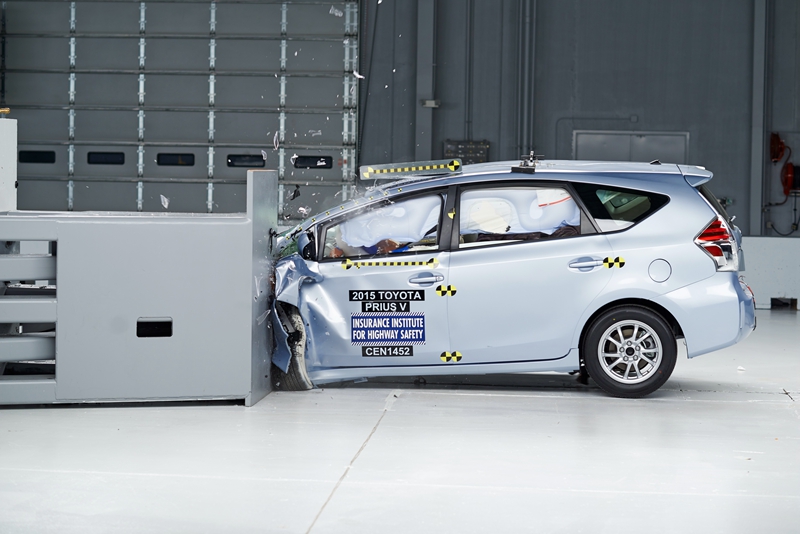 IIHS將會不斷改善碰撞測試,直到能夠100%避免碰撞事故的發生。