高端汽車制造商的頂級車型正在遭遇大滑坡,因此在推出新車的時候,各大制造商都想方設法賦予車輛更奢華的配置和更尖端的科技。
在2015年法蘭克福車展上,寶馬揭開了全新7系的面紗,直接對戰梅賽德斯奔馳S級與奧迪A8等車型。盡管使用在跑車上的碳纖維材料還未在轎車中普及使用,但2016年的寶馬7系向人們展示了這一方向,7系的底盤使用了強化碳纖維制作,堅固程度堪比鋼結構。寶馬將這一混合材料稱為“碳內核”。
車門、行李廂蓋、懸架、制動和車輪部件都是用鋁合金制作,為車身結構減輕了15%的重量。
“這種將碳纖維結構與鋼材、鋁材、鎂和塑料相結合的做法使750i xDrive比舊版車型輕了130 kg (287 磅),”寶馬研發委員會成員Klaus Frolich指出。“輕量化設計總共實現了200 kg (440 磅)的減重,這樣我們可以為車輛添加更多的舒適與安全配置。這讓7系成為了該級別中最輕的豪華轎車。”
從外部來看,7系新添的一系列主動設計使車身外殼的形狀與空氣流動更為流暢。其中包括格柵百葉窗和前翼子板上的垂直進氣口。前者的作用相當于一塊“空氣擋幕”,可將氣流導向輪罩拱的外側,而后者則是一個“呼吸器”,可將空氣直接吸入前輪罩拱。這些主動設計加上密封的車身底座一共可減少15%的氣動阻力。
7系的前方與后方都安裝了自調平空氣懸架。在上陡坡的時候,駕駛員可以手動將車輛抬升20 mm (0.8 英寸),而在高速行駛時,車輛會自動降低10 mm (0.4 英寸)以減小阻力。
主動防傾桿是一個在SUV上越來越常見的裝置,它的作用是車輛轉彎時先松開車輪,再減少車身傾斜。新7系上使用的防傾桿可在車輛直線行駛時,讓每個角落的懸架對路面磕碰實現獨立反應,不會互相干涉。只有在轉彎時,防傾桿才會發揮它的本來作用——減少車身傾斜。
此外,7系還有一個可變速率轉向架和主動后轉向系統,它們也為操縱性能的提升做出了貢獻。
其他技術呢?比如遠程控制自動泊車技術?“這一技術可以讓汽車自動進出車庫或停車場,而駕駛員無需用方向盤操縱” ,Frolich解釋道。駕駛員則使用寶馬新推出的“顯示鑰匙”(Display Key),它的外觀是一個小型的智能手機。駕駛員可以用它來啟動車輛,查看鎖門狀態和服務通知等信息。新7系將于今年秋天登陸經銷商,屆時還不會帶有遠程控制泊車系統。但他補充道,這一技術不用等多久便會推出。
Frolich自信地邀請客戶試用7系上全新推出的姿勢控制系統。這是車載信息娛樂系統中的一個界面,可讀取該方向上的駕駛員的各種姿勢,并判斷駕駛員是否試圖控制某個功能,如聽收音機和使用電話等。考慮到寶馬語音控制系統和iDrive界面在過去的市場反應褒貶不一,這個新的姿勢識別電腦系統性能如何,還需進一步觀察。
寶馬對其標志性的iDrive信息娛樂系統界面進行了進一步升級。10年來,寶馬一直堅稱指紋會弄臟觸屏,但今年它終于在控制旋鈕之外加上了觸屏輸入。
具有1個10頻道、1400 W擴音器與16個揚聲器的Bowers & Wilkins鉆石環繞式音響系統,可讓車內乘客充分沉浸在音樂中。此外,7系還采用了一個全新的平視顯示儀。該設備可將信息以圖像的方式投射在擋風玻璃上,投射畫面比舊系統大75%,圖像質量與呈現細節也更加完善。
寶馬公布了美國市場上7系的三種傳動系統:750i將使用一臺445馬力(332-kW)的雙渦輪4.4 L V8發動機,740i將使用一臺320馬力(239-kW) 的3.0 L雙渦輪直列式6缸發動機,而740e將采用由一臺258馬力(192-kW)2.0 L雙渦輪直列式4缸發動機與83 kW電機組成的插電式混合動力系統。混動系統的總輸出功率為243 kW。三輛車都搭載了八速自動變速箱。
V8發動機采用“熱V”設計,意味著一對霍尼韋爾雙渦輪增壓器位于V字中間。新一代發動機的壓縮率為10.5:1,比舊款高了0.5。冷卻系統也得到了優化,一個由地圖控制的水泵讓水流朝著氣缸蓋和氣缸組兩個方向流動。冷啟動時,系統流量被限制在正常水平的10%,這樣可使機身更快地升溫。
直列式6缸發動機為全鋁材結構,具備可變閥門正時和汽油直接噴射等功能,運行順暢且功率強大。
插電式混合動力版740e的鋰離子電池組可在不使用燃油的情況下確保75 mph (120 km/h)的駕駛速度,純電動行駛里程高達23英里(37 km)。可采用的充電方式包括標準家用電源、公共充電樁,和寶馬的i Wallbox。寶馬聲稱該車的最大效率為112 mpg。
此外,寶馬還將在全球市場推出730d,它將搭載一臺265馬力(198-kW)、52 mpg的3.0 L直列式6缸柴油發動機。
作者:Dan Carney
來源:SAE《汽車工程雜志》
翻譯:SAE 上海辦公室
BMW lightens 7 Series, but bulks up on tech
Prestige car manufacturers are trading body blows among their top-segment models, with each ladling on more lavish content and more cutting-edge technology with each new introduction.
So it was for BMW at the 2015 Frankfurt Motor Show, where it pulled the cover off its 7 Series and released it to take on the Mercedes-Benz S-Class and Audi A8. We may not have yet reached the day when carbon-fiber chassis seen in sports cars have proliferated among these sedans, but the 2016 7 Series offers a step in that direction with a chassis featuring significant carbon-fiber reinforcement to a mostly steel structure. BMW terms this hybrid materials approach “carbon core.”
The car’s doors and trunk lid are aluminum, and use of that metal in the suspension, brakes, and wheels slashes unsprung weight by 15%.
“Its innovative combination of carbon-fiber structures with steel, aluminum, magnesium, and plastic means that the 750i xDrive is 130 kg (287 lb) lighter than the previous model,” noted Klaus Frolich, BMW Board Member for Research and Development. “Lightweight design measures adding up to roughly 200 kg (440 lb) have enabled us to integrate additional comfort and safety features,” he said. “This ensures that the 7 Series is the lightest luxury sedan in its segment.”
Outside, the body shell is smoothed and airflowed aided by active measures such as grille shutters, an “air curtain” that steers airflow past the side of the wheel arch, while “air breathers” direct air into the front wheel arches through vertical intakes in the front fenders. These measures, along with a sealed underbody, contribute to a 15% reduction in aerodynamic drag.
Front and rear self-leveling air suspension lets drivers manually raise the car by 20 mm (0.8 in) when approaching steep entrances and automatically lowers is by 10 mm (0.4 in) when driving at highway speeds for reduced drag.
An active anti-roll bar is a feature increasingly seen on SUVs because it permits disconnection for wheel articulation when driving off road, then returns to its normal function of reducing body lean in turns on road. The new 7 Series uses one so it can disconnect the bar when the car is driving in a straight line to let each corner’s suspension respond to bumps individually, without affecting the others. When turning, the anti-roll bar returns to its normal function.
The 7 Series also has a variable ratio steering rack and active rear steering, which combine to provide improved maneuverability.
What else? How about remote control self-parking? “This means the vehicle can maneuver itself in and out of a garage or parking spot without the driver behind the wheel,” Frolich explained. The driver will use BMW’s new Display Key, which appears to combine the appearance of a small smartphone with functions such as starting, the car’s lock status, and even service notifications. Remote-control parking will not be available when cars reach dealers this fall, but is scheduled to follow soon afterward, he added.
Frolich boldly invited customers to try the 7 Series’ new gesture-control system, an interface for the car’s infotainment systems that reads the driver’s gesticulating in its direction and interprets that to control functions like radio and phone. Considering the mixed record of voice command systems and BMW’s iDrive interface, it is worrisome to consider what gestures the computer system might induce.
BMW continues to refine its signature iDrive infotainment interface, finally combining touch screen inputs with its control knob despite a decade of insisting that fingerprints make touch screens undesirable.
A Bowers & Wilkins Diamond surround sound system features a 10-channel, 1400-W amplifier and 16 speakers to immerse occupants in sound. Meanwhile a new headup display projects information for the driver with an image on the windshield that is 75% larger than the previous system, with improved image quality and detail.
BMW has announced three U.S. gasoline drivetrains for the 7 Series; a 445-hp (332-kW) twin-turbo 4.4-L V8 for the 750i, a 320-hp (239-kW) 3.0-L twin-turbo inline six for the 740i, and a 258-hp (192-kW) 2.0-L twin-turbo inline four and 83 kW electric motor plug-in hybrid-electric combination in the 740e. The hybrid's total system output is 243 kW. All three cars use eight-speed automatic transmission.
The V8 is a hot-vee design, nesting a pair of Honeywell twin scroll turbos in the valley of its vee. Compression for this iteration of the engine climbs a half-point to 10.5:1, with cooling optimized with separate flow to the heads and cylinder liners determined by a map-controlled water pump. System flow can be restricted to 10% of normal for faster warmup on cold starts.
BMW is debuting a new inline-six for 2016 featuring all-aluminum construction, variable valve timing, and direct gasoline fuel injection for a good combination of smoothness and power.
The plug-in hybrid 740e has a lithium-ion battery pack that can propel the car with no fuel consumption at speeds as high as 75 mph (120 km/h) or for distances as far as 23 mi (37 km). Charging is via standard household current, public charging station or BMW’s i Wallbox. BMW claims maximum efficiency of 112 mpg for the plug-in hybrid
Global markets will also enjoy the 730d, a 265-hp (198-kW) 3.0-L, 52-mpg fuel-sipping 3.0-L inline six-cylinder diesel.
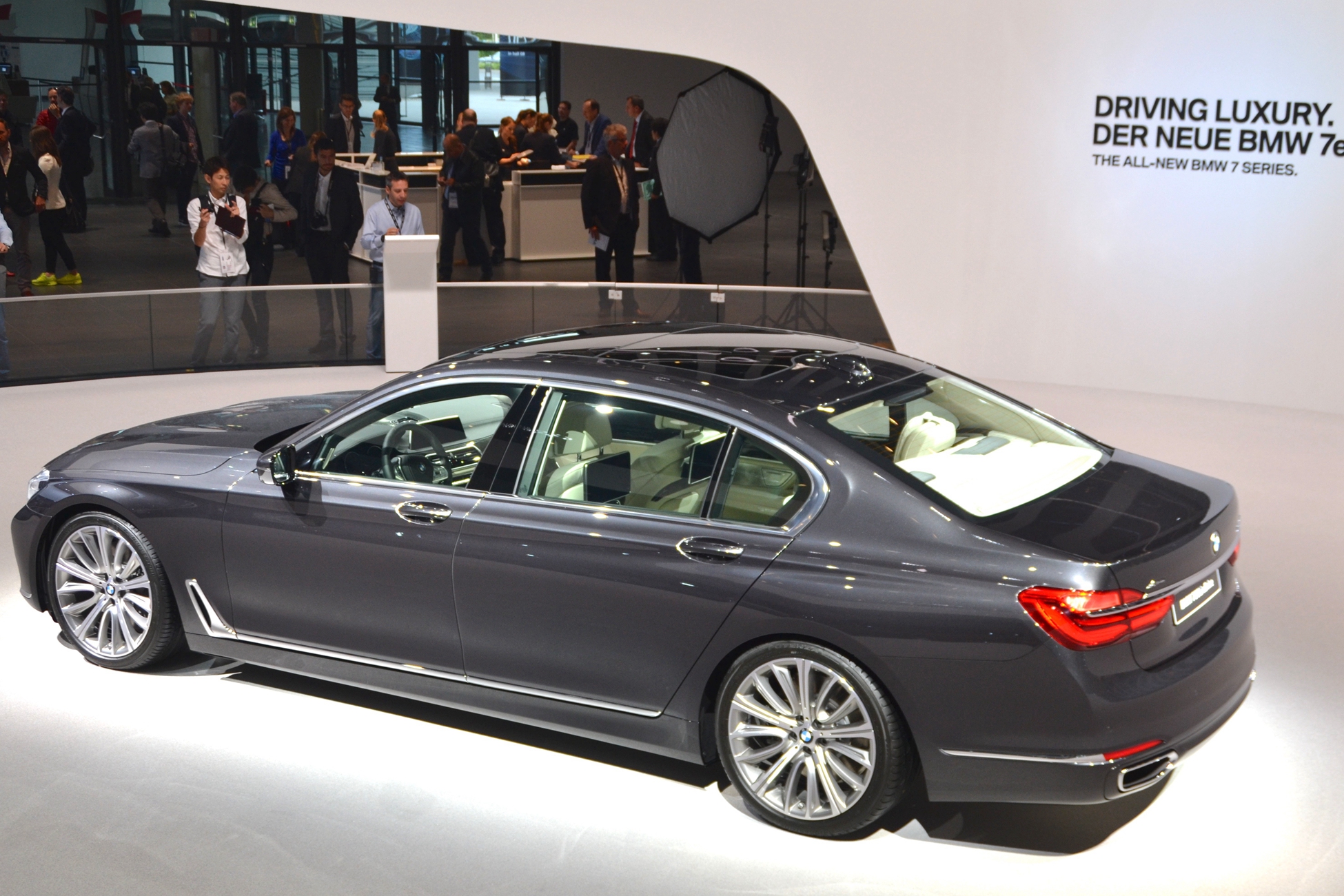 2016年寶馬7系的光滑外形,使得新車型比舊款降低了15%的氣動阻力。
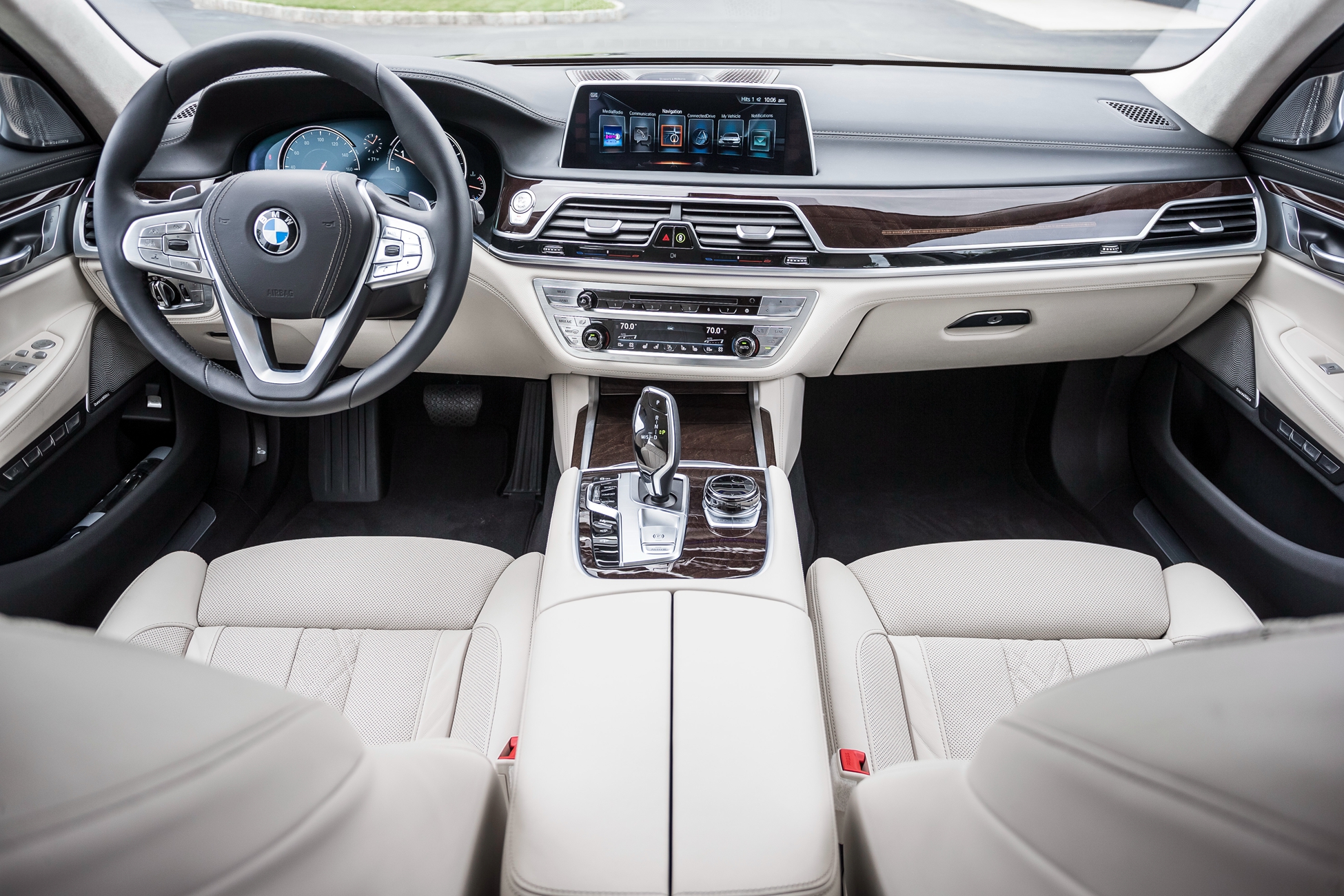 位于7系儀表板中央的高精度信息娛樂系統顯示器換成了觸屏,使駕駛員可以更方便地使用某些功能。
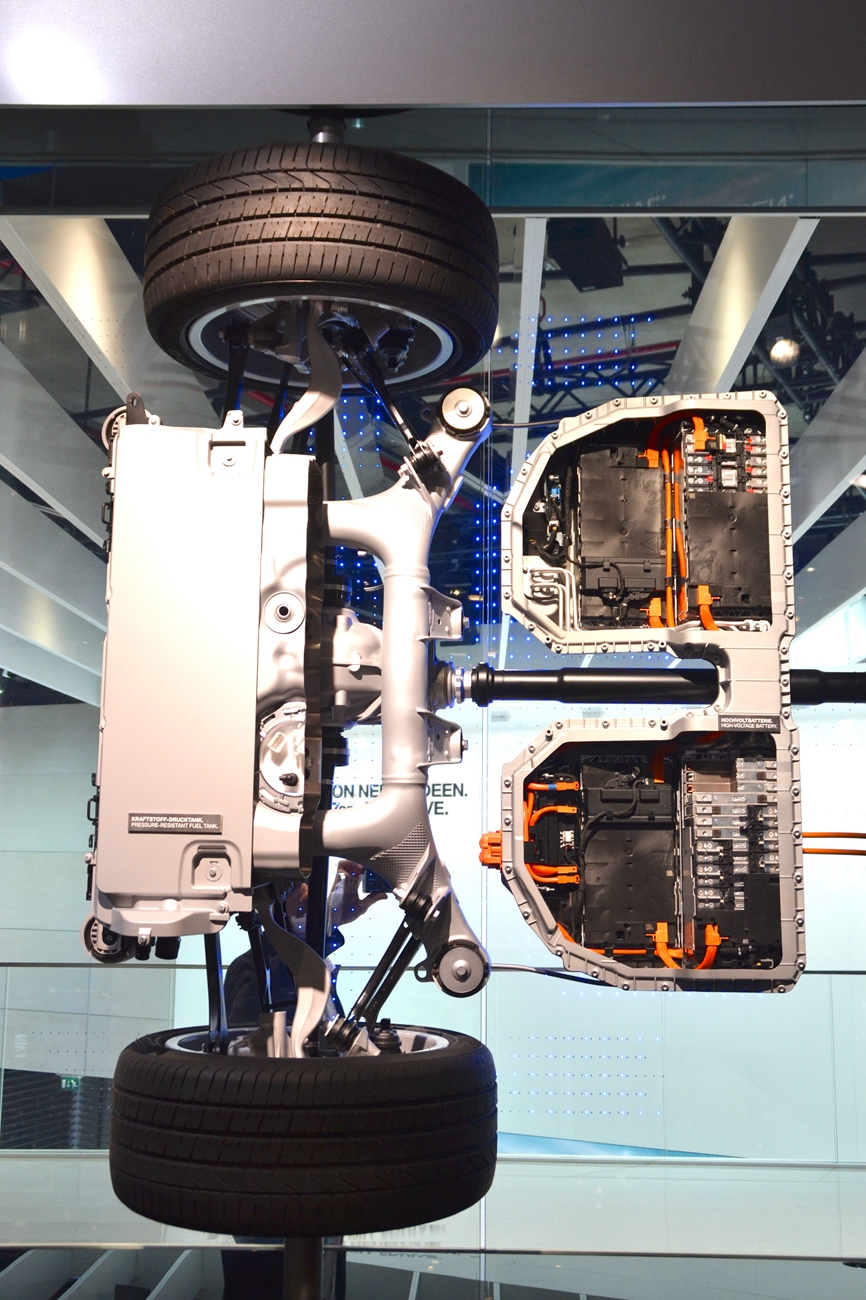 插電式混合動力版7系的鋰離子電池組的純電動里程為23英里。
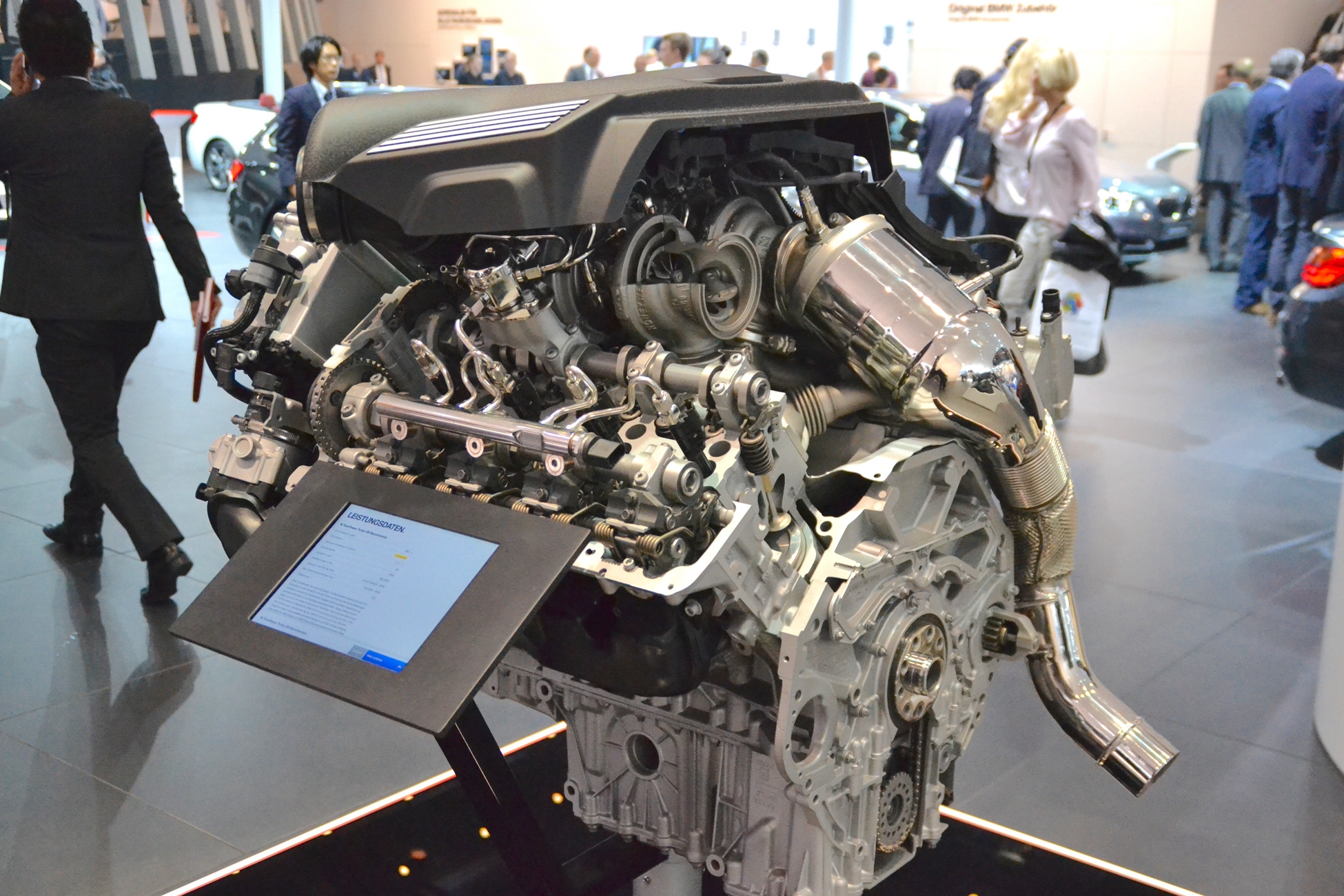 4.4 L V8發動機將一對霍尼韋爾渦輪增壓器置于V形的中間。