消費者對捷豹標志性轎跑、跑車和轎車的興趣日減,導致其市場份額走低。為了挽救這一局面,捷豹決定涉足急速發展的跨界SUV市場。在2015法蘭克福車展上亮相的2016 F-Pace是一輛以鋁合金為主要材料打造的“高性能跨界SUV”,捷豹稱其為一輛適應全天候、偏公路用途的房車,不僅可以輕松駕馭公路,而且還能征服那條著名的盧比肯小道。
2016 F-Pace在理念上非常接近于保時捷的人氣車型Macan,捷豹正是以它為基準來設計F-Pace的。捷豹將F-Pace的基底稱為“輕型鋁合金架構”,同樣適用該架構的還有XE和XF轎車。“我們知道,人們經常把保時捷的Macan作為這一級別的參照車”,捷豹汽車項目主管Andy Whyman表示。
捷豹不愿使用“平臺”這個詞,因為它往往暗示著與其他車型共享部件,而F-Pace上81%的內容都和另外兩輛轎車不同。Stride表示,鋁合金占據了整車重量的80%,多于其他任何跨界SUV。通常使用抗沖擊高強度鋼材的地方都使用了高強度鋁合金,包括B柱和門板周圍的沖壓件。沖擊塔則是用高壓壓鑄鋁合金制成。
捷豹自豪地表示,F-Pace中使用的1/3鋁合金都是回收材料,而且它還打算在2020年前將這一比例提升至75%。這意味著目前捷豹每年對3萬噸的鋁進行重復利用。需要指出的是,這些回收的鋁材料都是捷豹沖壓工廠中生產的廢料鋁,并不是說那些用完的啤酒罐找到了一個高級的歸宿。
那是因為F-Pace中使用的大多數鋁合金都是一種符合RC5754級別的專用鋁,由捷豹與Novelis 共同研發,具備特殊的強度特性。“我們正在研究對消費后產品加以利用,” Whyman表示。底板沖壓件似乎最適合用這些回收材料制作,“因為啤酒罐的材料和底板很接近”。而用于車身結構的鋁合金則全是高強度制品。
其他創新材料包括在前車架橫向構件與儀表板橫向構件中使用的鎂。而后車廂則是用復合材料制作的。最終形成的白車身重量為298 kg(657磅),與體型小得多的菲亞特500 L相當。
Whyman表示,通過10萬小時的計算機模擬與1.5萬小時的結構工程制作,捷豹完成了F-Pace的設計優化,前端與后端的橫向硬度分別比Macan高出50%和35%。
在轉向方面,F-Pace使用博世汽車操縱系統公司(Bosch Automotive Steering)生產的可變速率電子助力轉向系統,捷豹還專門為其設計了一套軟件。上述車身硬度與這套軟件共同實現了F-Pace干脆利落的轉向反應。
前懸架是雙叉骨結構,后懸架是捷豹稱之為“一體化連接式的”雙叉骨,上面的腳輪設計可以在急剎車的時候幫助車身穩定,Whyman表示。不僅如此,它還能在縱向上增強緩沖能力,抵御坑洼等障礙物造成的尖銳沖擊。減震器由Bilstein公司生產。還有一個使用鋁合金的部位是前轉向節,使用鑄鋁模鍛造工藝制作而成,因而具備極高的硬度。
F-Pace上市時將提供5種發動機選項,其中3種將用于美國市場。它們分別是一臺180-PS (132-kW) 2.0-L渦輪柴油四缸發動機、一臺340-PS (250-kW) 3.0-L增壓汽油V6發動機以及同款發動機的380-PS (270-kW)版本。
Ingenium生產的柴油發動機中采用了可變排氣凸輪正時技術,可在車輛冷啟動時對后處理系統中的尾氣迅速加熱。在一個獨立的冷卻系統、一臺可變水泵和一個恒溫器的作用下,發動機自身也能實現快速升溫。一個冷卻低壓EGR系統可配合1800巴(26.1 ksi)的共軌噴射系統和可變速率渦輪增壓器,共同降低氮氧化物的含量。
兩臺V6發動機與F系跑車中采用的一樣,但新款經過了一些調整,可以使駕駛員更好地駕馭低速反應。除了美國市場的3臺發動機外,國際市場上還將推出一臺300-PS (220-kW) 3.0-L的雙渦輪柴油V6發動機與一臺功率尚未公布的渦輪增壓2.0-L汽油四缸發動機。據捷豹的知情人士透露,汽油四缸發動機日后也將進入美國市場。
所有發動機都將搭配ZF八速自動變速箱,但在某些市場中,柴油四缸發動機還可以搭配一款六速手動變速箱。后輪驅動是柴油版F-Pace的標準配置,用戶也可選擇全輪驅動,而V6汽油發動機一律為全輪驅動。
F-Pace的BorgWarner全輪驅動系統是基于其他捷豹車型采用的系統改進而成的,新系統的重量精簡了16%,內部損耗也降低了10%。全輪驅動版只比后驅版重8kg(18磅)。
車輪的尺寸從18到22英寸不等。SuperAlloy Industrial有限公司生產的22英寸車輪的輪胎壁比競爭車型更高,有助于抵擋日積月累的沖擊。
F-Pace內部也充滿了新技術,一臺10.2英寸的觸摸式信息顯示屏和一塊12.3英寸的儀表板由一個Intelquad內核處理器驅動,并配有一臺60 GB的固態硬盤。這些硬件確保了按壓、滑動和滾動等操作的迅速與敏捷,但捷豹同時也為具有17個揚聲器的825 W音響系統保留了傳統的音量控制旋鈕。這與凱迪拉克和本田不一樣,它們主要是通過觸屏和方向盤來控制音量的。
F-Pace的所有系統部件都是通過千兆以太網連接起來的,而且它是第一輛采用這種技術的車型。之所以這樣做可行,是因為F-Pace內置了手機上使用的Wifi功能,搭配的車頂天線使信號接收能力比手機還要好上30%。它最多可以同時支持8個無線設備的上聯網。
這一手機聯網功能還能讓車主使用Apple iOS或谷歌安卓智能設備遠程連接車輛,便于檢查車門是否上鎖、車窗是否打開、最近將車停在何處,以及燃油和擋風玻璃清洗液的剩余量等問題。他們還能使用app來完成為車輛解鎖、啟動發動機、接收報警裝置傳來的警報信息、遠程重置等操作。
F-Pace還有一個名為主動鑰匙(Active Key)的創新系統,它是一個由 Flextronics生產的RFID橡膠手環,車主可以像Fitbit健康追蹤腕帶一樣佩戴該手環。車主可將貴重物品鎖在車內,并通過將主動鑰匙手環按壓在F-Pace后方的捷豹徽章上來完成解鎖。Delphi 車載系統會與被動式的手環主動聯系,因此手環中沒有需要充電的電池。
四缸柴油版F-Pace將于今年秋天登陸美國,汽油六缸發動機將于2016年上市。
作者:Dan Carney
來源:SAE《汽車工程雜志》
翻譯:SAE 上海辦公室
Jaguar enters performance crossover SUV segment
In a bid to combat flagging market share due to declining consumer interest in its signature coupes, roadsters, and sedans, Jaguar is making its first move into the booming market for crossover SUVs. The 2016 F-Pace, shown at the 2015 Frankfurt Motor Show, is an aluminum-intensive "performance crossover," Jaguar's term for an all-weather, on-road-focused wagon with real handling on pavement and no pretensions that it is meant to conquer the Rubicon Trail.
Philosophically, this is similar to Porsche's wildly popular Macan, a vehicle Jaguar used as a benchmark for the F-Pace. Jaguar calls its foundation the Lightweight Aluminum Architecture, which it shares with the XE and XF sedans. "We recognize that the dynamic benchmark in the segment is the Porsche Macan," acknowledged Vehicle Program Director Andy Whyman.
The company shies from the term "platform" with its implicit parts sharing because the F-Pace is 81% unique from its sedan siblings. The result is a vehicle that is 80% aluminum by weight, which is more than any other crossover SUV, said Kevin Stride, Jaguar XE Vehicle Line Director. Areas that are normally high-strength steel for its strength in crashes are high-strength aluminum in the F-Pace, including the B-pillar and the door-surround stamping. Shock towers are high-pressure die-cast aluminum.
Jaguar boasts that one-third of the aluminum used in the F-Pace is recycled, and the goal is to raise this portion to 75% by 2020. This currently amounts to 30,000 ton (27,200 t) of reused aluminum annually. It should be understood that this refers to the company's reuse of its own scrap aluminum from its stamping facility, and not to the notion that discarded beer cans have found a higher purpose.
That's because most of the aluminum used in the F-Pace is a very specific RC5754 grade developed with Novelis for its strength properties. "We are working on using post-consumer material," Whyman said. Floorpan stampings are the most likely application for such recycled metals, he said. "Beer cans are similar to floorpan material," he explained. The structural aluminum is all high-strength.
Other innovative materials include the use of magnesium for a front frame crossmember as well as the common dashboard crossmember. And the vehicle's rear hatch is composite. The resulting body-in-white weighs 298 kg (657 lb), a mass comparable to that of the much smaller Fiat 500L's.
With 100,000 h of computer simulation time and 15,000 h of engineering work in the F-Pace's structure, Jaguar has been able to optimize its design to produce a vehicle that is 50% stiffer than the Macan in lateral stiffness at the front end and 35% stiffer across the rear, according to Whyman.
This stiffness, along with Jaguar's own software for the Bosch Automotive Steering-sourced variable-ratio electric power steering system contributes to the F-Pace's crisp steering response, he said.
Front suspension is double-wishbone and the rear is what Jaguar terms an "integral link" double-wishbone design whose castor properties contribute to stability during hard braking, said Whyman. It also provides increased longitudinal compliance to cushion the blow from sharp-edged impacts such as potholes. Dampers are Bilsteinunits. Another aluminum application is for the front steering knuckles, which are forged from cast aluminum blanks for maximum stiffness.
At launch the F-Pace will offer five engines, three of which will come to the U.S. market; a 180-PS (132-kW) 2.0-L turbodiesel four-cylinder, a 340-PS (250-kW) 3.0-L supercharged gasoline V6, and a 380-PS (270-kW) version of the same engine.
The Ingenium diesel engine employs variable exhaust cam timing to quickly heat the exhaust aftertreatment system on cold starts. The engine itself also warms quickly thanks to a split cooling system, variable water pump, and a mapped thermostat. The 1800-bar (26.1-ksi) common-rail injection system and variable-ratio turbocharger are complemented by a cooled low-pressure EGR system to produce minimal NOx.
The gasoline V6 engines are the same as seen in the F-Type sports car, but tuned for more tractable low-rpm response. World markets also get a 300-PS (220-kW) 3.0-L twin-turbocharged diesel V6 and a turbocharged 2.0-L gasoline four-cylinder engine of unspecified output. Company sources indicate that the gasoline four-cylinder will come to the U.S. later.
All engines are matched to ZF eight-speed automatic transmissions, though a six-speed manual transmission is available with the diesel four-cylinder in some markets. Rear-wheel drive is standard for the diesel, with optional all-wheel drive and the gasoline V6 models are all-wheel drive only.
The F-Pace's BorgWarner all-wheel-drive system is an evolution of that seen on other Jaguar models, one that sees the weight trimmed by 16% and internal losses reduced by 10%. All-wheel-drive models weigh only 8 kg (18 lb) more than rear-drive ones.
Power reaches the road through wheels that are available in sizes between 18 and 22 in. The SuperAlloy Industrial Co. Ltd. 22-inch wheels wear tires with higher sidewalls than those on competitors' vehicles, helping shield them from increasingly common impact damage.
New technology abounds inside the F-Pace, where there is a 10.2-in touchscreen infotainment display and a 12.3-in instrument panel that are powered by an Intelquad-core processor with a 60-GB solid-state hard drive. This promises quick, responsive pinching, swiping and scrolling, but Jaguar has retained a familiar rotary knob for volume control for the 17-speaker, 825-W sound system, unlike the interface in Cadillac and Honda models that rely exclusively on touch surface inputs and steering wheel controls.
All of the system's components are connected via gigabit Ethernet networking, making the F-Pace one of the very first vehicles to employ this technology. This seems appropriate because the F-Pace has a built-in cellular Wifi capability using a roof-mounted antenna for 30% better reception than that of a handheld cell phone, the company said. It supports as many as eight connected wireless devices at a time.
This cellular connection also lets owners connect to their car remotely using AppleiOS or Google Android smart devices to check whether the doors are locked, whether any windows are open, where the F-Pace was last parked, and the levels of fuel and windshield washer fluid. They can use the app to lock or unlock the F-Pace, start the engine, receive alerts if the alarm is triggered, and reset it remotely.
An innovative new system called Active Key is a Flextronics-supplied rubber wristband RFID system that the driver wears like a Fitbit activity monitor. With it, the driver can lock keys and valuables in the car and unlock it by pressing the Active Key to the letter "J" in the F-Pace's rear Jaguar badge. A Delphi onboard system communicates with the passive Active Key, so there is no battery in the wristband to discharge.
Four-cylinder diesel F-Paces reach U.S. dealers this fall, with gasoline six-cylinders arriving in 2016.
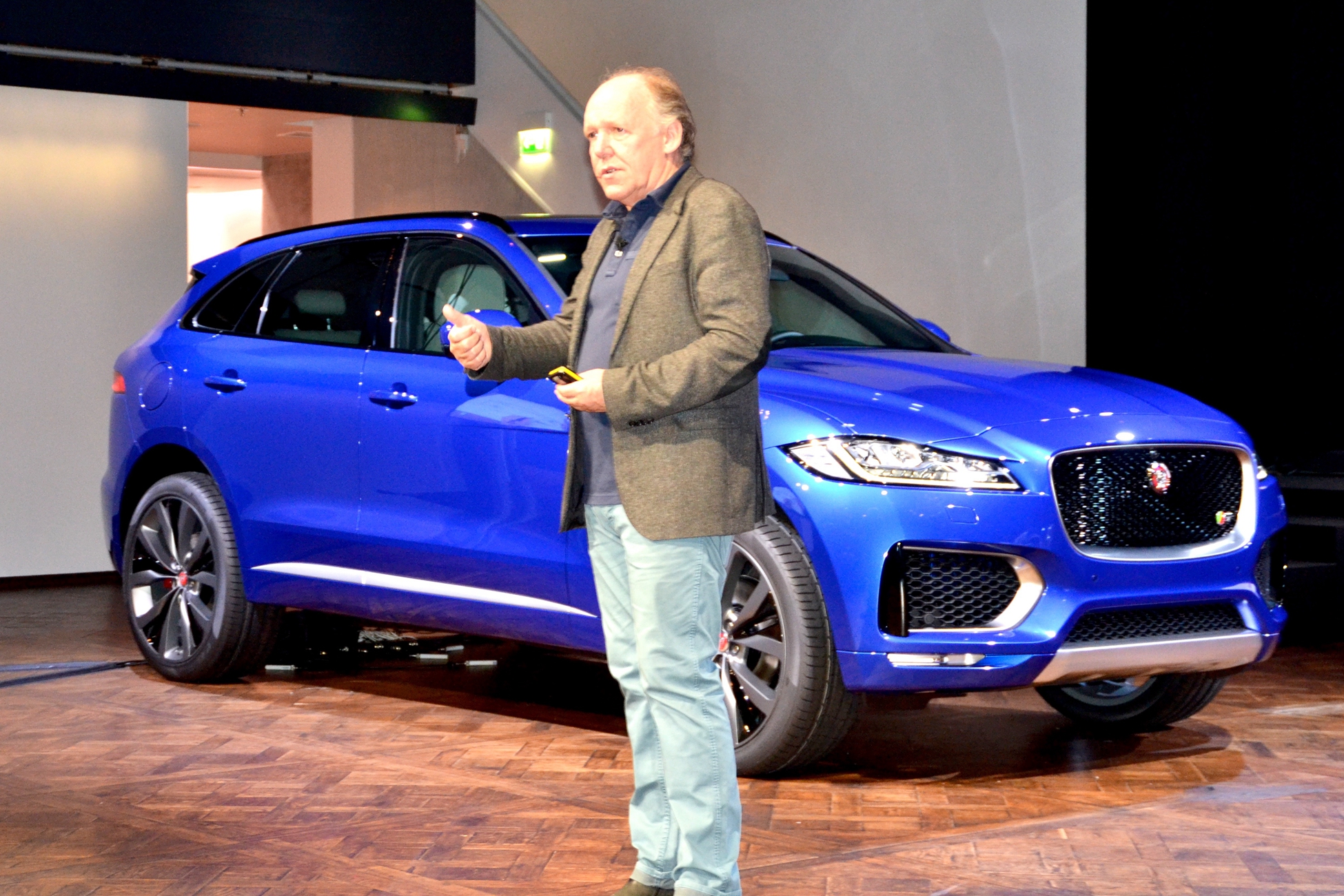 捷豹設計總監Ian Callum在法蘭克福車展上介紹F-Pace。
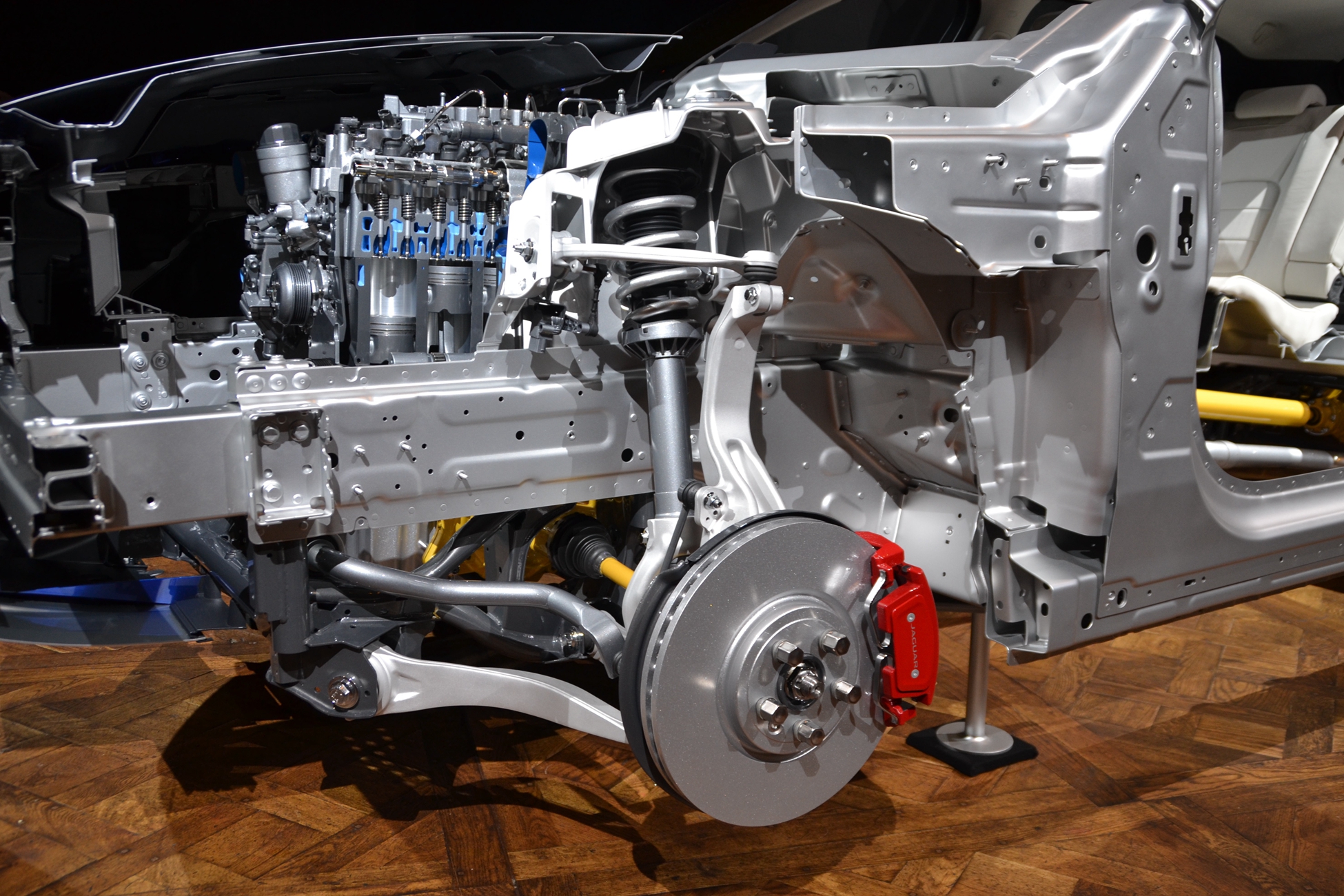 80%的F-Pace車身重量都是由鋁合金制作而成,連懸架鑄件和B柱等部件也使用了鋁合金。
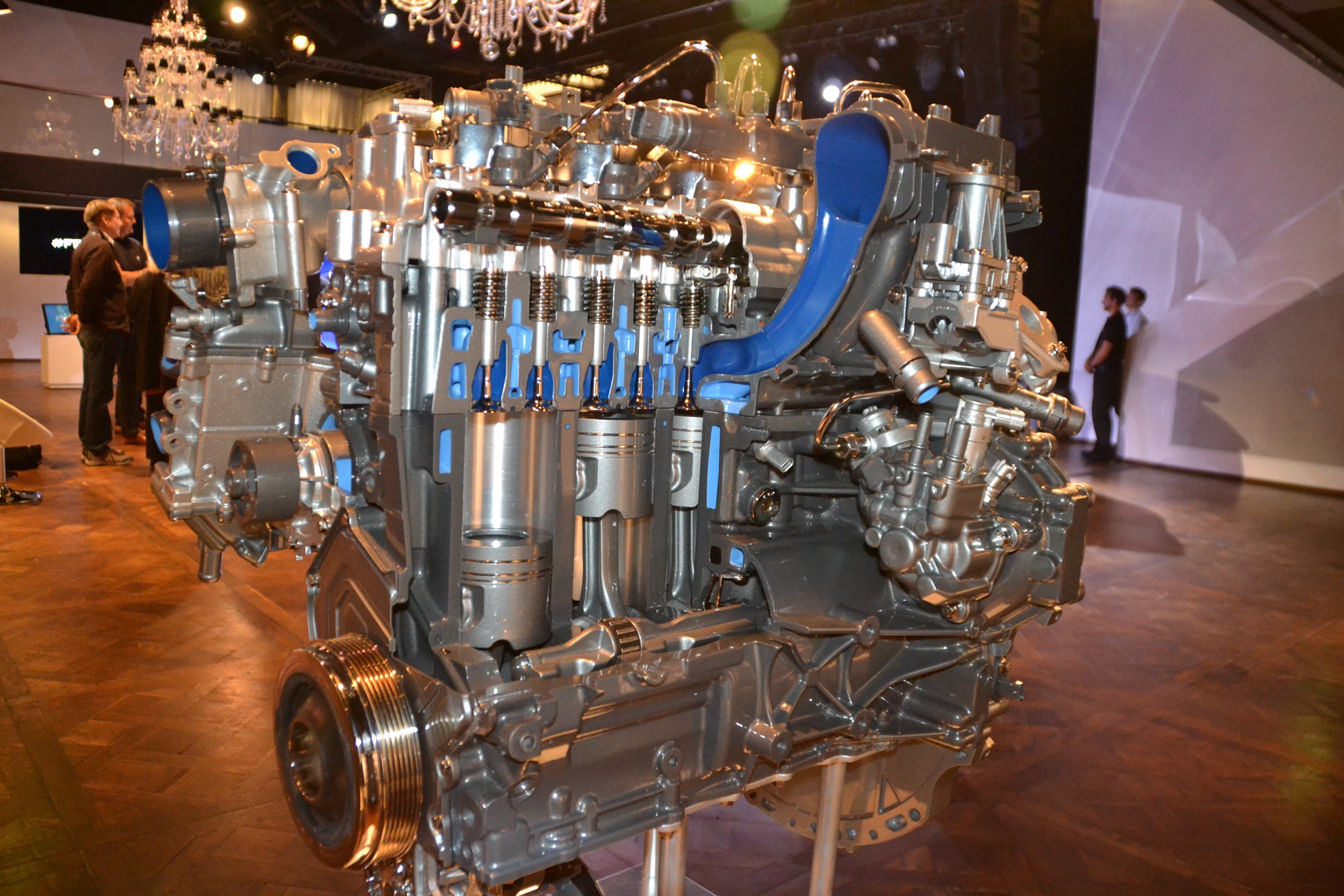 登陸美國市場的第一批F-Pace將搭載捷豹的2.0-L Ingenium渦輪柴油四缸發動機。
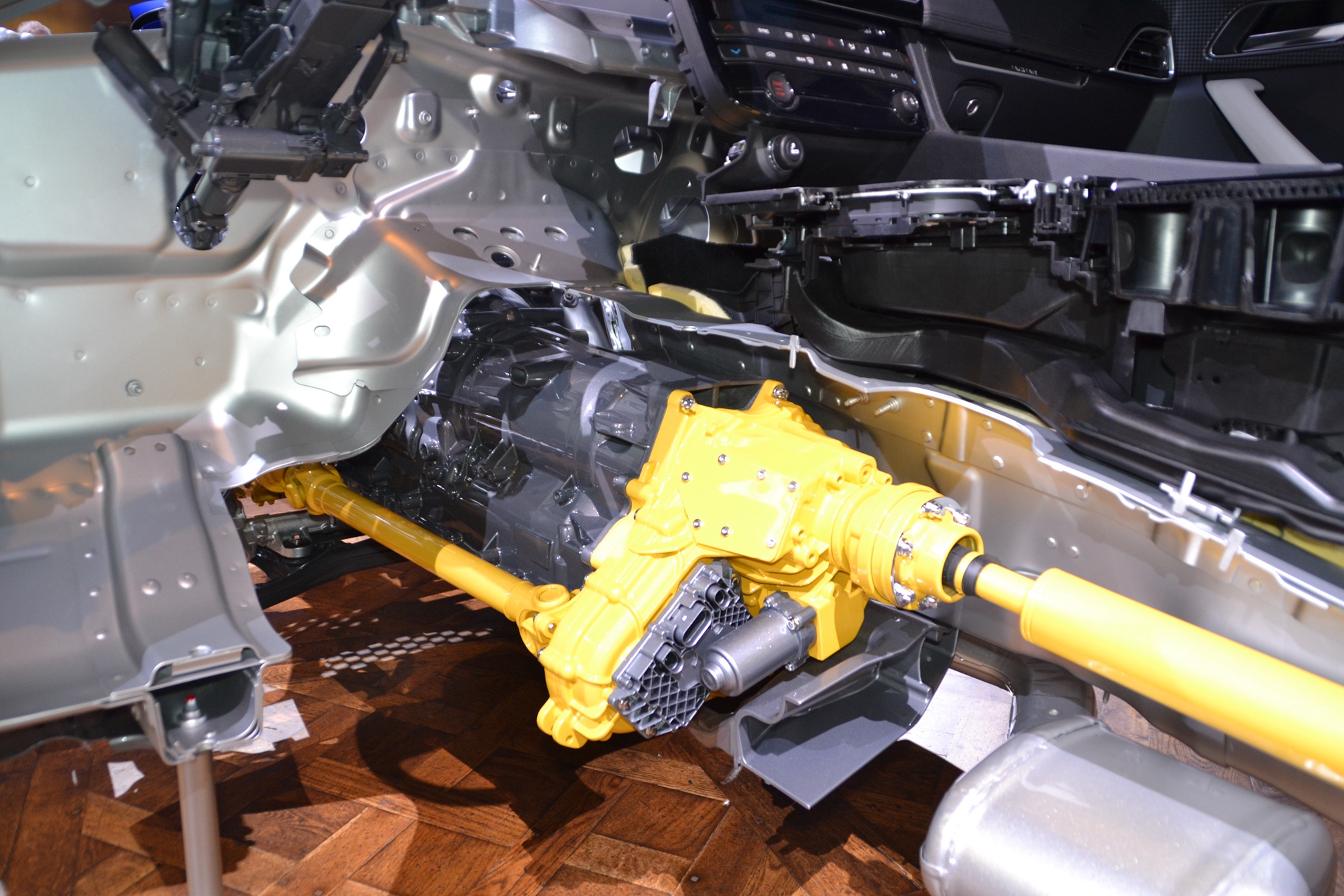 安裝BorgWarner全輪驅動分動器的版本只比雙驅版重了8 kg。
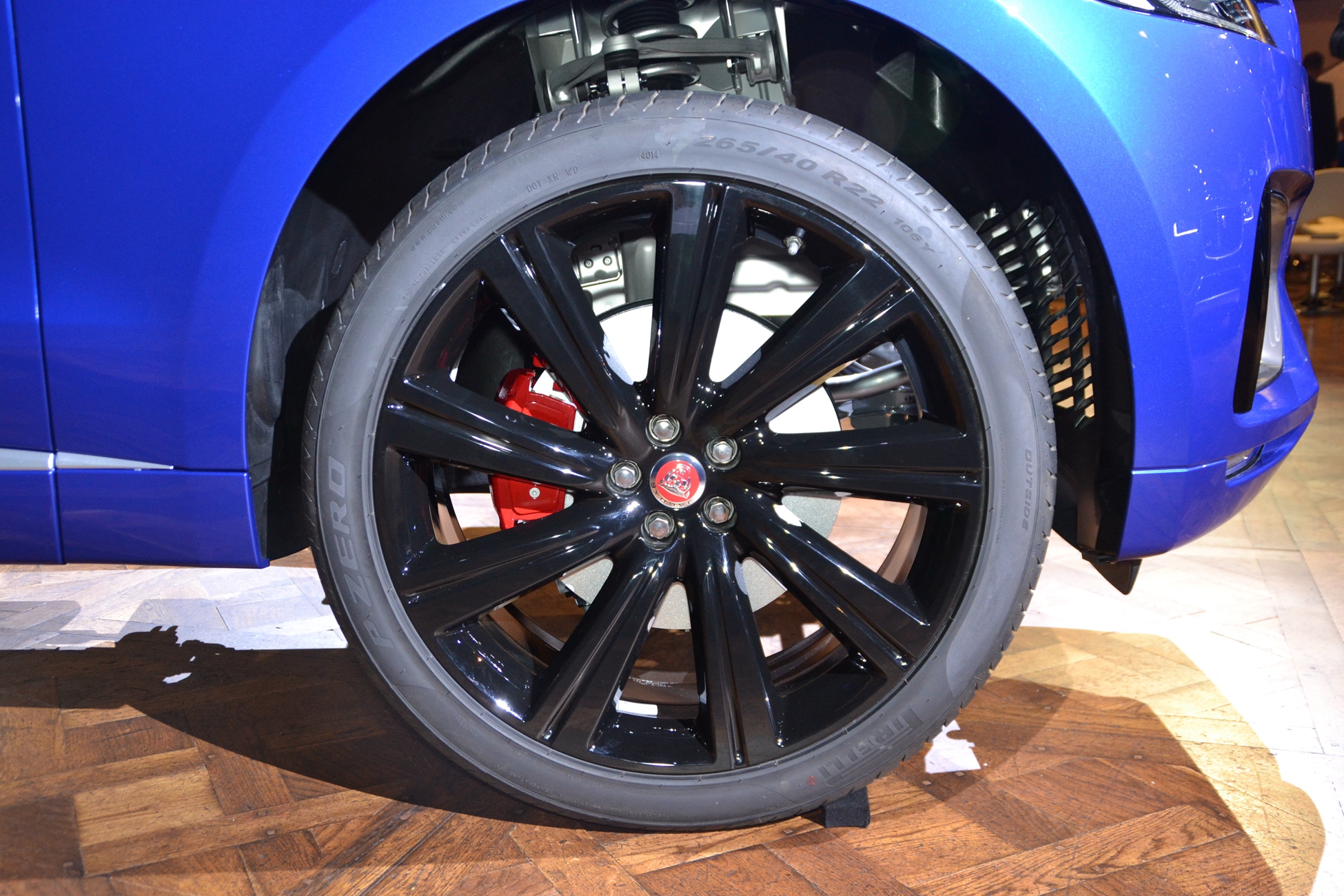 捷豹與SuperAlloy和Pirelli分別合作研發了F-Pace的車輪與輪胎,為邊緣刮擦問題提供解決方案。