為打造2016思域,本田幾乎傾其全力。此次在第10代思域上所花的心思,體現出本田致力于提升全球C級車水準的決心。新思域在很多方面都有顯著提升,包括子結構上的4連桿獨立后懸架、液壓懸架襯套、更強大的NVH弱化技術、以及內飾設計、材料和整體裝潢等。
在9月16日底特律與洛杉磯的媒體披露會上,本田美國執行副總裁 John Mendel揭開了新思域的面紗。其實它屬于一個全新的車型系列,該系列還將包括一輛雙門轎跑、五門兩廂車、運動版Si和高性能的R車型。
“這個平臺于2012年初啟動,在研發這輛車的時候,我們的目標不僅是思域這個級別中的競爭對手,我們更希望做到全方位的最佳水平,而不是局限于該級別的評價標準。這是一個野心勃勃的計劃,” Mendel告訴《汽車工程雜志》。他說奧迪A3是最主要的競爭對手,此外還有梅賽德斯CLA。Mendel坦承目前的思域是公司的遺憾,因為外界普遍批評其使用了廉價的內飾材料,而且失去了本田獨有的駕駛樂趣。從1973年以來,這種良好的感覺已幫助本田賣出了4000萬輛車。
這也是第一輛真正意義上的全球性的本田思域,全世界各地都使用相同的架構、生產流程和材料。而上一代思域的許多細節在北美、歐洲和亞洲各不相同。
《汽車工程雜志》在2015年初也報道過(見http://articles.sae.org/14040/),2016款思域是本田第一輛采用全新的“全球緊湊平臺”的車型,該平臺也將成為下一代雅閣和HR-V跨界車的基底。位于俄亥俄州雷蒙德地區的本田研發中心的工程師們指出,公司產量最高的兩個平臺的結合,將使產量提升數百萬臺。
這一由俄亥俄團隊牽頭,并由資深項目經理Mitsura Kariya管理的項目還采用了一種全新的采購部件與系統的模塊化方案。這個采購計劃可以極大地促進本田對全球供應商的利用,在過去的供應商之外開拓更廣闊的天地。
新思域的軸距比舊版長了1.2英寸(30.5mm),寬了近2英寸(50mm)。
新思域將提供2種全新的動力系統選項。第一種是配有最新的i-VTEC 氣門機構的2.0L自然吸氣四缸發動機,可搭配6速手動變速箱或無極自動變速箱(CVT)。第二種是1.5L直噴渦輪發動機,也是本田成品車中首次使用的增壓發動機,它只能搭配CVT。兩種選項中的CVT都是在位于俄亥俄州Russells Point的本田工廠中生產的。Mendel沒有提供關于動力系統的更多細節,只提到燃油經濟性數據將“比40 mpg高一些”。
新思域采用了本田稱之為ACE(高級兼容性工程)的最新車身結構,據稱該結構的抗扭強度比舊版高出26%,因為材料中包含了12%的超高強度鋼材。在早期規劃中,本田就打算回歸其經典的低前圍板駕駛位置設計。為此,本田將駕駛員的H點降低20mm(0.8英寸),這也是奧迪TT的水平。地板、儀表板和發動機架也進行了相應的降低。據稱,車內空間增加了3.7立方英尺(105 L),腿部空間增加了2英寸(51毫米)。行李箱體積比2015版多了2.6立方英尺(74 L)
新思域的綜合安全系統采用了“本田傳感”主動安全技術,其中包括首次在思域上使用的適應性巡航控制與低速跟進技術。
面向北美客戶的新思域將在位于安大略州阿里斯頓與印第安納州格林斯堡的組裝工廠生產。發動機將在俄亥俄州安娜市的工廠中生產。
《汽車工程雜志》將繼續報道有關新思域研發與技術的全面細節。
作者:Lindsay Brooke
來源:SAE《汽車工程雜志》
翻譯:SAE 上海辦公室
Honda’s all-new global 2016 Civic targets Mercedes refinement
Honda appears to have committed the resources where it counted to create the 2016 Civic. With a 4-link independent rear suspension mounted on a subframe, hydraulic suspension-compliance bushings, increased use of NVH attenuation techniques, and a visibly significant upgrade in interior design, materials, and overall finish, Honda’s 10th-generation Civic shows the automaker’s seriousness in raising the bar in the global C-segment.
American Honda Executive Vice President John Mendel unveiled the Civic sedan—part of an all-new model range that will also include a 2-door coupe, 5-door hatch, sporty Si, and high-performance Type R—at media events in Detroit and L.A. on Sept. 16.
“In developing this car—the platform was signed off in early 2012—we targeted not just the best competitors in the Civic’s segment but the best overall, regardless of segment. This was a very ambitious program,” Mendel told Automotive Engineering. He said Audi’s A3 was the primary competitive bogey, along with theMercedes CLA. Mendel frankly admitted that the incumbent Civic was a disappointment to the company, being widely criticized for its use of cheapened interior materials and a perceived loss of the fun-to-drive character that helped Honda sell over 40 million examples since 1973.
This also is Honda’s first truly global Civic, sharing a common architecture, build process, and bill of material in all regions. Previous-generation Civics differed in many details between North America, Europe, and Asia, he said.
As reported in early 2015 by Automotive Engineering (seehttp://articles.sae.org/14040/), the 2016 Civic is Honda’s first application of its new Global Compact vehicle platform that will also underpin the next-generation Accord and HR-V crossover. Engineers working at the Raymond, OH, R&D complex noted that consolidating the company’s two highest-volume vehicle platforms will dramatically boost production scale, by millions of units.
The program, which was spearheaded by the Ohio team and led by veteran program manager Mitsura Kariya, also integrates a new modular approach to components and systems. The new sourcing plan greatly expands Honda’s use of global vendors, going farther outside the kieretsu than ever before.
The new model rides on a wheelbase that is 1.2 in (30.5 mm) longer and nearly 2 in (50 mm) wider than the outgoing car.
Two all-new powertrains will be available: a 2.0-L naturally-aspirated four featuring the latest i-VTEC valvetrain, offered with either a 6-speed manual or CVT (continuously variable transmission); and a 1.5-L direct-injected turbo engine, the first boosted engine offered in a production Honda, mated only to the CVT, itself to be built at Honda’s Russells Point, OH, factory. Mendel provided no details of the powertrains, other than to say fuel economy would be “several ticks above 40 mpg."
Civic uses the latest version of the company’s so-called ACE (Advanced Compatibility Engineering) body structure that is claimed to be 26% stiffer in torsion than the previous car and incorporates 12% ultra-high-strength steel. Attention was paid during early layout to returning to the classic Honda low-cowl driving position. To achieve this, the driver’s H-point was lowered by 20 mm (0.8 in) to bring it to the same level as Audi’s TT. Height of the floorpan, instrument panel, and engine mounts were commensurately reduced. Cabin volume is increased by a claimed 3.7 ft3 (105 L), with 2 in (51 mm) more rear legroom. Trunk space is 2.6 ft3 (74 L) larger than that of the 2015 model.
The comprehensive safety suite features available “Honda Sensing” active technologies including, for the first time on Civic, adaptive cruise control with a low-speed follow feature.
The new Civic will be built at Honda’s Alliston, Ont., and Greensburg, IN, assembly plants for North American customers. Engines will come out of Anna, OH.
Automotive Engineering will have full details of the car’s development and technologies in an upcoming issue.
Author: Lindsay Brooke
Source: SAE Automotive Engineering Magazine

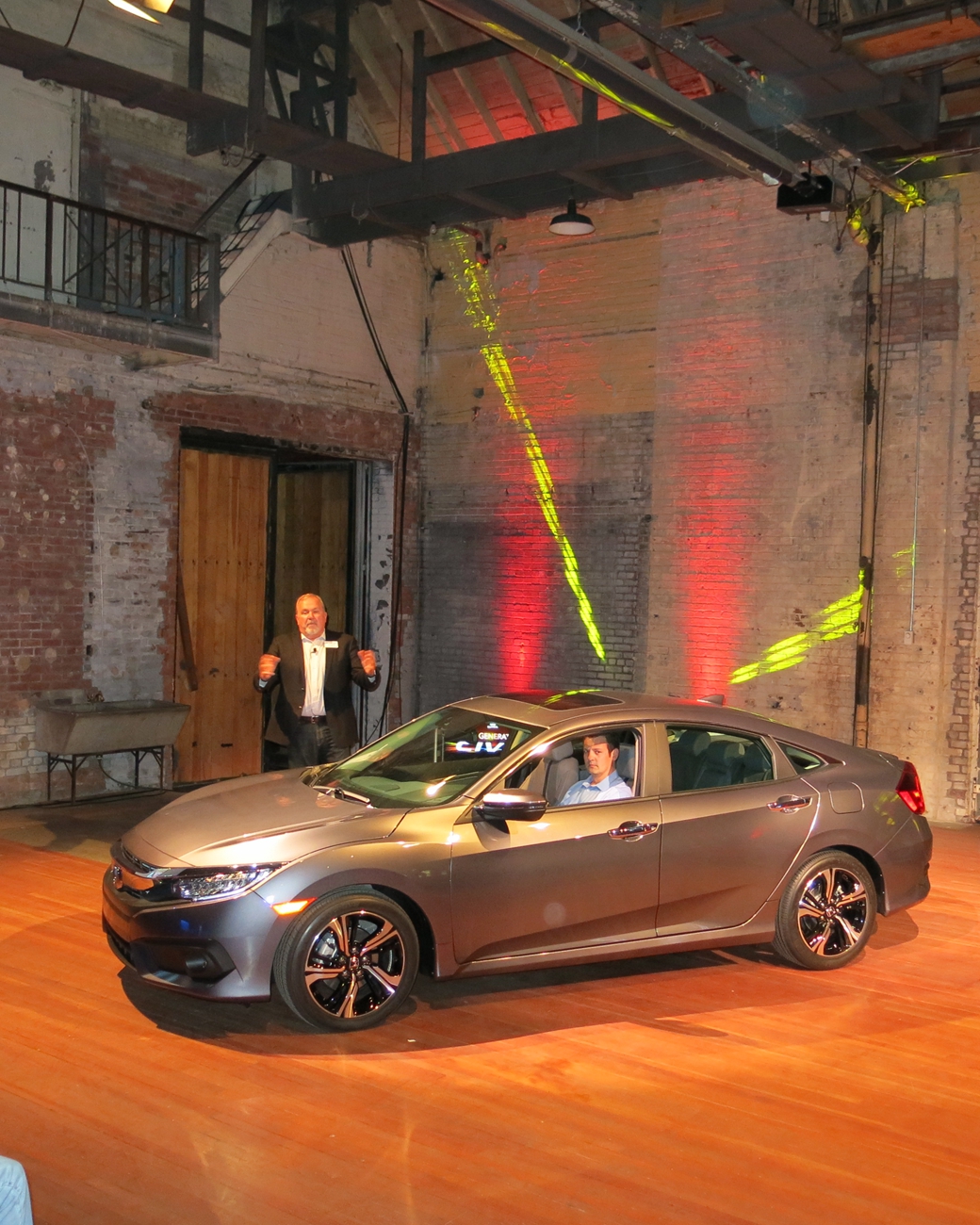 本田美國執行副總裁John Mendel在9月16日底特律的媒體披露會上介紹全新的2016思域轎車。
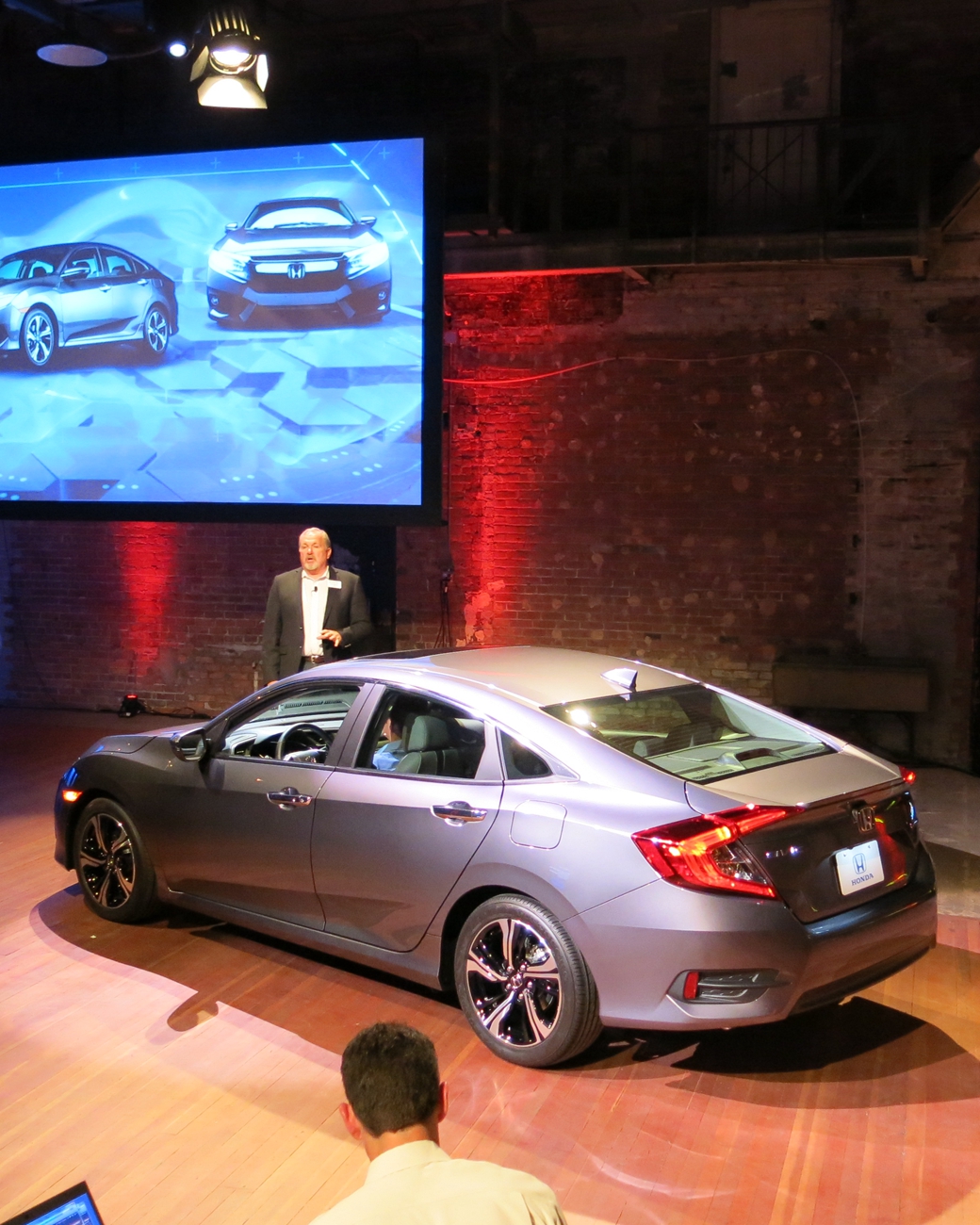 新思域后部四分之一的照片顯示出這輛C級轎車具有更大的車身比例、充滿雕塑感的車身板和更小的側窗。
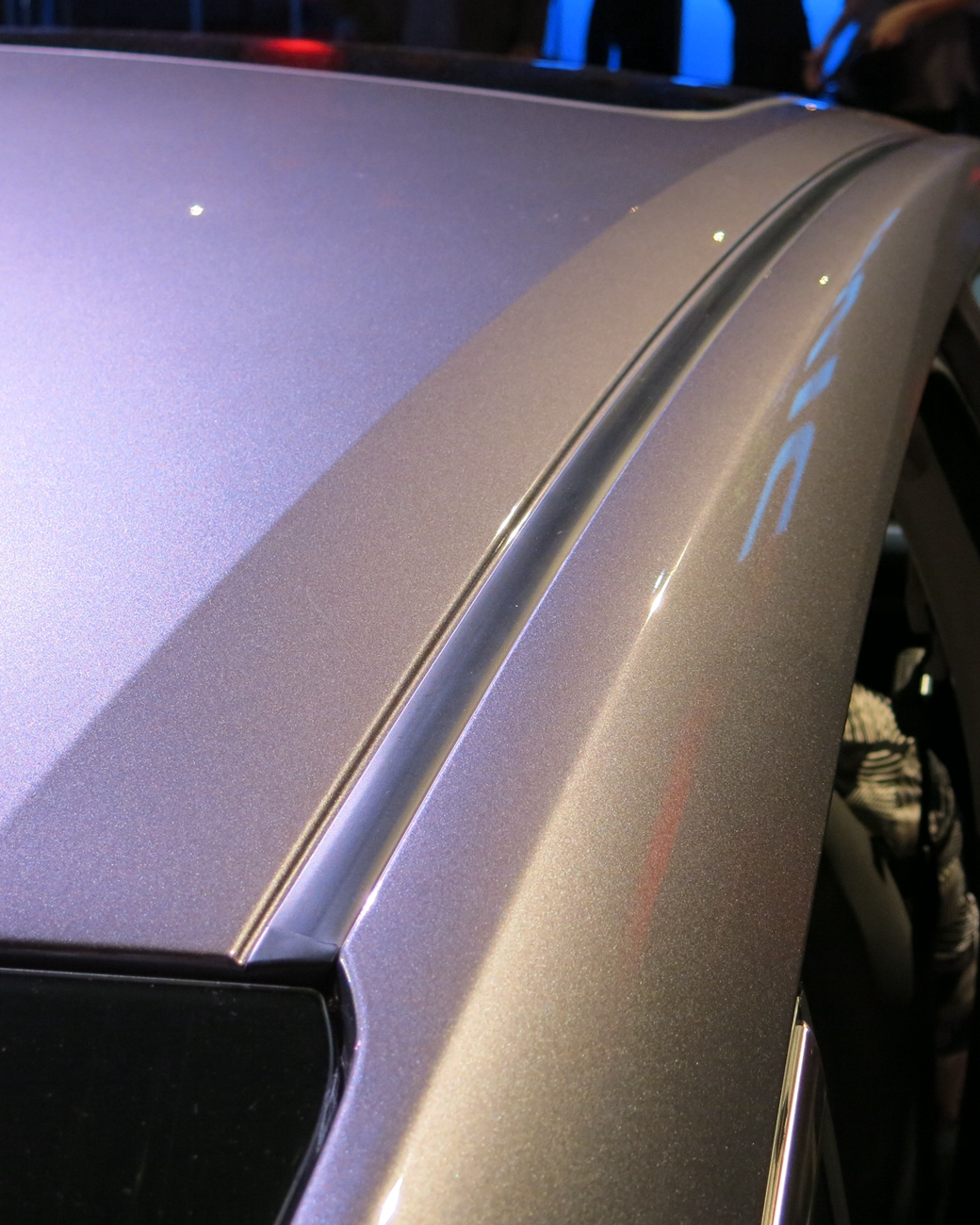 新思域車頂至側面的結構
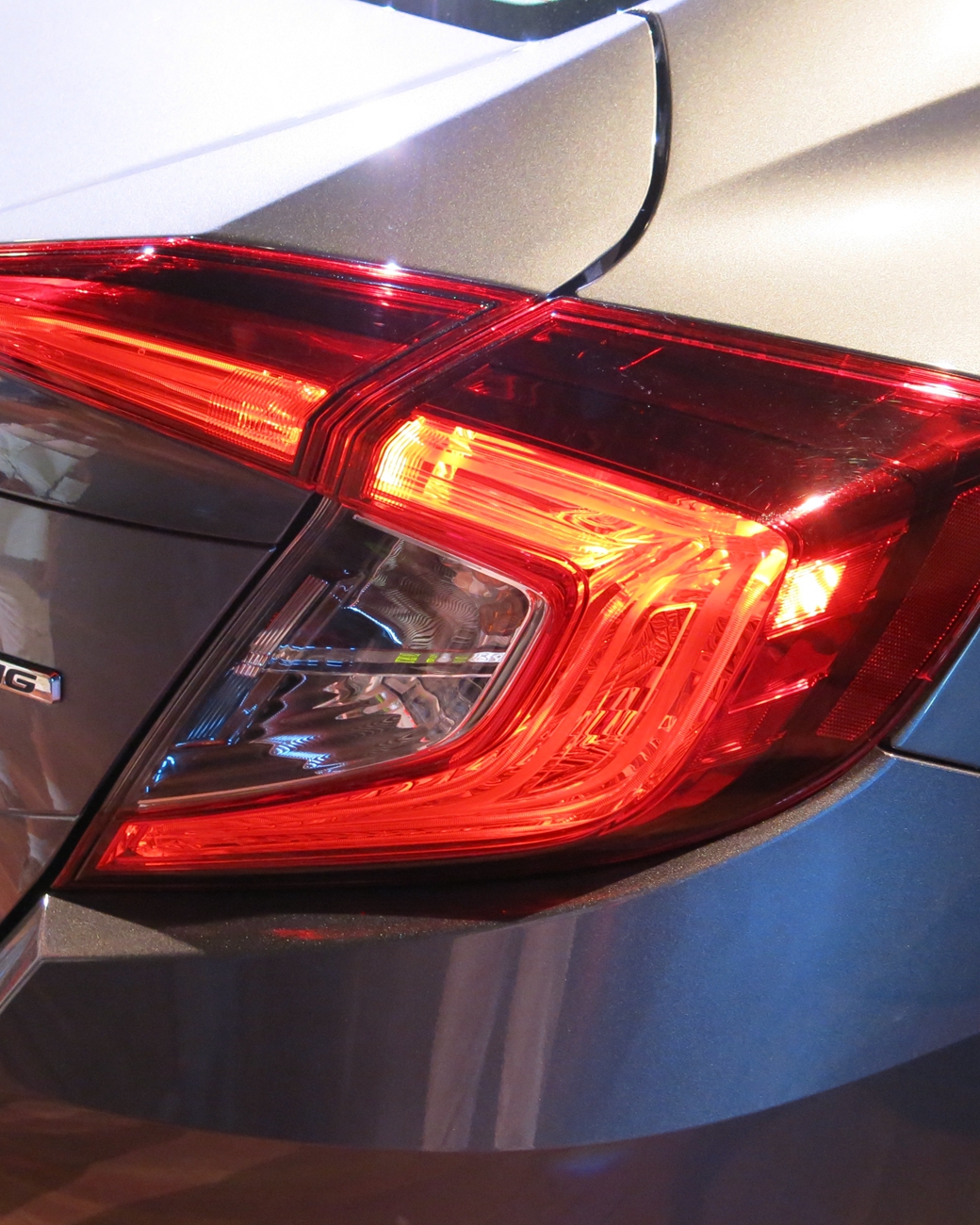 大型LED尾燈為新車型的時尚風格增色不少。
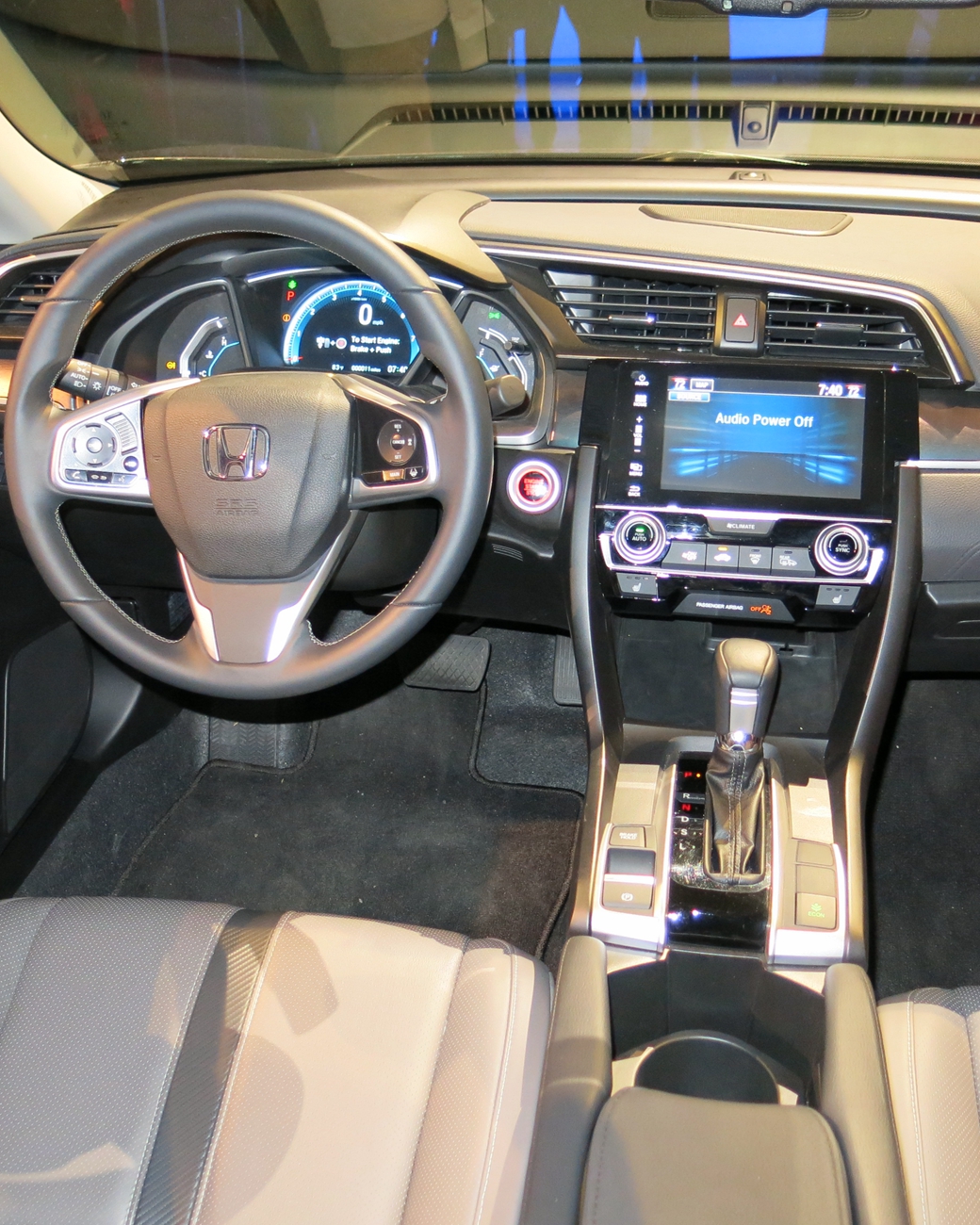 2016思域的駕駛艙提升了人體工程學設計。駕駛員的H點比舊版更低,底板、儀表板和發動機架也進行了相應的降低。
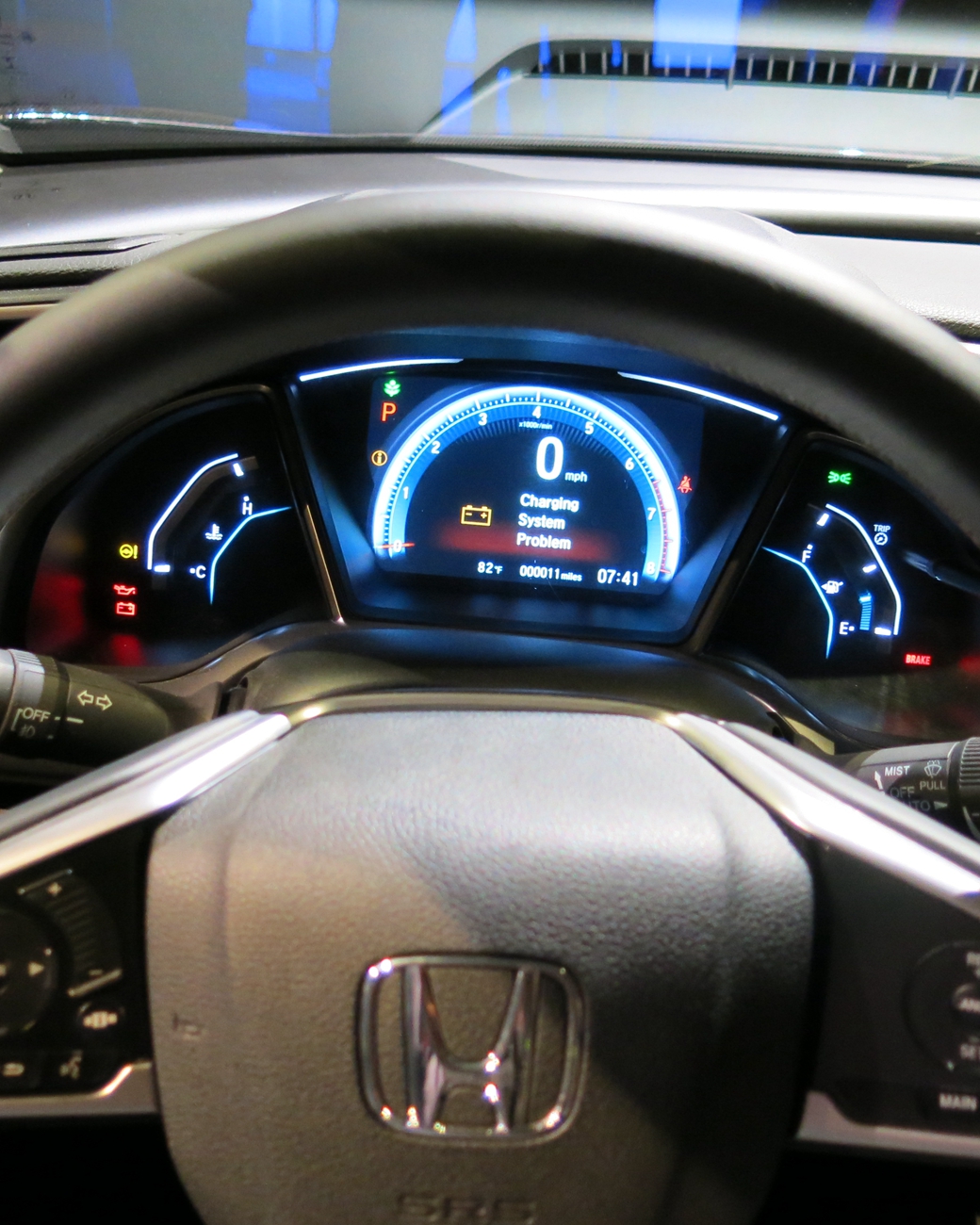 本田電子設計師將思域的儀表顯示設計得簡單易讀。
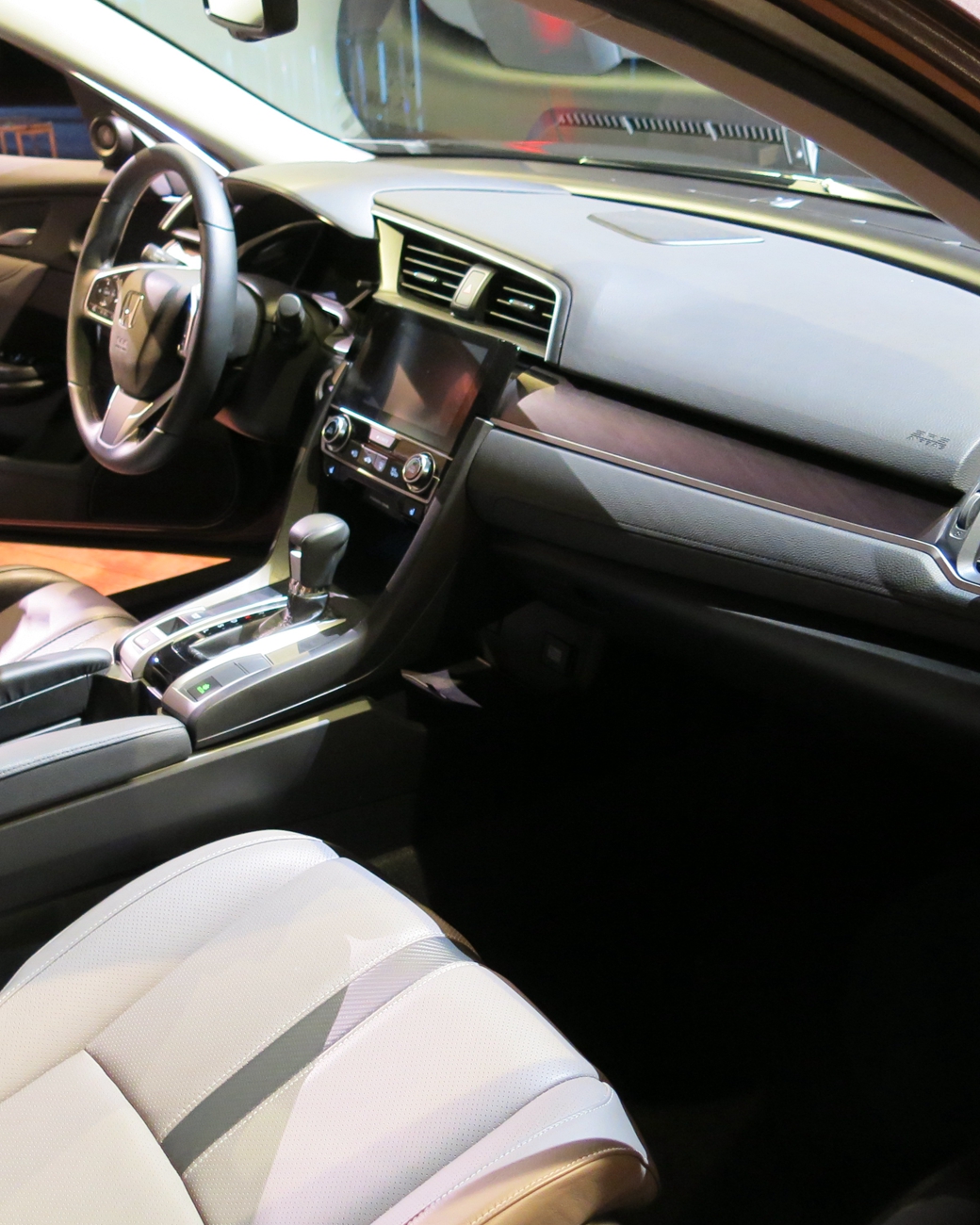 新思域的內部空間比舊版寬敞許多。后座的座椅與頭部空間以及腳部空間甚至可以輕松容納2米高的乘客。
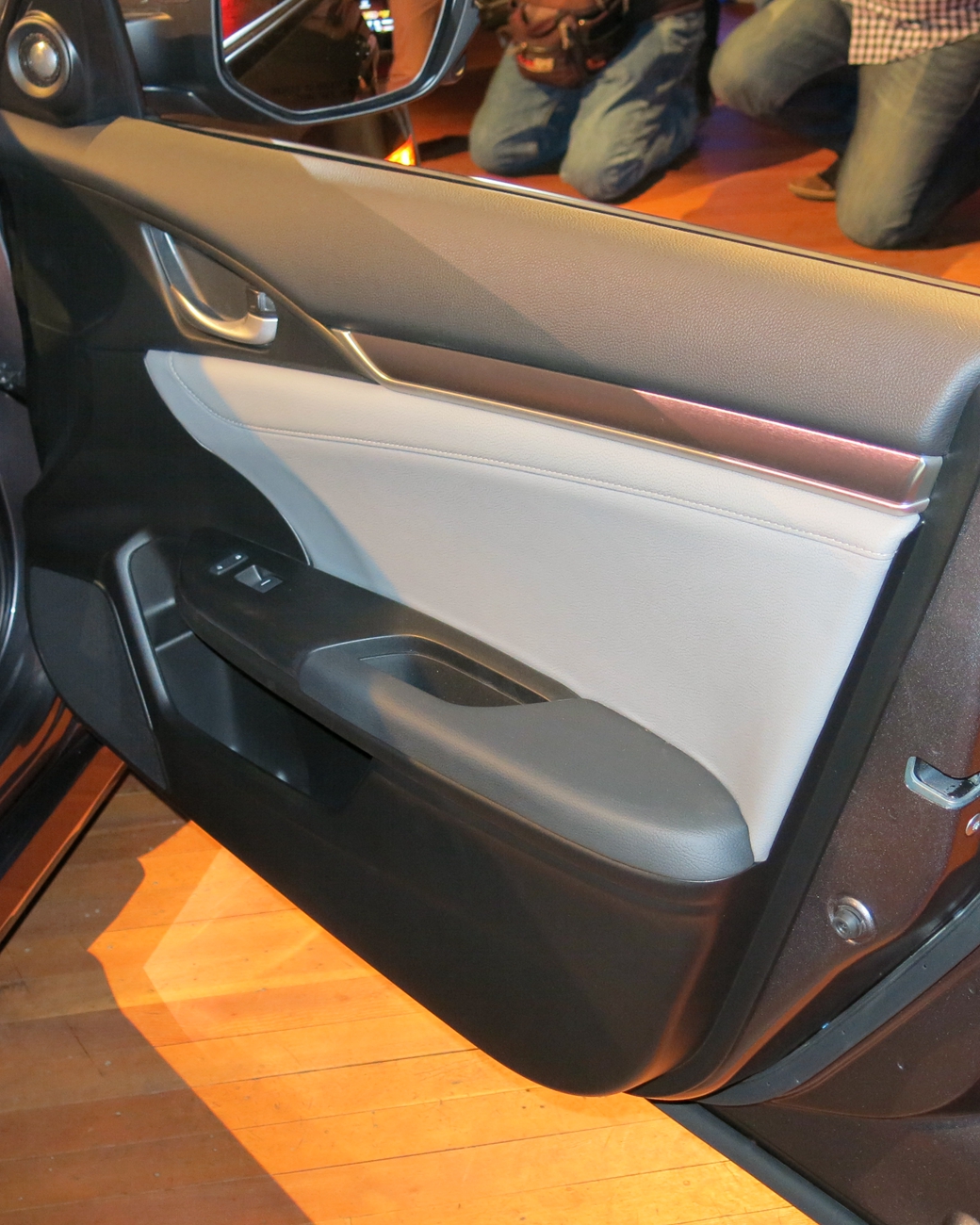 以奧迪A3和梅賽德斯CLA為基準,本田全面升級了新思域的車身與裝飾件材料。