Dornier 328在十年前停產(甚至有些人說如果從原制造商倒閉的年份算起的話,這一機型已經停產將近15年了),眾所周知,Dornier328的特點是“能在荒野跑道上起降”以及“便于第三世界國家進行維護”。如今, Sierra Nevada Corp. (SNC)打算讓它重新回到生產線上。在2015巴黎航空展上,SNC宣布成立一家全新的全資子公司TRJet Havacilik Teknolojileri Anonim ?irketi (簡稱TRJet)。而就在5月,SNC剛剛與Savunma Teknolojileri Mühendislik ve Ticaret A.S. (STM) 簽署了一份諒解備忘錄。其內容是雙方合作生產土耳其的第一款支線飛機,旨在為該國的交通、海運與交流部的地域性飛機計劃提供支持。
土耳其公司TRJet的總部將設于土耳其安卡拉。SNC總裁Eren Ozmen在航空展上表示,選擇該市而非伊斯坦布爾的主要原因在于安卡拉現有的基礎設施更加理想,而且從地理位置上也能更好地為支線飛機計劃和國家商業航空部提供支持。TRJet將繼承SNC和328支持服務有限公司(328 SSG)的技術優勢,全力打造一家“融合現代德國飛機工程技術與最新行業標準的航空航天公司。”
全新啟動的支線飛機計劃將使用TRJ328機型——32座D328的現代改良版。該機型是土耳其邁向自主生產第一架50-70座TRJ628商用飛機的第一步。328不僅僅在商用飛機領域享有盛譽,執行民用與軍用航空特殊任務也是它的強項。而628也有可能獲得同等的好評,但它必須首先進入商用飛機市場。
“我們相信,技術、研究、合作和數十年的經驗可以為TRJet在土耳其乃至全球的成功打下堅實的基礎,” Ozmen表示。“我們還相信,土耳其支線飛機計劃參與者的承諾與支持終將使土耳其的交通面貌煥然一新。”
自2006年以來,328 SSG便持有高翼328的適航認證,但并沒有重新啟動生產這一機型,而是將主要精力放在328JET和328 turboprop的維修維護服務上。生產重啟之際,328 SSG執行總監Dave Jackson強調,“公司的主要目標并非發明尖端技術,而是通過重新生產328幫助土耳其工程師熟悉飛機生產工作,為將來628的設計做好準備。”
Jackson表示,在開始階段,將有2-3架328飛機將在德國完成生產,以重新取得認證,之后的飛機將在土耳其生產。大部分原供應商將繼續提供服務,但有些合同可能需要進行重新評估或設計。
在巴黎航空展上,Jackson曾在多次場合下將328稱為“踏腳石”、“訓練機”、并且是最終目標628的“學習曲線”。當然,這并不意味著噴氣機和渦輪螺旋槳版的328機型就是628的丑小鴨姐妹,但它們的確肩負著幫助土耳其工程師實現技術進步的重任。盡管飛機工程師并沒有“創造出”尖端技術,但也并不意味著他們不會達到市場上最優的技術水平。
以328JET為例,該機型預計將配備玻璃駕駛艙、適合當今與未來ATM環境的先進系統、經過升級改良的現代內飾(LED燈和全新座椅)以及全高度機艙。
生產該機型預計需要500名工人,這意味著有更多的土耳其人將會間接地受雇于該項目。328目前已在全球85個國家獲得適航認證,并在美國、瑞士、德國、英國和丹麥等多個國家開始運行。TRJet相信,對與328同級載客能力飛機的需求將在全球范圍內增加。
“328可在一個國家內的小城市之間頻繁地直接往返,而用大型飛機是不能實現的,因此328擁有一個專門的細分市場,” Ozmen表示。“市場分析表明,該機型將滿足國內與國際航線的巨大需求。”
TRJet最終將實現TRJet328的生產與銷售,并在“土耳其自主生產首架TRJ628客機的過程中起到關鍵作用,” Jackson表示。“TRJ628將會繼承328的基因。”土耳其將最終完成628的設計、工程與生產的整個流程,而且工程師將在其中使用328的供應鏈,盡管其生產停頓了幾年。
啟動資金由土耳其政府以預訂50架飛機的形式提供,但最終TRJet將完全成為一家商業企業,“公司的生死都取決于效益。” Jackson表示。
Some 10 years since being out of production (some might say even nearly 15 years if one considers the demise of the plane’s originator), the Dornier 328, known for its ability to function on “unimproved runways” and “being easy to maintain in third-world countries,” is going back into production under at least the partial guidance of Sierra Nevada Corp. (SNC), which Tuesday at the Paris Air Show announced the formation of its newest wholly owned subsidiary, TRJet Havacilik Teknolojileri Anonim ?irketi (TRJet, for short). The announcement follows SNC’s May 2015 signing of a Memorandum of Understanding involving the Savunma Teknolojileri Mühendislik ve Ticaret A.S. (STM) in support of the Turkish Ministry of Transport, Maritime Affairs & Communications to produce the country’s first regional jet as part of its Regional Aircraft Project.
A Turkish corporation, TRJet will be based in Ankara, Turkey—chosen over Istanbul mainly due to existing infrastructure, SNC President Eren Ozmen said Tuesday—and will serve the Regional Aircraft Project as well as the commercial aviation sector. TRJet will combine the legacy of SNC and 328 Support Services GmbH (328 SSG), to create “an aviation and aerospace company that merges modern-edge German aircraft engineering and the latest industry modification standards.”
The newly launched Regional Aircraft Project will use the TRJ328 aircraft, a modernized version of the 32-seat D328, as a first-step toward production of Turkey’s first domestically built passenger aircraft, the 50-70 seat TRJ628. The 328’s reputation not only lies in the commercial arena, but special ops as well for civil and military applications, and the 628 may earn that reputation as well, but it is first anticipated as an entry into the commercial market.
“We believe that the combination of technology, research, collaboration, and decades of experience is the right recipe for TRJet’s future success in Turkey and around the globe,” said Ozmen. “We are confident that the commitment and support of those involved in the Turkish Regional Aircraft Project, will be successful in producing aircraft that changes the face of transportation in Turkey.”
328 SSG has held the type certificate on the high-wing 328 since 2006, but has not resumed production, focusing instead on MRO for the 328JET and 328 turboprop. On the re-launch of production, Dave Jackson, Managing Director, 328 SSG, emphasized that the company is “not looking to create cutting-edge technologies. Instead, the re-launch of the 328 is designed to be a stepping stone to familiarize Turkish engineers with the aircraft’s workings prior to design of the 628.”
To start, Jackson said two to three 328s will be manufactured in Germany for recertification and then their production will move to Turkey, with most of the original suppliers for continuity, though some contracts may be re-assessed and/or reassigned.
At various times in Paris, Jackson referred to the 328 as a “stepping stone,” a “training vehicle,” and as a “learning curve” toward the ultimate 628 goal. That said, by no accounts do the jet and turboprop 328 versions seem to be the ugly duckling sibling of the same versions for the 628, but, instead, strong shoulders upon which to technologically advance and provide Turkish engineers the ultimate in professional development, and while the aircraft engineers may not “create” cutting-edge technologies, that is not to say that they won’t make the best of cutting-edge technologies already in the marketplace.
For example in terms of the 328JET, it is expected to include a glass cockpit and updated systems suitable both for today's and future ATM environments, an upgraded modern interior with LED lighting and new seats, and a full-height cabin.
It is estimated that up to 500 people are needed to work in the factory to build the aircraft, which will also employ significant numbers of the Turkish population via indirect employment opportunities. The 328 is currently certified in 85 countries around the world, and is in use in many countries including the U.S., Switzerland, Germany, U.K., and Denmark. TRJet believes that there is an increasing demand around the world for an aircraft such as the 328 with this passenger capacity.
“The [328] fills a niche market for direct and frequent flights between small cities in the country that is currently not feasible using larger airplanes,” said Ozmen. “According to market analysis, the aircraft is expected to meet a large demand for both domestic and international [needs].”
TRJet will ultimately produce and sell the TRJ328 and “will play an essential role in making Turkey’s first indigenous passenger aircraft [the TRJ628] a reality,” said Jackson. “The TRJ628 will be built on the DNA of the 328.” And, ultimately, the 628 will be locally designed, engineered, and manufactured in Turkey, and it is expected that engineers will be able to leverage the built-in supply chain of the 328, even though it hasn’t been in production for some years.
Launch funding was enabled by the Turkish government ordering 50 planes, but ultimately, TRJet is fully commercial and “will have to live or die by selling airplanes,” said Jackson.

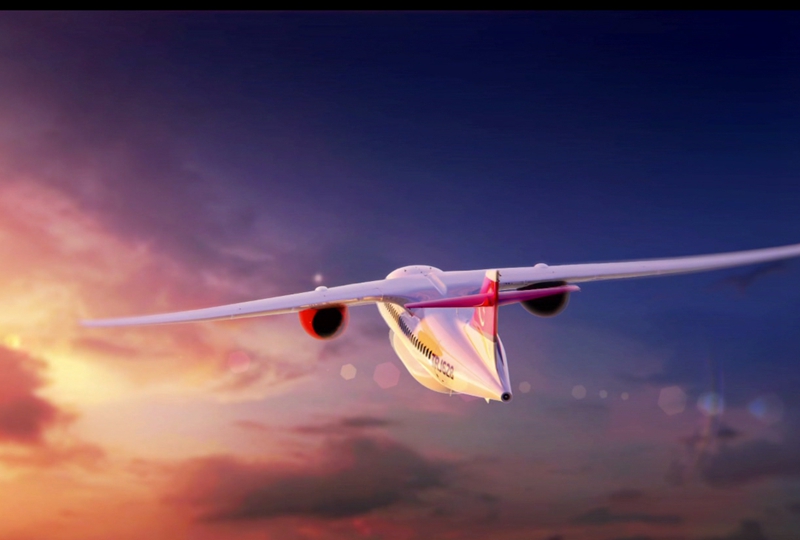 628機型的效果圖。TRJet表示,盡管飛機從概念設計到完成通常需要12-14年的時間,但這個項目一開始就有得天獨厚的優勢,因為作為其原型的飛機是一架已經獲得認證且已在全球范圍內運作的機型。
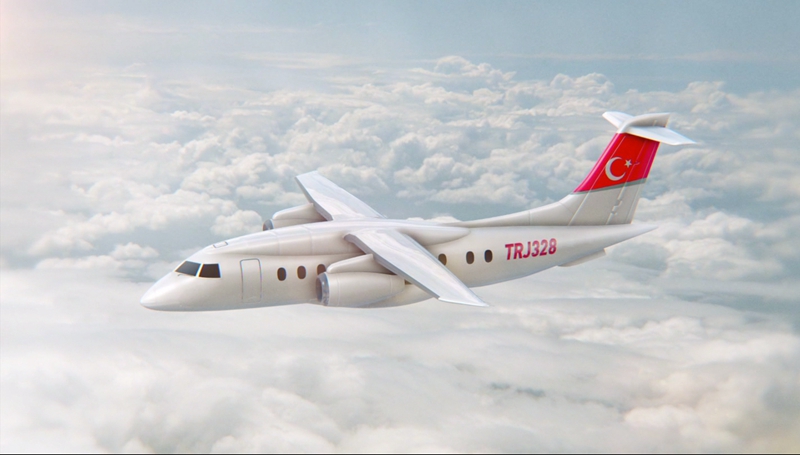 TRJ328目前已在全球85個國家獲得了適航認證。TRJ328在配備噴氣機發動機或渦輪螺旋槳發動機的情況下通常可搭載32名乘客,TRJet相信此類飛機的全球需求還將增加。標準噴氣機的最大里程大約為1500海里,乘客滿載的情況下通常為900海里。(Lorbi)