在被空客與波音壟斷的150座以下級商用噴氣式飛機市場中,下一代巨頭將是加拿大龐巴迪和巴西航空工業公司。
龐巴迪曾在C系列噴氣式飛機上雄心勃勃,但這段歷史充滿曲折。現在,龐巴迪計劃靠CS300機型重回150以下座級噴氣式飛機市場。該機型設計載客量為149人,但通常只配置130個乘客座位。比CS300稍小一些的CS100通常可載110名乘客,預計于今年年底之前由歐洲支線航空運營商瑞士航空啟動運營。
龐巴迪計劃在今年的巴黎航空展上向公眾展示這兩款機型,并期待借此重啟停運多年的C系列機型生產線。目前,龐巴迪已接到多張尚未確認的訂單,最新收到的訂單中包括馬來西亞Flymojo航空訂購的40架飛機。龐巴迪希望很快便能宣布更多確認的訂單。
龐巴迪正在對6架飛機進行測試,以取得適航認證。與波音737和空客A320窄體系列中最小的成員相比,C系列在中低密度級別航線上的性能更優秀,因為它不僅擁有更緊湊的機身,而且還使用了燃油效率較高的 P&W Pure Power齒輪傳動式渦扇(GTF)發動機。
C系列最直接的競爭對手是巴西航空工業公司的下一代E-Jet機型。巴西航空工業公司為該系列設計了不同尺寸的機身,以配合該公司目前的直線飛機產品線的需要。新機型分別為E175-E2、E190-E2和E195-E2。第一批E190-E2預計將于2018年投產,E195-E2將在2019年投產,而E175-E2為2020年投產。目前為止,巴西航空工業公司已收到420架E2機型的已確認訂單,或被列入客戶采購的候選名單。E2發動機也是P&W的GTF,型號為PW1900G。
從設計伊始,三菱的MRJ90也打算選用燃油效率較高的P&W GTF發動機,以及高復合材料制成的輕型機身。然而由于規范的修訂和由此引發的設計變更,項目只能延長交付期。這使得三菱失去了本來擁有的先機,現在則不得不與龐巴迪和巴西航空工業公司進行競爭,這兩家公司的競爭機型無論在尺寸還是動力方面都與其旗鼓相當。三菱已收到200多份確認訂單,而進入客戶候選名單的訂單數量也幾近持平。
多年前,人們認為俄羅斯將憑借蘇霍伊超級噴氣式飛機搶占這一市場,該機型由俄羅斯與Alenia合作,在意大利進行生產。但隨著西方對俄羅斯態度漸冷,并且超級噴氣式飛機開始面臨新的競爭,該機型在俄羅斯境外的銷量變得極為有限(除墨西哥以外)。現在,俄羅斯正在中國建立一家全新的飛機租賃公司,該公司不僅將運營100架超級噴氣式飛機,還將負責俄羅斯飛機在亞洲市場的推廣。另外,在俄羅斯,Irkut正在研發一款全新的180座機型MC-21,但是除了在俄羅斯本土外,這款飛機也不太可能對波音和空客造成沖擊。
在中國,針對國際市場的新商用飛機的自主研發仍處于早期階段,但在國家大力支持航空業的背景下,中國的雄心依然不減。中國商飛的第一代機型ARJ21與MD-95的外形很相似,而且研發時間已超過12年。但是直到最近,該機型才獲得中國的適航認證,預計將在今年下半年進入中國本土市場。
無論是波音還是空客,都已向中國的航空公司售出了1000多架飛機,目前,空客正在天津組裝中國航空公司訂購的A320。與此同時,中國正在生產自主研發的C919原型機,它是波音737和空客A320(150-180座)的直接競爭對手,采用CFM LEAP-1C發動機。盡管第一架C919飛機可能要到2015年底或2016年初才開始生產,上市時間預計為2018年左右,來自中國航空公司和飛機租賃公司的訂單已經得到了450架。
與俄羅斯的MC-21相同,中國的C919也可能主攻本國航空公司,從而削減西方飛機制造企業在本國內的銷量。但這兩款機型在中長期內都不太可能對西方大腕造成影響。在未來幾年內,他們無疑會積極主動持續地推行改進項目,在與新晉對手的競爭中保持不敗之地。
Global contenders to break the commercial aircraft duopoly
In the commercial jet market below the 150-seat Airbus and Boeing killing fields, the next biggest sales are in the hands of Canada’s Bombardier and Brazil’sEmbraer.
Bombardier has had a troubled development history with its ambitious CSeries jetliners that nudge the sector edge with the CS300, which can seat up to 149 passengers but would usually be equipped with around 130 seats. The slightly smaller CS100, typically seating 110 passengers, is due to enter delayed airline service before the end of this year with European regional operator Swiss.
Bombardier is planning to show both versions in public for the first time at the Paris Air Show and hopes that this will re-launch the product line, which has been flatlining for a couple of years. The company has many unconfirmed commitments on its books, one of the latest being Malaysia’s Flymojo for 40 aircraft, and Bombardier will be hoping to announce more firm sales soon.
Flight tests using six aircraft are underway in the development program leading to certification. Compared to the smallest members of the Boeing 737 and Airbus A320 families, the CSeries offers more optimized performance on low-medium density sectors, with a lighter and more compact airframe and fuel-efficient P&WPure Power geared turbofan (GTF) engines.
The direct rival to the CSeries is to be found in Embraer’s next-generation E-Jet models. These are being developed in three different sizes, in line with the current Embraer regional jets. They will be known as the E175-E2, E190-E2, and the E195-E2. First deliveries of the E190-E2 are expected to be made in 2018, with the E195-E2 following in 2019 and the E175-E2 in 2020. So far 420 E2 models are on order and option. Power is being provided by P&Ws GTF again, designated the PW1900G.
From its outset, Mitsubishi’s MRJ90 was designed to also exploit the fuel-saving P&W GTF engines, as well as a lightweight airframe with high composite contents. However, extended delays due to revised specifications and subsequent design changes have resulted in the program losing its potential lead, and is now faced with well-established competition from Bombardier and Embraer, with similar size and similar powered rivals. Over 200 orders have been received, with a similar number of options.
A few years ago it was thought that Russia could be making inroads into this market sector with its Sukhoi Superjet, manufactured in cooperation with Alenia in Italy. But with Russia falling out of favor in the West and the Superjet facing new competition, sales beyond Russia have been very limited (except to Mexico) and now efforts are underway to establish a new leasing company in China, which might take 100 Superjets, and which might also assist sales campaigns in the Asian market. Also in Russia, Irkut is developing a new 180-seat airliner, the MC-21, but this is unlikely to have much, if any, sales impact on Boeing and Airbus sales, except perhaps in Russia itself.
China’s own attempts to develop new commercial aircraft aimed at the global market are still at an early stage though the ambition is still very strong, with massive subsidized state support for new aerospace factories. The initial program, the Comac ARJ21, is an MD-95 look-alike and has been in development for over 12 years. It only recently was awarded Chinese certification and is expected to enter domestic Chinese service later this year.
Both Boeing and Airbus have sold over 1000 aircraft each to Chinese airlines, and Airbus currently assembles A320s ordered for Chinese airlines at Tianjin, though China is currently manufacturing the first prototype of its own indigenous design, the C919. This is a direct rival to the 737 and A320 (150-180 seats) and will be powered by two CFM LEAP-1C engines. Chinese airlines and leasing companies have committed to 450 C919s to date, though the first flight may not take place until late 2015 or early 2016 and service entry is anticipated around 2018.
As with Russia’s MC-21, the Chinese C919 may reduce Western sales to the domestic airlines in these two countries, but they are hardly likely to create any medium-term concern for the big Western players who will no doubt be very active in the coming years through continuous improvement programs, to keep on top of any emerging competition.

 在數次推遲C系列的研發項目后,龐巴迪的CS300終于在2月底完成首飛。第一架升空的C系列機型為CS100,2013年9月完成首飛。
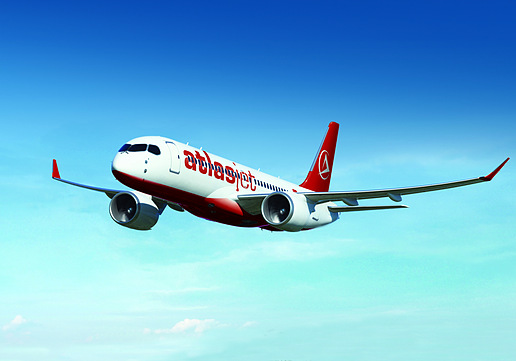 圖為印有Atlasjet航空公司標志的龐巴迪CS300。
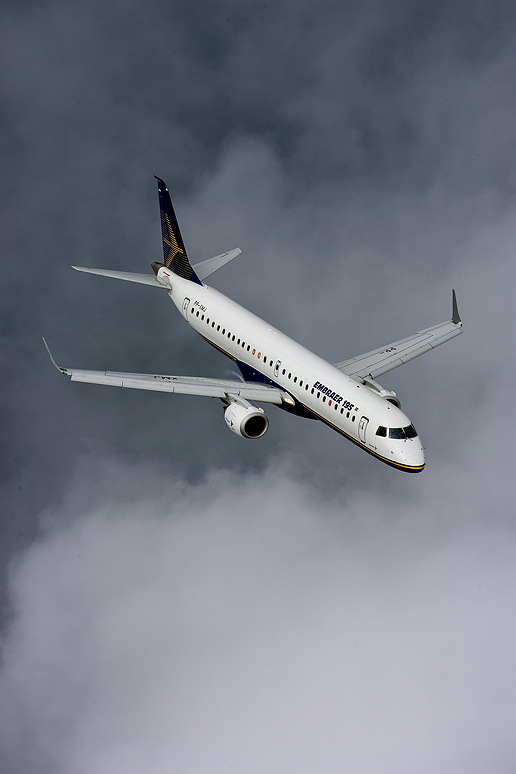 巴西航空工業次世代E-Jet升級款支線飛機,正在被設計開發成三個不的大小機型,首架E190-E2預計將于2018年交付,E195-E2將在2019,而E175-E2將于2020交付。
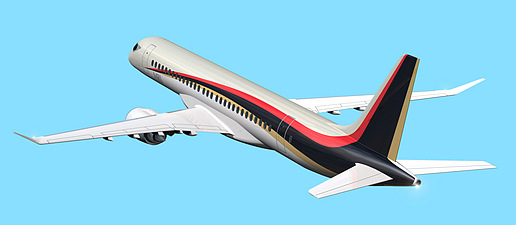 日本三菱MRJ90項目的持續延期,將導致它在這個非常有競爭前景的市場中丟失市場份額。
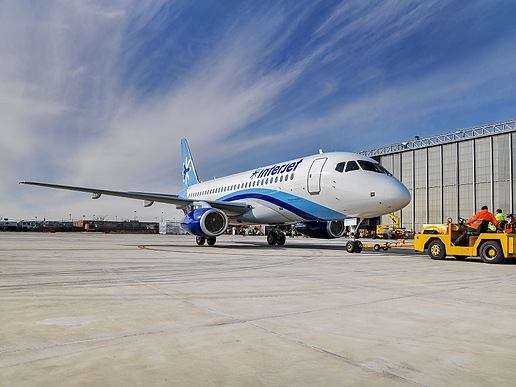 由合作伙伴Alenia生產的蘇霍伊SSJ100已經開始在俄羅斯以外的地區限量銷售。